
Flexible Elastomeric Couplings
Engineering selection, damping, replacement & interchange guide.
Overview
Engineering support for selection, supply, replacement/interchange and customized solutions for rubber and polyurethane flexible couplings used in industrial rotating equipment. Reference series in current scope: N-EUPEX, RUPEX, TRASCO, ROTEX, HRC, Tire, Omega, Viva and Sure-Flex Plus.
Coupling Technologies Covered
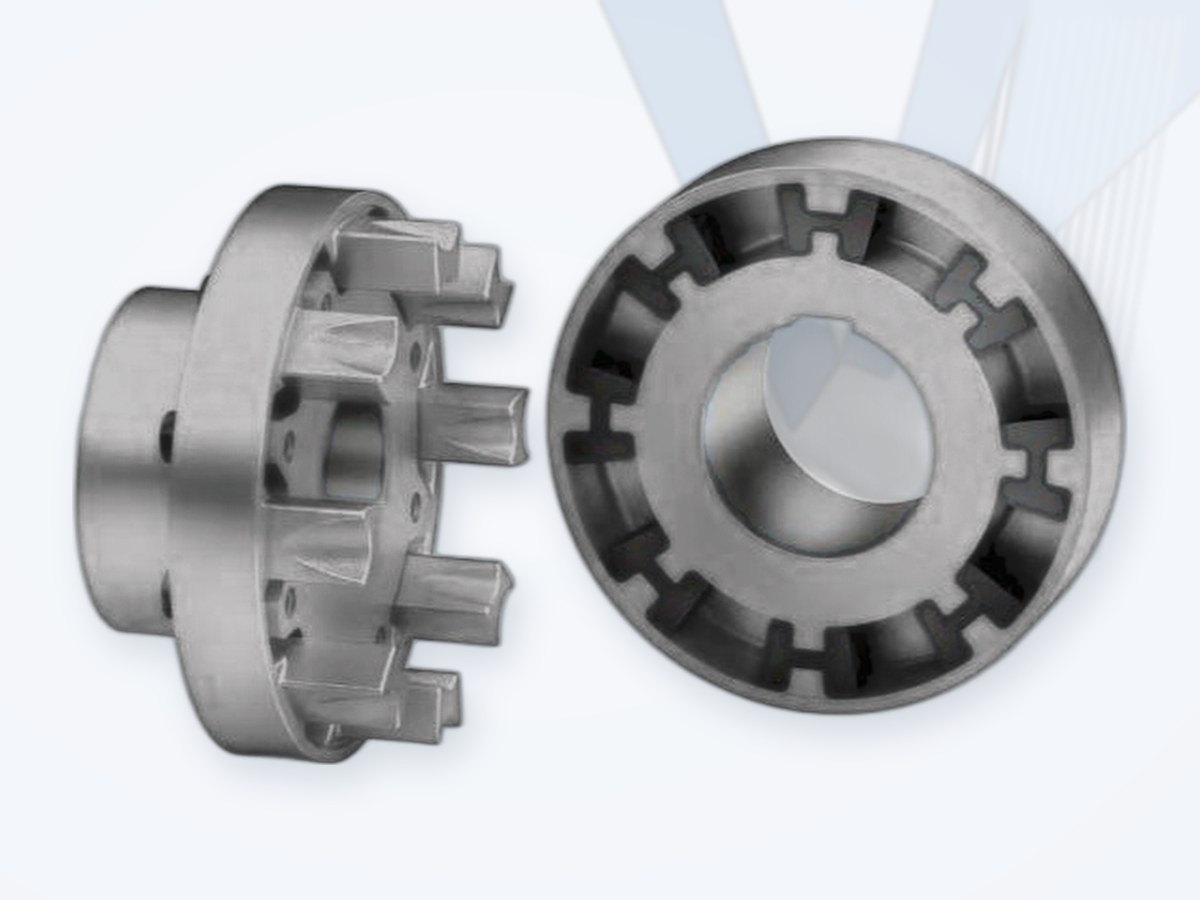
N-EUPEX
Flexible elastomeric coupling using replaceable elastic elements for torque transmission, damping and shaft-misalignment compensation. Exact configuration and element properties are series-specific.
View Product →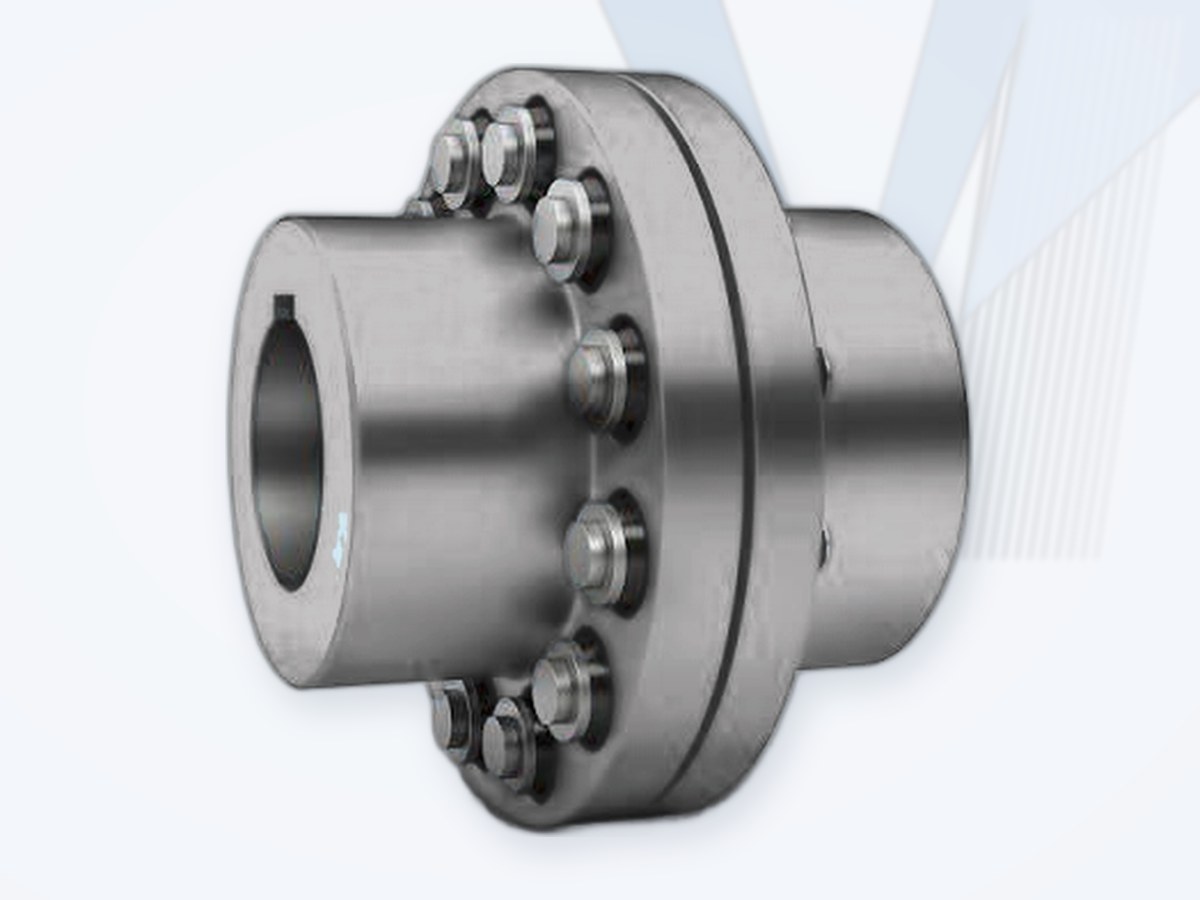
RUPEX
Pin-and-bush coupling using metallic pins and resilient bushes. Robust for industrial drives with shock and fluctuating torque; bush condition and pin/flange geometry are important in replacement work.
View Product →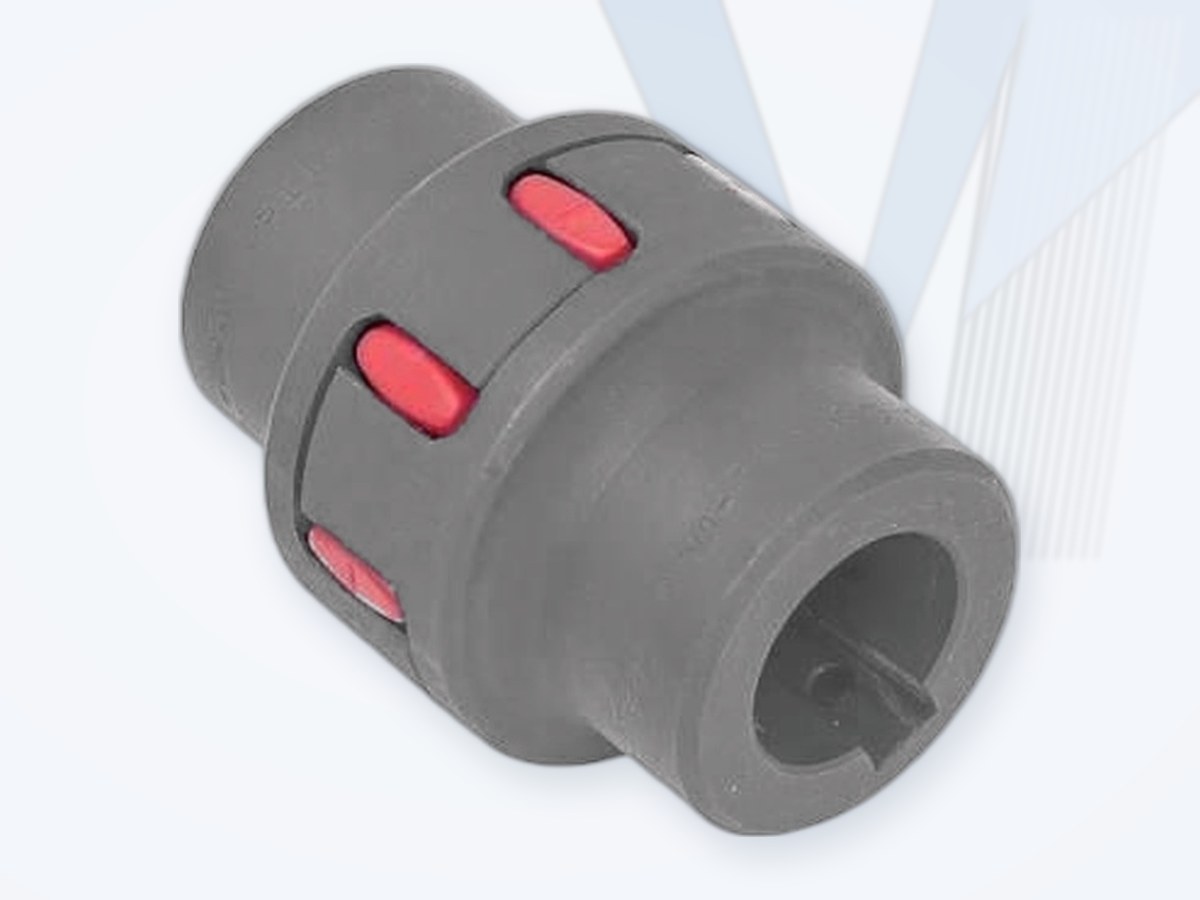
TRASCO
Compact jaw-type flexible coupling using a polyurethane elastic element between metallic hubs, for general industrial drives where compactness, damping and easy element replacement are valued.
View Product →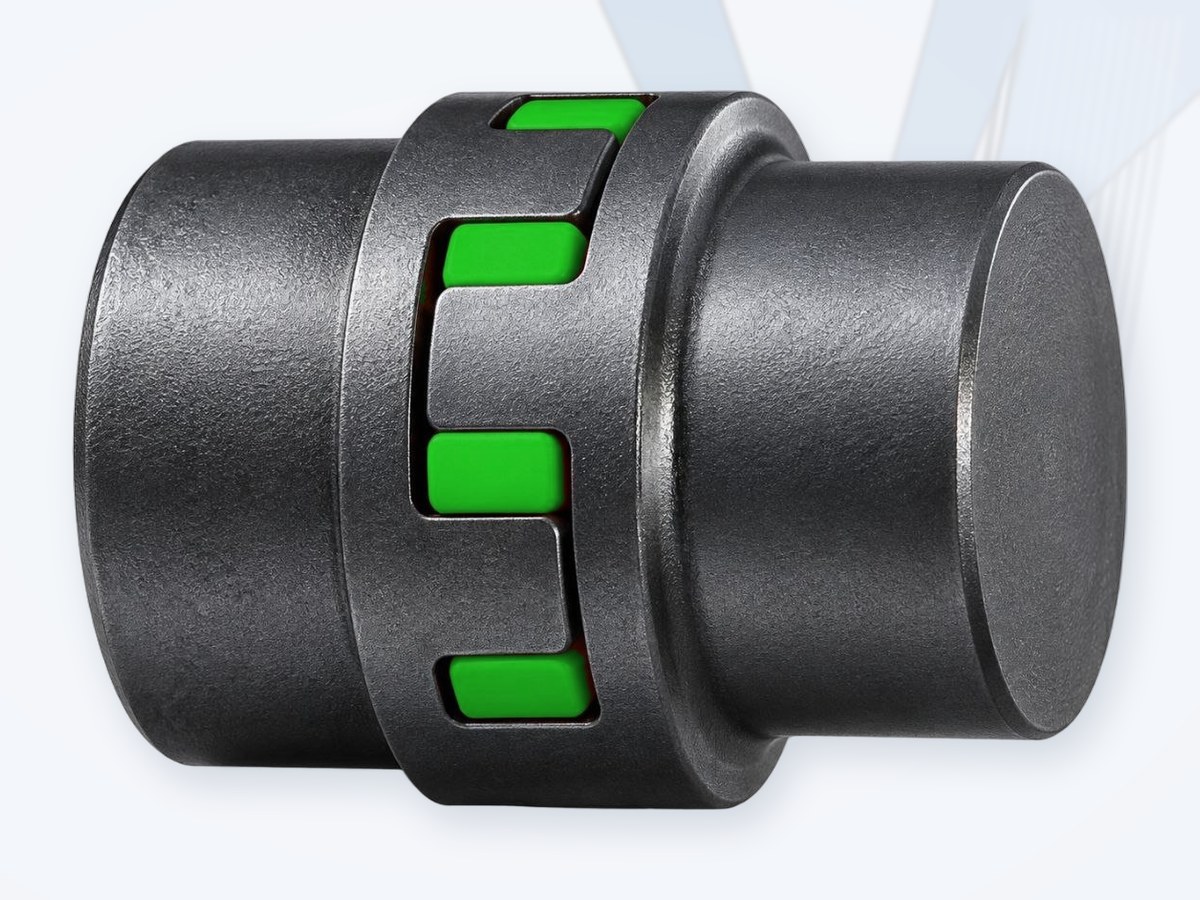
ROTEX
KTR torsionally flexible jaw coupling family using an elastomer spider. The current KTR range includes multiple hub and flange configurations, with spider hardness used to influence damping and torsional stiffness.
View Product →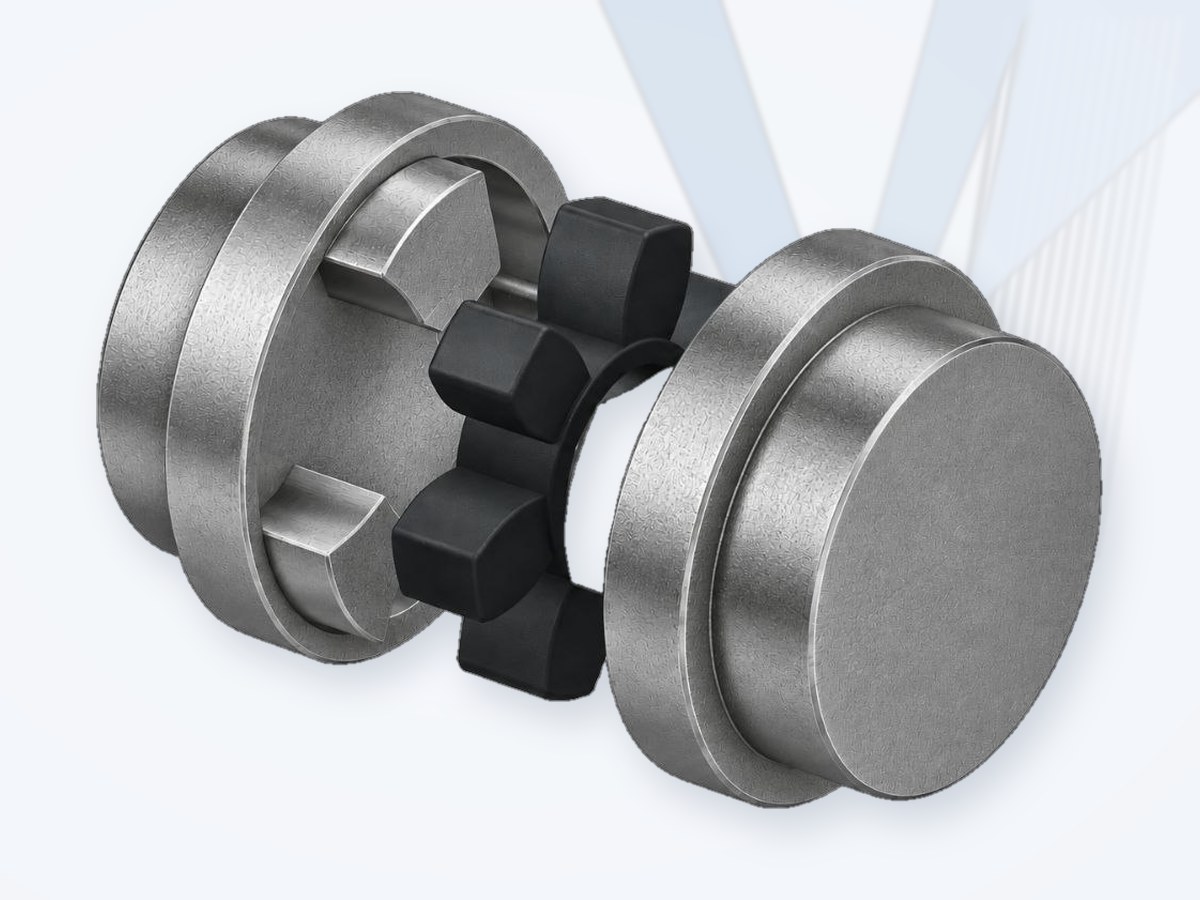
HRC
Semi-elastic general-purpose coupling for electric motor drives; Taper Lock, bored and pilot-bore versions; fail-safe interacting dogs.
View Details →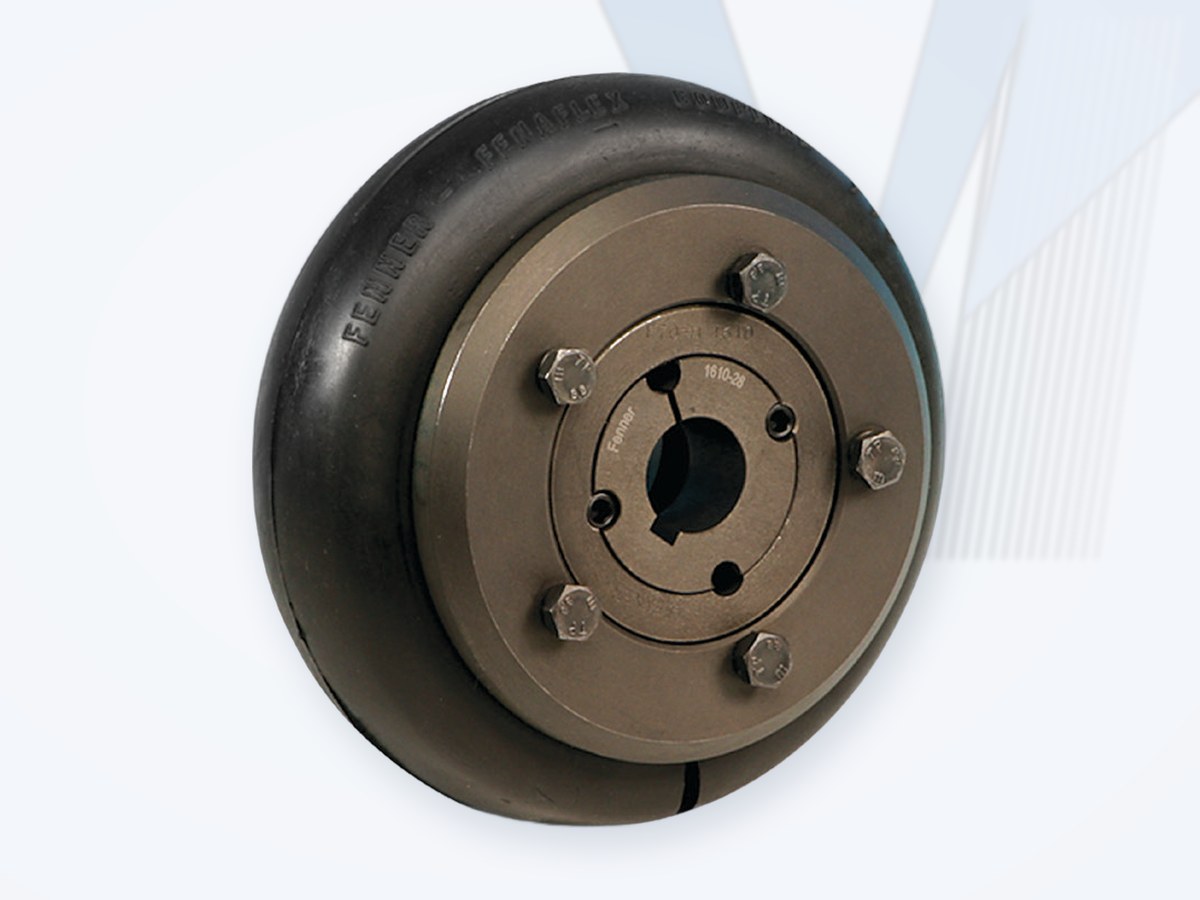
Tyre (Fenaflex type)
Highly elastic tyre coupling: large misalignment, shock and vibration damping, tyre replaceable without moving the machines.
View Details →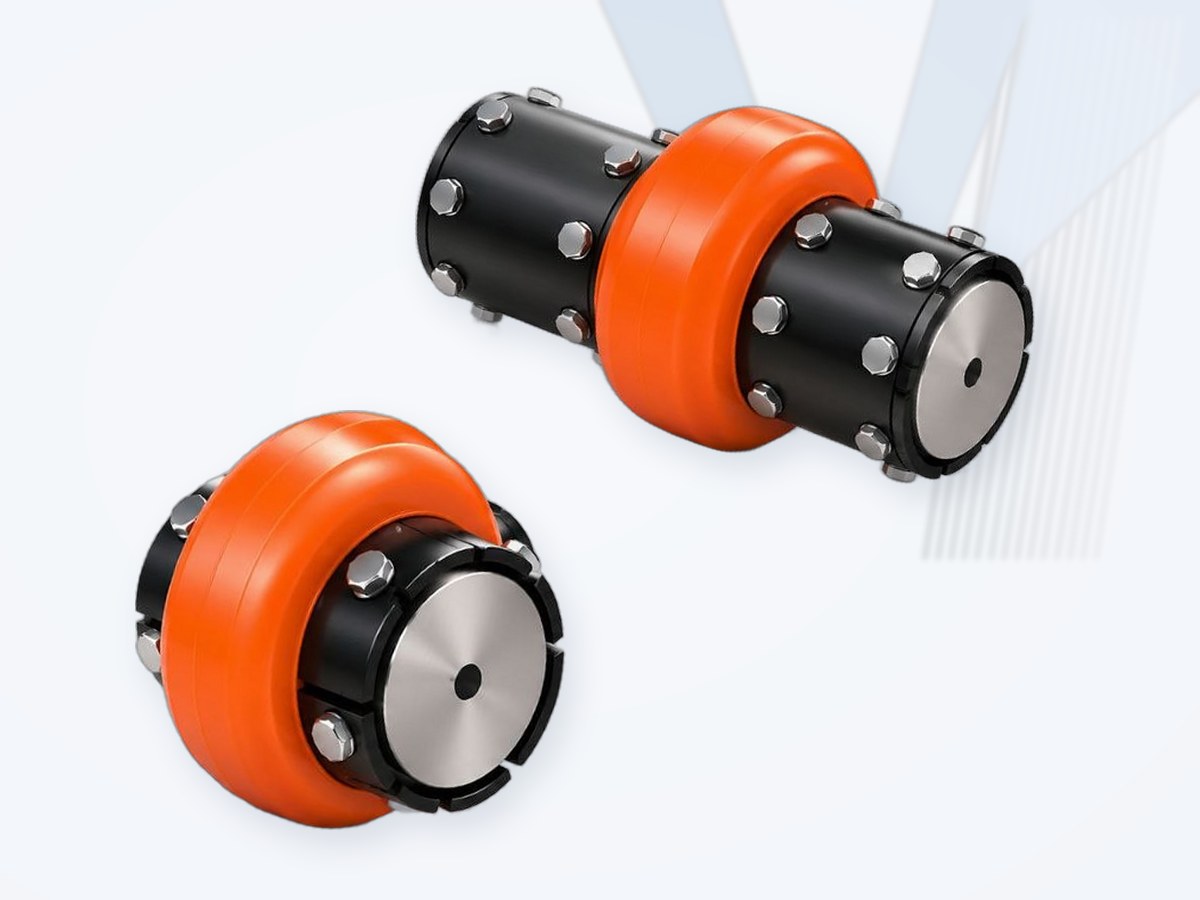
Omega (Rexnord)
Torsionally soft split-element elastomeric coupling, Type E and spacer Type ES; element replaceable without moving the machines.
View Details →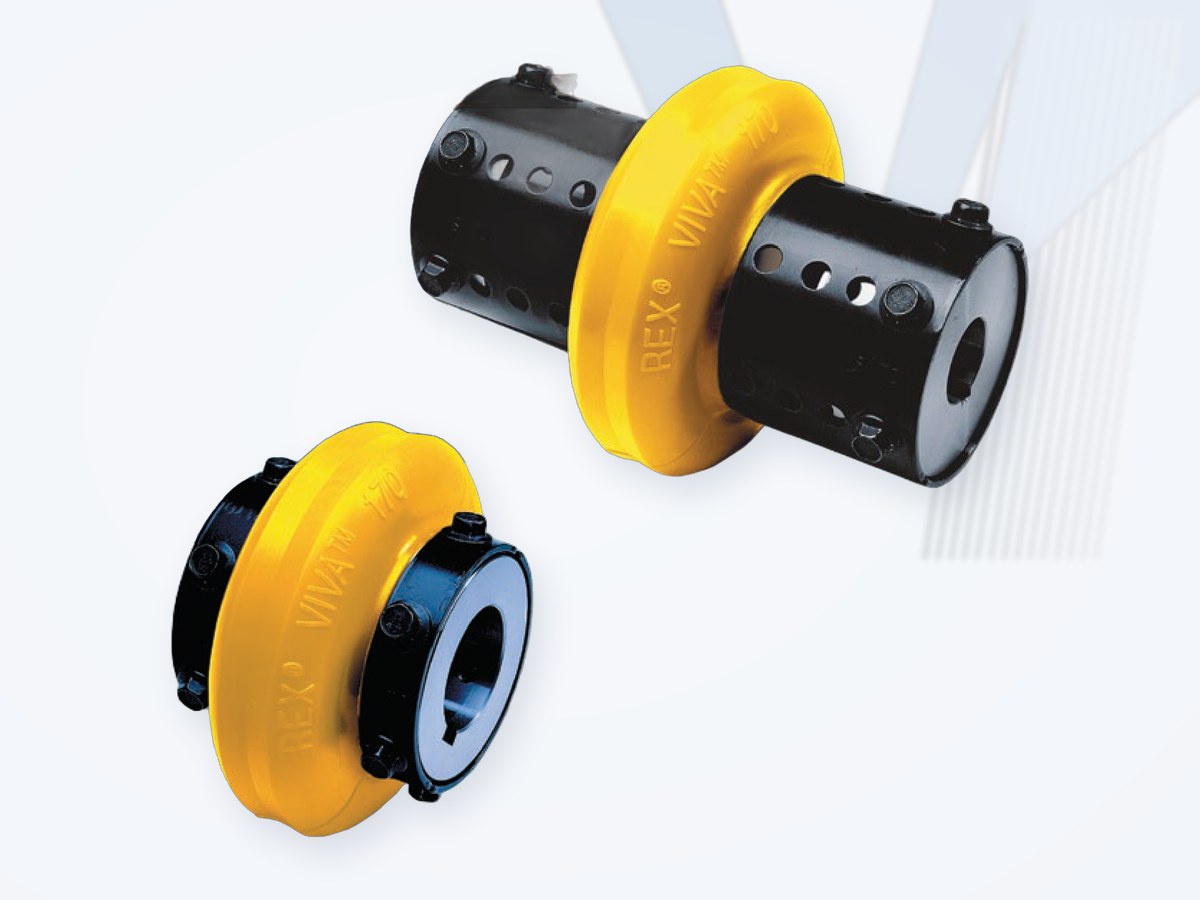
Viva (Rexnord)
Non-lubricated split polyurethane element bonded to steel shoes; V / VS / VSX, sizes 110-460; not interchangeable with Omega.
View Details →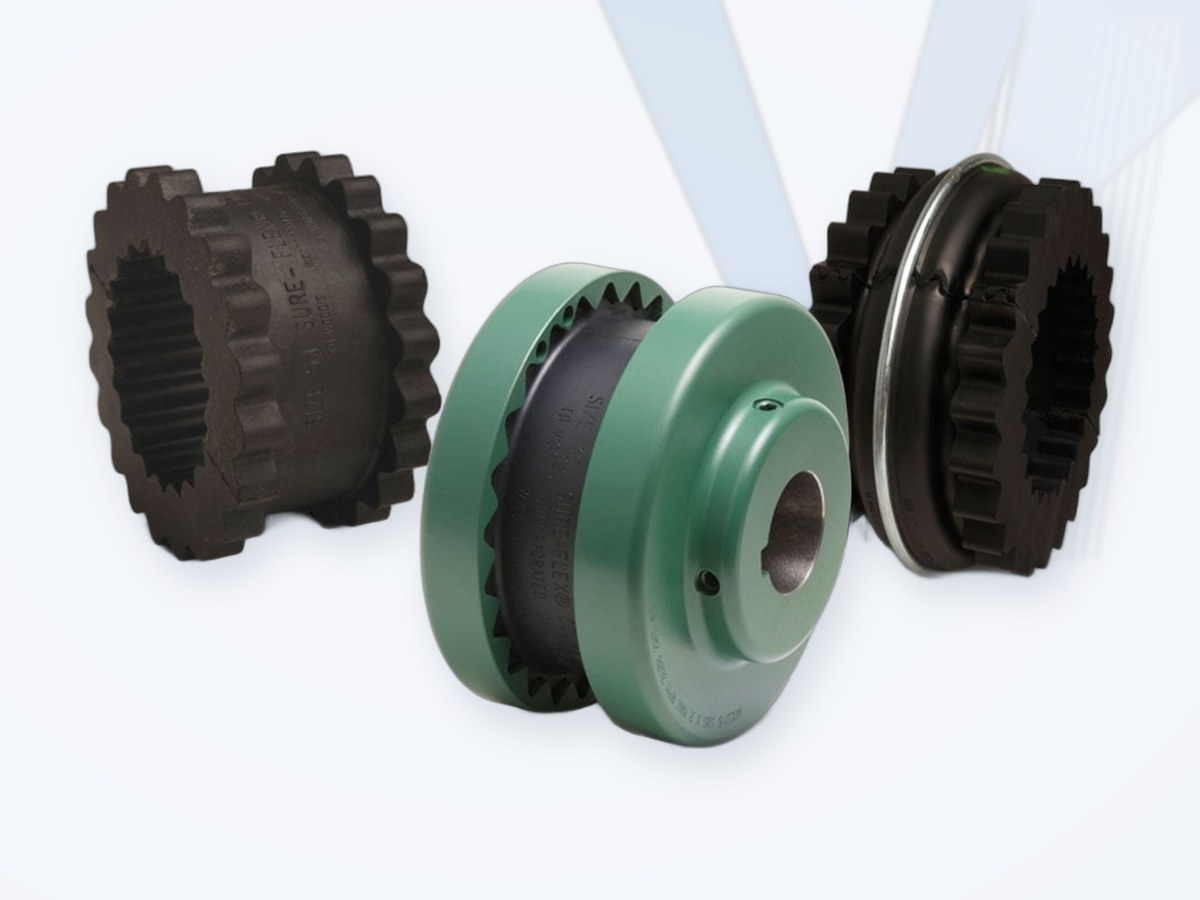
Sure-Flex Plus (TB Wood's)
Elastomeric sleeve couplings with four-way flexing; EPDM, Neoprene and Hytrel sleeves; J, S, SC, B and C flanges; no lubrication.
View Details →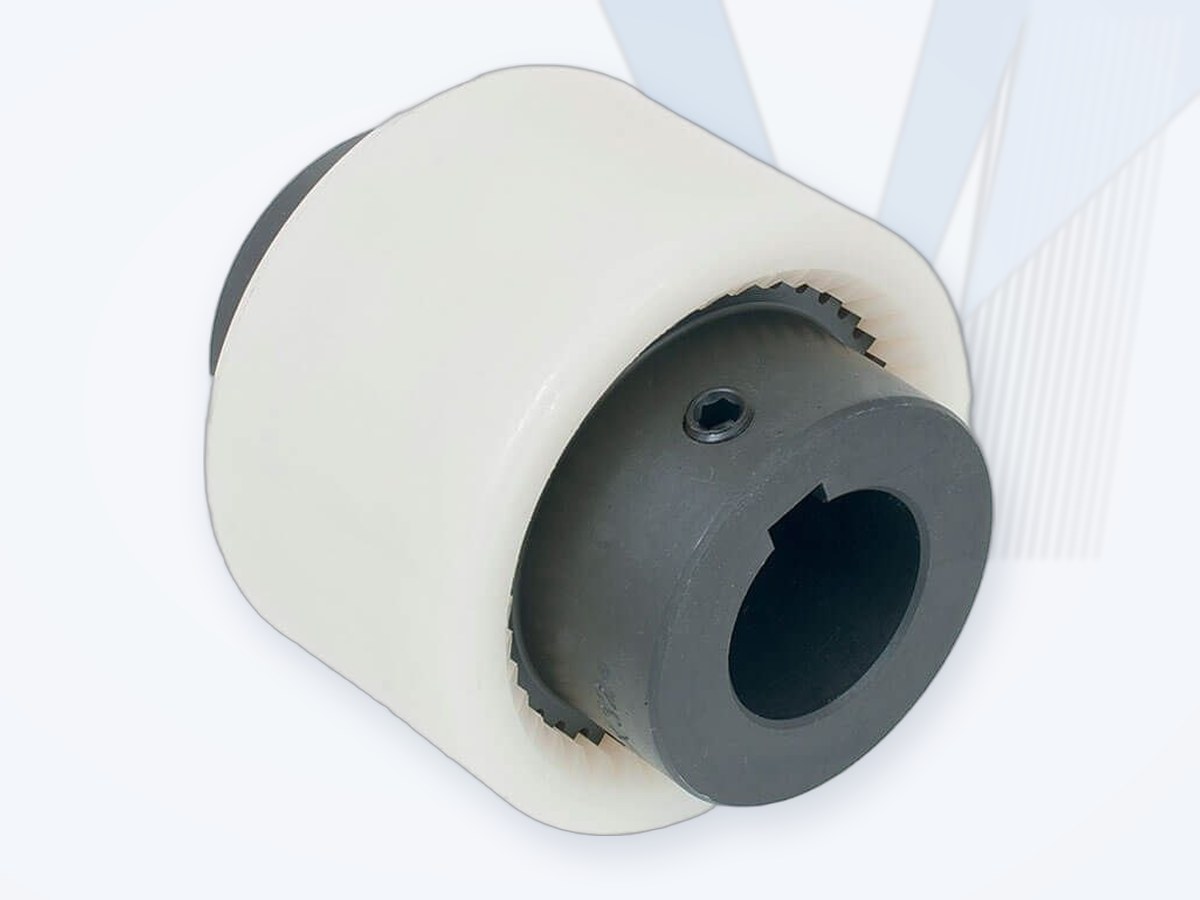
What is a flexible elastomeric coupling?
A flexible elastomeric coupling transmits torque between rotating shafts through resilient rubber or polyurethane (PU) elements. Elastic deformation of the element provides torsional flexibility and damping while accommodating limited angular, radial/parallel and axial shaft displacement within the limits of the selected coupling.
This category includes several distinct torque-transmission concepts. Jaw couplings use an elastomer spider between metallic jaws; pin-and-bush couplings transmit torque through pins and resilient bushes; tire and split-element couplings use highly flexible rubber elements. Their dynamic behavior, allowable misalignment, torque density, temperature capability and maintenance requirements are not identical.
MECHATRIC scope for this page: N-EUPEX, RUPEX, TRASCO, ROTEX, HRC, Tire, Omega and Viva. Nylon/polyamide sleeve couplings are listed under gear couplings.
Why Elastomeric Couplings Are Used
- Torsional vibration damping - resilient elements can reduce transmission of torque oscillations and shocks.
- Misalignment accommodation - controlled element deformation allows limited shaft movement.
- Maintenance-friendly designs - many types use replaceable elastic elements and require no lubrication.
- Application flexibility - motor-pump, motor-gearbox, fan, blower, conveyor, mixer and general industrial drives.
- Dynamic tuning - element material, geometry and hardness influence torsional stiffness and damping.
ROTEX - Engineering Reference
KTR describes ROTEX as a torsionally flexible jaw coupling consisting of two hubs and an elastomer spider. The spider is loaded primarily in compression and is intended to damp torsional vibration and cushion shocks from irregularly operating machines; different spider hardnesses adjust damping and torsional stiffness.
ROTEX variants include standard keyed hubs, split-hub designs for radial installation/removal, flange arrangements for heavy engineering, clamping solutions and other application-specific hub concepts - a jaw coupling is not one fixed construction.
Manufacturer-specific ROTEX data - torque ratings, permissible speed, spider hardness/color, maximum torsion angle, ATEX status and exact dimensions - remain attached to the verified KTR product record and are not generalized to every elastomeric coupling.
Jaw Coupling Working Principle
In a jaw coupling, torque passes from the driving hub jaws into the elastomer spider and then into the driven hub. The elastomer deforms under torque and dynamic load; this deformation provides the torsional compliance and damping that distinguish the coupling from rigid or torsionally stiff metallic designs. KTR states that the ROTEX flexible teeth are subjected to compressive stress and that the coupling damps torsional vibration and shocks. The elastomer also deforms under load and speed, so adequate space for deformation is part of correct installation.
Elastomer Hardness, Damping & Torsional Stiffness
Elastomer selection is an engineering decision. A softer element generally provides more compliance and damping, while a harder element can provide greater torsional stiffness and often higher torque capability within the same coupling concept. The exact relationship must be taken from the manufacturer's data. KTR offers standard T-PUR spiders in different hardness grades and links them to damping and torsional stiffness; special materials further change temperature resistance, chemical resistance, damping and stiffness.
Do not select a replacement spider by color alone. Confirm manufacturer, material, hardness, size, geometry, temperature capability and torque data.
Fail-Safe and Maintenance Concepts
Some jaw coupling designs are described by their manufacturers as fail-safe because the metallic jaws can continue to provide a mechanical torque path after severe elastomer damage, although the allowable emergency behavior is product-specific. Many elastomeric couplings are maintenance-free in the sense that they require no lubrication, but the elastic element still requires inspection and eventual replacement. KTR ROTEX DF, for example, is presented as a maintenance-free, fail-safe flange design for heavy engineering; ROTEX AH and SH use split hubs that allow radial assembly/disassembly without moving the connected machines in suitable installations.
Engineering Selection Method
Correct selection should start with the complete drive system rather than shaft diameter or motor power alone.
| Step | Engineering check | Required information |
|---|---|---|
| 1 | Identify driver and driven machine | Motor/engine/turbine; pump, fan, gearbox, conveyor, crusher, mixer, etc. |
| 2 | Calculate operating torque | Power and operating speed; use actual transmitted power where available. |
| 3 | Define dynamic duty | Starting, stopping, peak/reversing torque, shock, load fluctuation, inertia and starts per hour. |
| 4 | Apply manufacturer selection method | Service/application factor and rated/maximum/vibratory torque definitions for the exact coupling family. |
| 5 | Choose coupling concept | Jaw, pin-and-bush, HRC, tire or highly flexible split-element according to damping, stiffness and maintenance needs. |
| 6 | Select elastomer | Material, hardness, temperature capability, chemical/environmental resistance and dynamic properties. |
| 7 | Check shaft interfaces | Bores, keyways, taper bush, clamping hub, split hub, shaft tolerance and hub length. |
| 8 | Check displacement capability | Angular, radial/parallel and axial movement; verify combined limits and installation alignment. |
| 9 | Check speed and envelope | Permissible rpm/circumferential speed, OD, hub length, guard clearance and installation/removal space. |
| 10 | Check environment / certification | Temperature, dust, oil/chemicals, corrosion, hazardous area and required certificates. |
Torque Formula
Operating Torque (Nm) = 9550 x Power (kW) / Speed (rpm)
The calculated operating torque is only the starting point. Final selection must use the manufacturer's definitions for rated torque, maximum torque, vibratory torque, service/application factor, temperature correction and other relevant factors.
ROTEX Selection - What KTR Adds
KTR publishes rated, maximum and vibratory torque data for ROTEX spiders, as well as dynamic torsional stiffness and damping-related data - especially valuable where the coupling is part of a torsionally sensitive drivetrain. For high-inertia drives, VFD applications, reciprocating machinery or systems near a torsional resonance, MECHATRIC requests enough drivetrain data to determine whether a torsional-vibration review is needed rather than relying only on nominal torque.
Misalignment & Alignment
Elastomeric couplings can compensate for limited shaft displacement, but they do not eliminate the need for correct machinery alignment. Excessive angular, radial or axial displacement increases element deformation, heat and restoring forces and can shorten element, bearing and seal life. Exact permissible values depend on size, speed, element and hub arrangement and are taken from current manufacturer data.
MECHATRIC engineering rule: use the manufacturer's recommended installation alignment values; never install intentionally at the maximum published operating displacement.
Temperature, Chemicals & Environment
Rubber and polyurethane properties change with temperature and chemical exposure. Selection identifies ambient and process temperature, oil/grease contact, water/humidity, dust, solvents/chemicals, outdoor exposure and hazardous-area requirements. Manufacturer-specific material limits (for example KTR T-PUR and special spider materials) are stored on the exact product/element record.
Hazardous-Area Applications
ATEX compliance is an exact product/configuration certification attribute. A generic jaw or elastomeric coupling is not described as ATEX compliant unless the selected manufacturer's documentation confirms the relevant configuration and operating conditions.
Hub & Installation Options
| Hub / arrangement | Why it matters |
|---|---|
| Keyed standard hub | Common general-purpose shaft connection; check bore, keyway and axial retention. |
| Split hub / half-shell | Allows radial installation/removal in suitable designs and can reduce machine movement during maintenance. |
| Clamping hub / clamping ring | Frictionally engaged shaft connection; shaft tolerance, surface condition and tightening procedure become critical. |
| Taper-bush arrangement | Useful for standardized shaft mounting; bush size and hub compatibility must be verified. |
| Flange connection | Supports heavy-engineering or equipment-specific interfaces; bolt pattern and centering are critical. |
| Spacer / maintenance-oriented arrangement | May improve access to seals or connected equipment; verify dynamic and dimensional effects. |
Replacement & Interchange Method
An elastomeric coupling replacement must be evaluated as a complete engineered assembly. Matching only outside diameter, bore or nominal torque is not sufficient.
| Review area | What MECHATRIC compares |
|---|---|
| Existing identity | Manufacturer, series, size, hub type, element/spider/bush/tire, hardness/material and configuration. |
| Torque & dynamics | Rated/continuous torque, peak/maximum torque, vibratory duty, service factor, damping and torsional stiffness where relevant. |
| Shaft interface | Bores, keyways, taper bush/clamping arrangement, hub length, fits and axial retention. |
| Dimensions | Shaft gap, overall length, outside diameter, flange pattern, guard clearance and removal space. |
| Misalignment | Angular, radial/parallel and axial capability plus correct installation alignment. |
| Elastomer | Material, hardness, geometry, temperature range, chemical resistance and spare-element availability. |
| Speed & balance | Maximum rpm/circumferential speed and any balance requirement. |
| Environment / certification | Hazardous area, temperature, corrosion, chemicals and required certificates. |
| Maintenance | Whether element replacement requires machine movement; lubrication requirements; inspection access. |
MECHATRIC Interchange Classification
- Direct Interchange - exact engineering verification supports direct replacement for the specified size and application.
- Dimensionally Compatible - physical/interface compatibility is verified, but performance and duty still require confirmation.
- Functionally Equivalent - performs the required function but may differ in dimensions, dynamic behavior or maintenance method.
- Engineering Review Required - a candidate has been identified but is not approved as a verified interchange.
Component Compatibility Warning
Do not assume that spiders, rubber elements, bushes, tires, hubs or coupling halves from different manufacturers are interchangeable. Similar color, nominal size or appearance does not prove compatibility; geometry, material formulation, hardness, preload/clearance and dynamic properties can differ.
KTR publishes its own T-PUR spider materials and hardness grades for ROTEX. These data are not used to claim that an unrelated spider is a direct ROTEX replacement without exact engineering verification.
Choosing Between Elastomeric Coupling Concepts
| Concept | General behavior | Typical reason to select |
|---|---|---|
| Jaw / spider | Compact; torsionally flexible; PU element; no routine lubrication. | General motor-driven machinery, compact envelope, easy element replacement. |
| Pin & bush | Robust metallic pins with rubber bushes; damping and shock tolerance. | Heavy industrial drives, fluctuating load, maintainable bushes. |
| HRC-type | Simple general-purpose elastomer insert coupling. | Economical motor-to-machine duties and standardized installations. |
| Tire | Highly flexible rubber element; strong vibration isolation and misalignment capability. | Greater flexibility, shock isolation and easy split-element replacement. |
| Omega / Viva-type split element | Highly flexible elastomeric element, typically maintenance-oriented and lubrication-free. | Rotating equipment where damping, misalignment and radial element replacement are priorities. |
Applications & Industries
Applications: pumps, fans, blowers, compressors, gearboxes, conveyors, crushers, mills, mixers, agitators, cooling towers, bucket elevators and general industrial machinery.
Industries: cement, mining and mineral processing, steel and metals, oil & gas, petrochemical, power generation, water & wastewater, material handling and industrial OEM machinery.
Information Required for Selection / RFQ
| Data group | Information to provide |
|---|---|
| Driver | Motor/engine/turbine; rated and actual power; base/maximum speed; VFD if applicable. |
| Driven machine | Equipment type and application; continuous/intermittent service. |
| Load | Normal, starting, peak and reversing torque; shock/fluctuation; inertia; starts/stops. |
| Shaft interface | Both shaft diameters; keyways; taper bush/clamping details; shaft tolerances if relevant. |
| Geometry | Shaft gap; overall envelope; hub length; flange pattern; guard and removal clearance. |
| Misalignment | Required angular, radial/parallel and axial movement; thermal growth if relevant. |
| Environment | Temperature, oil/chemicals, water/humidity, dust, corrosion and hazardous-area classification. |
| Existing coupling | Manufacturer, series, size, spider/element hardness and material, photos, drawing/nameplate and failure history. |
| Engineering dynamics | Required damping/stiffness or torsional-analysis data for sensitive/high-inertia applications. |
Equivalent Designs - Cross-Reference
Use this table to find the equivalent design from another manufacturer. Send the existing part number - MECHATRIC confirms the exact size and rating.
| Coupling type | KTR | SIT S.p.A. | Relationship |
|---|---|---|---|
| Jaw coupling with elastomer spider | ROTEX | TRASCO | Same design - interchangeable sizes |
These designs are built to the same concept and interchangeable sizes by several manufacturers. Mechanical ratings (torque, speed, misalignment, element hardness or grid material) can differ slightly between makers and are always checked against the duty before a replacement is confirmed.
Leading Manufacturers Worldwide
Well-known European, American and Asian (Japanese and Korean) manufacturers of flexible elastomeric couplings.
| Manufacturer | Country | Product focus |
|---|---|---|
| FLENDER | Germany | N-EUPEX, RUPEX, ELPEX, ARPEX, ZAPEX, FLUDEX couplings; industrial gear units |
| KTR Systems | Germany | ROTEX, BoWex, RADEX-N couplings; CLAMPEX locking devices; brakes |
| VULKAN | Germany | Highly flexible couplings |
| SIT S.p.A. | Italy | Flexible, disc, gear and zero-backlash couplings; pulleys, belts, SIT-LOCK, taper bushes |
| Renold | United Kingdom | Couplings, freewheels / backstops, chains |
| Fenner Drives | United Kingdom | Taper-Lock bushes, pulleys, couplings, keyless bushings |
| Regal Rexnord (Falk, Kop-Flex, Thomas, Rexnord) | USA | Grid, gear and disc couplings; gear drives; backstops; roller chain |
| Lovejoy (Timken) | USA | Jaw and elastomeric couplings |
| TB Wood's (Regal Rexnord) | USA | Couplings, sheaves, bushings |
| Tsubaki | Japan | Couplings, POWER-LOCK, backstops, chains |
| Miki Pulley | Japan | Precision couplings, electromagnetic brakes |
Listed for market information only. Brand names belong to their owners; their mention does not imply that MECHATRIC represents, distributes for or is authorized by these manufacturers. Product availability and equivalents are confirmed per enquiry.
Need help selecting or replacing an elastomeric coupling?
MECHATRIC supports coupling sizing and selection, technical cross-reference, replacement of obsolete couplings, rubber/PU element selection, failure analysis, reverse engineering, spare elastic-element supply and customized coupling solutions. Alternatives are evaluated from the actual application rather than catalogue similarity alone.
Engineering references: current KTR ROTEX product information and KTR technical catalogue (jaw-coupling function, T-PUR spiders, hardness/dynamic behavior, split-hub and flange configurations, maintenance concepts and ATEX-related product attributes). Exact torque ratings, speed limits, spider properties, temperature limits, misalignment, dimensions, certifications and interchangeability must be verified against current manufacturer documentation for the exact series, size and configuration. Reference brand/series names do not imply representation, authorization or commercial partnership.
Frequently Asked Questions
What is an elastomeric coupling?
A flexible shaft coupling that transmits torque through resilient rubber or polyurethane elements while providing damping and limited misalignment accommodation.
What is a jaw coupling?
A coupling with two metallic jaw hubs and an elastomer spider between them. ROTEX and TRASCO are examples of established jaw-coupling series.
What does spider hardness change?
It changes the element's torque capability, torsional stiffness, damping and deformation behavior. Always use the exact manufacturer's data.
Does a flexible elastomeric coupling require lubrication?
Most coupling concepts covered on this page do not require routine lubrication of the elastic element, but inspection and correct installation remain necessary.
Can elastomeric couplings compensate for misalignment?
Yes, within specified limits. They do not replace accurate shaft alignment.
Can I replace a ROTEX spider with a visually similar spider?
Not without verification. Size, geometry, material, hardness, temperature capability and torque/dynamic properties must match the required application.
When is a split-hub coupling useful?
Where radial assembly/disassembly can reduce the need to move connected machines during maintenance. KTR ROTEX AH/SH are examples of this design approach.
How do I select an equivalent coupling?
Compare torque and dynamics, speed, shaft interfaces, dimensions, misalignment, elastomer characteristics, environment, maintenance method and certification - not only nominal size.