
Omega Elastomeric Couplings
Rexnord Omega torsionally soft split-element elastomeric couplings, Type E and spacer Type ES - selection checks, installation and replacement.
Rexnord Omega Elastomeric Couplings
Engineering overview, selection, configurations, replacement and interchange support for Rexnord Omega torsionally soft elastomeric couplings - split flexible element for service without moving the connected machines.
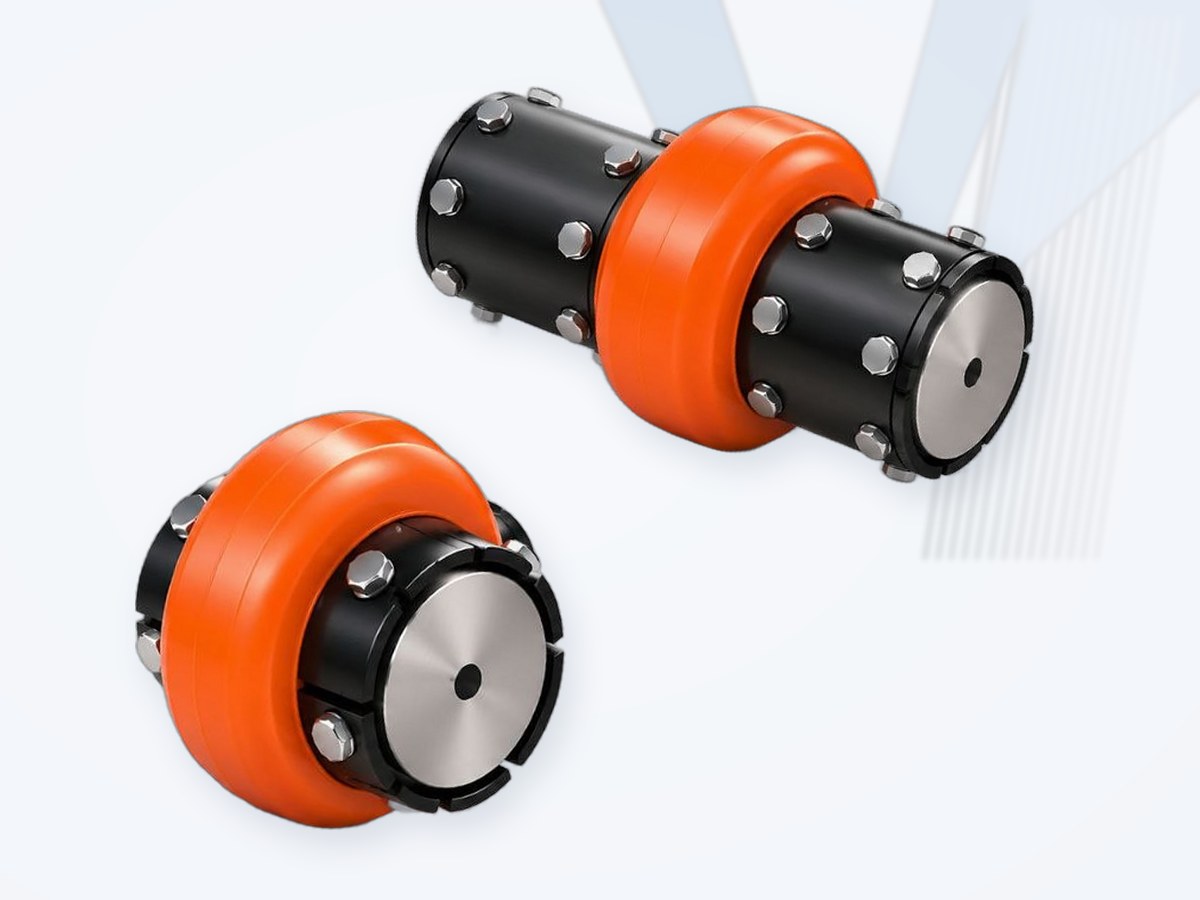
Omega-Type Coupling Products
Rexnord Omega Type E
Standard close-coupled Omega, sizes 2-140; rough-bore, Taper-Lock and QD hubs; split urethane element replaceable without moving the machines.
Request a Quote →Rexnord Omega Type ES
Spacer Omega for pump and process drives, DBSE 100-250 mm (ISO) or 3-10 in (ANSI); element removable without disturbing hubs.
Request a Quote →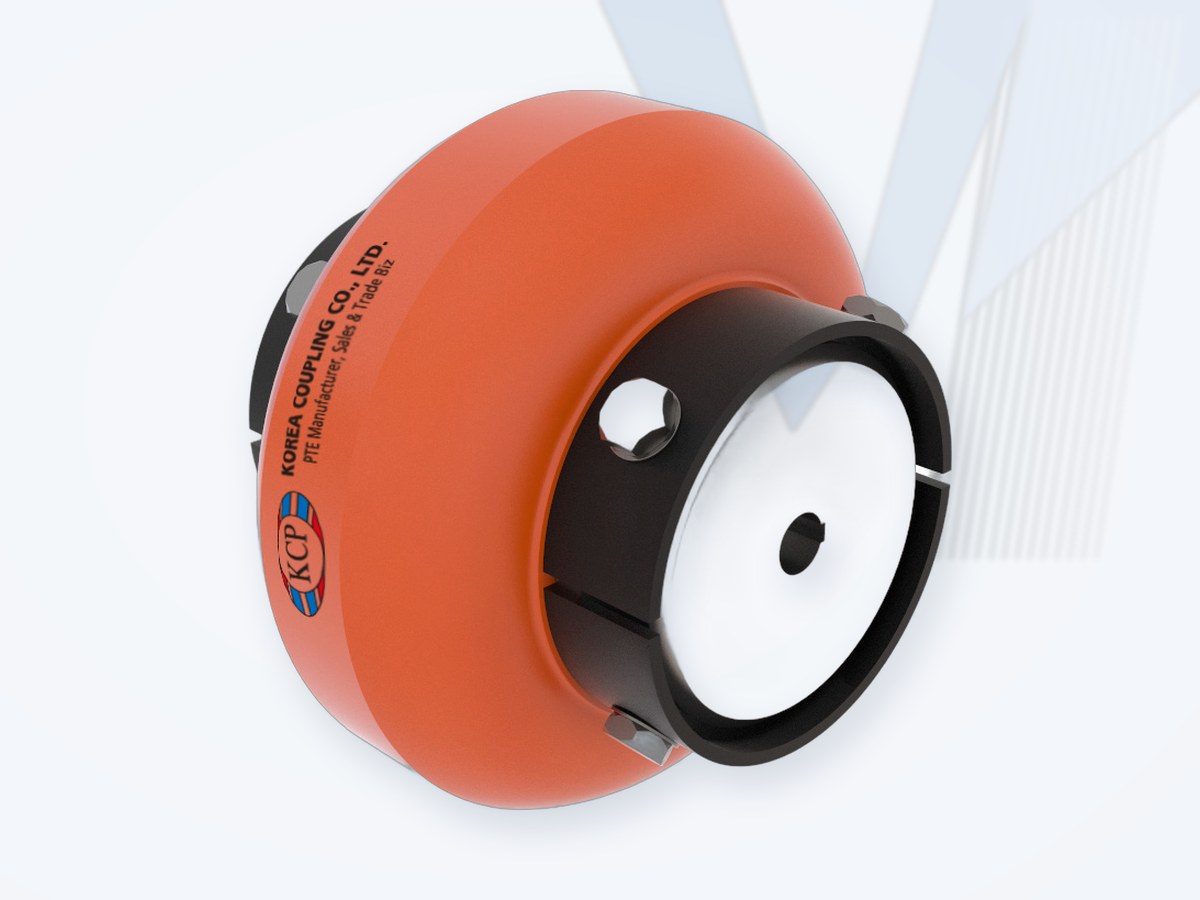
KCP Max Dynamic KD / KDS
Omega-type coupling, sizes 2 - 120, up to 19,221 N·m; halved bonded polyurethane element, reversible hubs, standard and spacer types.
View Details →KCP Max Dynamic KD / KDS
KCP Max Dynamic couplings are non-lubricated, material-flexing couplings with a halved polyurethane flex element bonded to metal and reversible hubs - the element can be replaced without moving the motor or driven machine. Torsionally soft, they cushion shock and vibration and accept misalignment with low reaction forces. Types: KD (standard, hubs inboard or outboard) and KDS (spacer).
KD Type (standard) - ratings & dimensions
| Size | Torque (N·m) | Max. speed (rpm) | kW per 100 rpm | Weight (kg) | Bore min - max (mm) | A (mm) | B (mm) | Gap C in / out (mm) | D (mm) | F in / out (mm) |
|---|---|---|---|---|---|---|---|---|---|---|
| KD 2 | 21.5 | 7,500 | 0.23 | 0.55 | 13 - 28 | 89 | 24 | 35 / 47 | 47 | 83 / 95 |
| KD 3 | 41.2 | 7,500 | 0.43 | 1.10 | 13 - 34 | 102 | 37 | 9 / 47 | 59 | 83 / 121 |
| KD 4 | 62.0 | 7,500 | 0.66 | 1.40 | 13 - 42 | 116 | 37 | 9 / 47 | 66 | 83 / 121 |
| KD 5 | 108.0 | 7,500 | 1.10 | 2.50 | 13 - 48 | 137 | 45 | 10 / 52 | 80 | 100 / 142 |
| KD 10 | 163.8 | 7,500 | 1.70 | 3.70 | 13 - 55 | 162 | 45 | 11 / 53 | 93 | 101 / 143 |
| KD 20 | 260.0 | 6,600 | 2.70 | 5.90 | 21 - 60 | 184 | 50 | 15 / 63 | 114 | 115 / 163 |
| KD 30 | 412.0 | 5,800 | 4.30 | 9.60 | 21 - 75 | 210 | 56 | 12 / 68 | 138 | 124 / 180 |
| KD 40 | 622.0 | 5,000 | 6.60 | 15.90 | 26 - 85 | 241 | 61 | 12 / 74 | 168 | 134 / 196 |
| KD 50 | 864.0 | 4,200 | 9.00 | 24.50 | 26 - 90 | 279 | 69 | 12 / 86 | 207 | 150 / 224 |
| KD 60 | 1,412 | 3,800 | 14.80 | 32.80 | 31 - 105 | 318 | 80 | 11 / 99 | 222 | 171 / 259 |
| KD 70 | 2,486 | 3,600 | 26.20 | 39.00 | 31 - 120 | 356 | 85 | 18 / 109 | 235 | 189 / 281 |
| KD 80 | 4,463 | 2,000 | 46.70 | 77.00 | 31 - 155 | 406 | 114 | 17 / 147 | 286 | 245 / 377 |
| KD 100 | 9,605 | 1,900 | 100.00 | 111.00 | 48 - 171 | 533 | 140 | 44 / 95 | 359 | 324 / 375 |
| KD 120 | 19,221 | 1,800 | 200.00 | 193.00 | 48 - 190 | 635 | 152 | 57 / 124 | 448 | 362 / 429 |
"In" / "out" = hubs mounted inboard / outboard. Letters as in the KCP catalogue drawing.
KDS Type (spacer) - ratings
| Size | Torque (N·m) | Max. speed (rpm) | Weight (kg) | Bore min - max (mm) | A (mm) | B (mm) |
|---|---|---|---|---|---|---|
| KDS 2 | 21.5 | 7,500 | 1.0 | 13 - 28 | 89 | 24 |
| KDS 3 | 41.2 | 7,500 | 1.8 | 13 - 34 | 102 | 37 |
| KDS 4 | 62.0 | 7,500 | 2.3 | 13 - 42 | 116 | 37 |
| KDS 5 | 104.5 | 7,500 | 3.4 | 13 - 48 | 137 | 45 |
| KDS 10 | 163.8 | 7,500 | 4.7 | 13 - 55 | 162 | 45 |
| KDS 20 | 260.0 | 4,800 | 7.1 | 21 - 60 | 184 | 50 |
| KDS 30 | 412.0 | 4,200 | 11.4 | 21 - 75 | 210 | 56 |
| KDS 40 | 622.0 | 3,600 | 18.2 | 26 - 85 | 241 | 61 |
| KDS 50 | 864.0 | 3,100 | 27.3 | 26 - 90 | 279 | 69 |
| KDS 60 | 1,412 | 2,800 | 38.2 | 31 - 105 | 318 | 80 |
| KDS 70 | 2,486 | 2,600 | 46.4 | 31 - 120 | 356 | 85 |
| KDS 80 | 4,463 | 1,800 | 81.8 | 31 - 155 | 406 | 114 |
Spacer lengths and overall dimensions per size on request.
Source: KCP (Korea Coupling Co., Ltd.) catalogue "Max Dynamic & Field Couplings", Ver. 2017-04. Weights without bore machining. Data subject to change - confirm current manufacturer data and certified dimensions for each enquiry.
Request a Quote for KCP Max Dynamic KD / KDS Ask an Engineer
What is an Omega coupling?
Rexnord Omega is a torsionally soft elastomeric coupling that connects rotating shafts, transmits power and torque and accommodates inherent misalignment. Its split flexible element allows service access around installed hubs. The flexible element is non-lubricated.
Core advantages: torsionally soft flexible element; accessible split-half replacement; close-coupled and spacer arrangements; hub mounting flexibility. Proper shaft alignment, verified hub engagement, specified fastener tightening torque, machine guarding and scheduled element inspection are essential to safe operation.
Configurations and Naming
| Item | Description |
|---|---|
| Type E | Standard Omega arrangement (close-coupled); nominal sizes 2-140 in the installation manual. |
| Type ES | Spacer Omega arrangement; element availability only for listed sizes - chosen by distance between shaft ends (DBSE) and service access. |
| Hub styles | Rough-bore, Taper-Lock and QD-bushed options, subject to size. |
| Options | High-speed rings and sleeve extensions, size-dependent. |
| Inch vs metric | Inch Type E hubs are not identical to metric Type EM hubs. |
Omega Type E & ES - Technical Data (metric)
Maximum misalignment (combined criterion)
| Size (E & ES) | Angular ΔKa max (mm) | Radial ΔKr max (mm) |
|---|---|---|
| Omega 2 | 3.3 | 1.5 |
| Omega 3 | 4.1 | 1.5 |
| Omega 4 | 4.6 | 1.5 |
| Omega 5 | 5.6 | 1.5 |
| Omega 10 | 6.4 | 1.5 |
| Omega 15 | 6.4 | 1.5 |
| Omega 20 | 5.8 | 2.3 |
| Omega 30 | 7.1 | 2.3 |
| Omega 40 | 8.9 | 2.3 |
| Omega 50 | 10.7 | 2.3 |
| Omega 60 | 7.9 | 3.3 |
| Omega 70 | 8.1 | 3.3 |
| Omega 80 | 9.9 | 3.3 |
| Omega 100 | 9.4 | 4.1 |
| Omega 120 | 11.7 | 4.1 |
| Omega 140 | 14.0 | 4.1 |
Use (ΔKa / ΔKa max) + (ΔKr / ΔKr max) ≤ 1. Angular value measured as the difference of gap readings around the hub, per the manual.
Element cap screw tightening torque (dry)
| Size | Cap screws (qty) | Tightening torque (N·m) | Screw size (inch thread) |
|---|---|---|---|
| Omega 2 | 8 + 8 | 23 | 1/4-20 x 3/8" |
| Omega 3 | 8 + 8 | 23 | 1/4-20 x 1/2" |
| Omega 4 | 8 + 8 | 23 | 1/4-20 x 1/2" |
| Omega 5 | 8 + 8 | 23 | 1/4-20 x 1/2" |
| Omega 10 | 12 + 12 | 23 | 1/4-20 x 1/2" |
| Omega 15 | 12 | 33 | 5/16-18 x 1/2" |
| Omega 20 | 12 | 40 | 3/8-16 x 5/8" |
| Omega 30 | 12 | 40 | 3/8-16 x 5/8" |
| Omega 40 | 16 | 40 | 3/8-16 x 5/8" |
| Omega 50 | 16 | 40 | 3/8-16 x 5/8" |
| Omega 60 | 16 | 100 | 1/2-13 x 7/8" |
| Omega 70 | 16 | 100 | 1/2-13 x 7/8" |
| Omega 80 | 16 | 100 | 1/2-13 x 7/8" |
| Omega 100 | 20 | 370 | 3/4-10 x 1-1/2" |
| Omega 120 | 24 | 370 | 3/4-10 x 1-1/2" |
| Omega 140 | 32 | 800 | 1-8 x 1-1/2" |
Cap screws have self-locking patches - do not lubricate and do not reuse more than twice. "8 + 8" / "12 + 12": extra screws supplied for spacer couplings with rings.
Type E hub mounting options - shaft gap
| Size | Arrangement A (mm) | Arrangement B (mm) | Arrangement C (mm) |
|---|---|---|---|
| Omega 2 | 34.0 | 41.1 | 48.3 |
| Omega 3 | 20.6 | 26.9 | 33.3 |
| Omega 4 | 11.2 | 22.4 | 33.3 |
| Omega 5 | 20.6 | 33.3 | 46.0 |
| Omega 10 | 14.2 | 30.2 | 46.0 |
| Omega 15 | 14.2 | 30.2 | 46.0 |
| Omega 20 | 12.7 | 36.6 | 60.5 |
| Omega 30 | 14.2 | 38.1 | 62.0 |
| Omega 40 | 14.2 | 41.1 | 68.1 |
| Omega 50 | 16.0 | 51.1 | 85.9 |
| Omega 60 | 17.5 | 52.6 | 87.4 |
| Omega 70 | 19.1 | 57.2 | 95.3 |
| Omega 80 | 19.1 | 73.2 | 127.0 |
| Omega 100 | 44.5 | 69.9 | 95.3 |
| Omega 120 | 57.2 | 90.7 | 124.0 |
| Omega 140 | 76.2 | 101.6 | 127.0 |
A = both hubs mounted inboard, B = one hub inboard / one outboard, C = both hubs outboard. Values converted from the inch Type E hubs; metric Type EM hubs differ. Type ES spacer couplings: DBSE 100 / 140 / 180 / 250 mm (ISO, ESM hubs) or 3-10 in (ANSI, ES hubs) depending on size. Source: Rexnord Omega Installation Manual 80152E (rev. July 2023); verify with current manufacturer data.
Selection Procedure - Engineering Verification
Record driver power, nominal / peak speed and load.
Calculate torque: T (N·m) = 9,549 × P (kW) / n (rpm).
Identify the duty / service factor from a current Omega rating catalogue (the installation manual does not supply selection factors).
Choose Type E or ES based on DBSE and service access.
Confirm rated torque, maximum speed, shaft diameter, hub fit, shaft gap and misalignment limits from manufacturer data.
Check start-up, reversal, shock, ambient conditions and torsional behaviour before release.
Alignment: Combined Angular and Radial Limits
The Omega manual specifies a combined misalignment criterion: (ΔKa / ΔKa max) + (ΔKr / ΔKr max) ≤ 1. Both maximum values are size-specific and tabulated in inches in the manual; the limits are not independently additive. Improper hub alignment can cause contact and sparking - check shaft and hub geometry before running.
Installation and Maintenance Checkpoints
- Isolate and lock out the drive; remove dirt and burrs; verify keys and hub fit.
- Set hub spacing using a half element; install both half elements.
- Tighten fasteners with a torque wrench to the size-specific dry-thread torque in the manual; do not lubricate element capscrew threads; verify required locking patches.
- Install guards before restart.
- Inspect the elastomer for split fatigue cracks, discoloration and body cracking.
- Replace both halves together using matched halves from the same package.
- Consult the manufacturer for sleeve-bearing or axially sensitive drives.
Replacement / Interchange Checklist
Never approve a replacement from size or visual similarity alone. Compare transmitted and peak torque; motor / driver type; maximum rpm; hub bores and keyways; shaft engagement; DBSE and total length; allowable combined misalignment; axial forces; torsional stiffness and damping; inertia and balance; temperature and chemicals; maintenance accessibility; fastener hardware; machine guarding; and any project standards.
| Classification | Meaning |
|---|---|
| Direct Interchange | Fully verified |
| Dimensionally Compatible | Dimensional checks passed, performance still to verify |
| Functionally Equivalent | Different design meeting validated application requirements |
| Engineering Review Required | Insufficient evidence or modifications needed |
Viva vs Omega - important compatibility distinction
Both are split-element elastomeric coupling families from Rexnord, but the Viva catalogue explicitly states that Viva and Omega parts are not interchangeable. Similar shaft-gap layouts or operating principles do not establish interchange of hubs, elastomer elements, fasteners or complete assemblies; any cross-family replacement requires dimensional and engineering verification.
Industrial Applications
Pumps, centrifugal fans, blowers, compressors, conveyors, bucket elevators, mixers, crushers, mineral processing, cement production, steel production, paper processing and general OEM drives. Final suitability depends on each duty cycle, motor characteristics and manufacturer limits.
What to Send for a Technical RFQ
Existing brand / series / size and photos; machine and industry; motor power (kW / hp), nominal and maximum rpm; driven load and operating cycle; start-up frequency and peak / reversing torque; both shaft diameters and keyways; distance between shaft ends (DBSE); current hub arrangement; ambient temperature / chemical exposure; available space; alignment and axial movement; required certification; quantity and delivery location.
Need an Omega coupling or element?
Send the existing coupling data and drive details - MECHATRIC checks the selection or replacement and prepares the RFQ.
Technical source: Regal Rexnord, Rexnord Omega Couplings - Imperial, Type E and ES, Form 80152E (rev. July 2023), pp. 1-4 - an installation manual, not a complete rating catalogue; verify current manufacturer data. Brand names identify original manufacturer products and engineering reference families; no manufacturer authorisation or agency is implied.
Frequently Asked Questions
Can the element be replaced without moving machinery?
The split-half construction is intended to simplify replacement, subject to safe access.
Does this coupling need oil or grease?
The flexible coupling element is non-lubricated; connected machinery may require separate lubrication.
Are Omega and Viva components interchangeable?
No; the Viva catalogue explicitly rules this out.
Can any replacement be certified from nominal size alone?
No. Torque, dimensions, dynamics, environment and installation requirements must be validated.