
Safety & Protection Products
Industrial braking, backstopping and overload protection - brakes, backstops and freewheels, torque limiters, safety couplings, monitoring and spare parts.
Industrial Safety & Protection Products
Protect industrial drive trains against uncontrolled motion, reverse rotation and mechanical overload. MECHATRIC supports the engineering selection, sourcing, replacement assessment and application integration of industrial brakes, backstops, freewheels, torque limiters, safety couplings and associated monitoring components. Reliable Motion Control. Engineered Drive Protection.
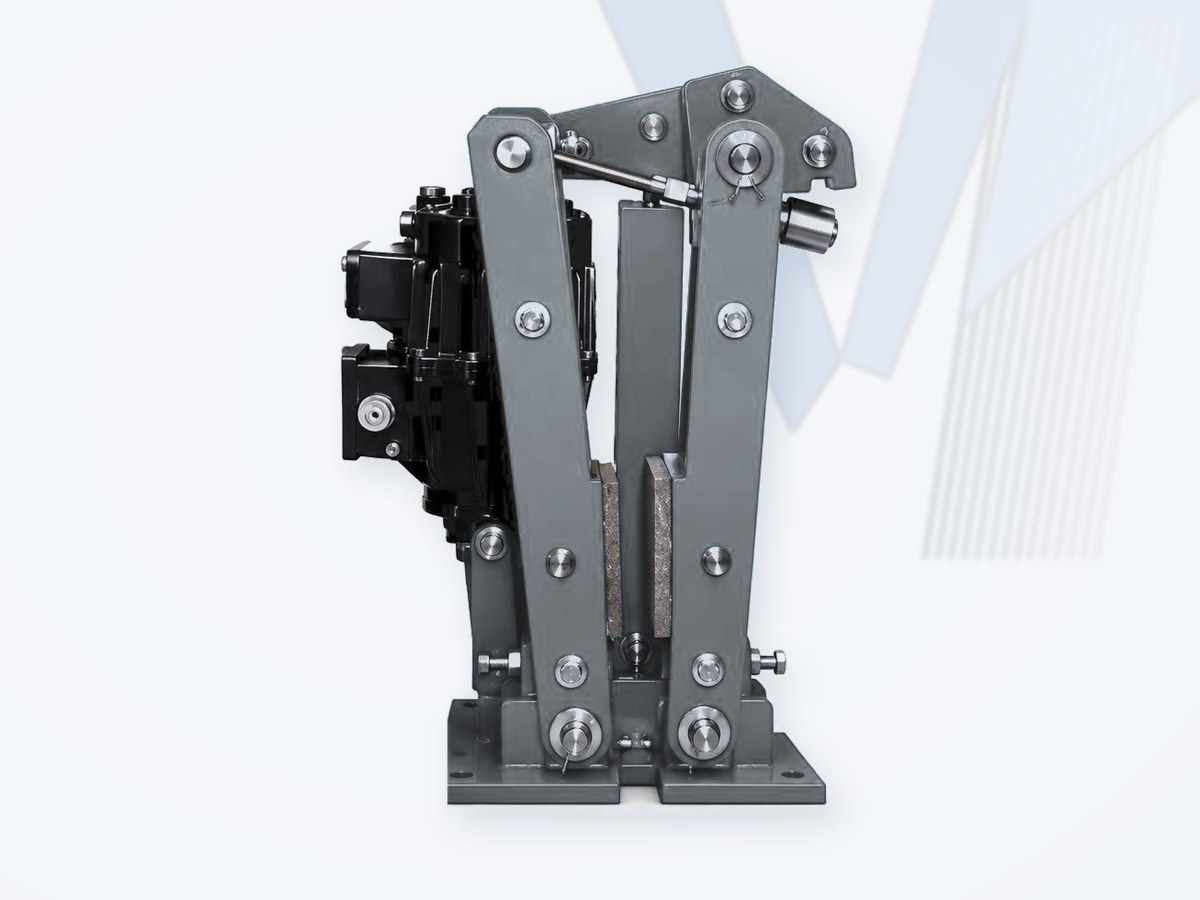
Industrial Brakes
Drum brakes, disc brakes, selection, safety, maintenance & replacement.
View →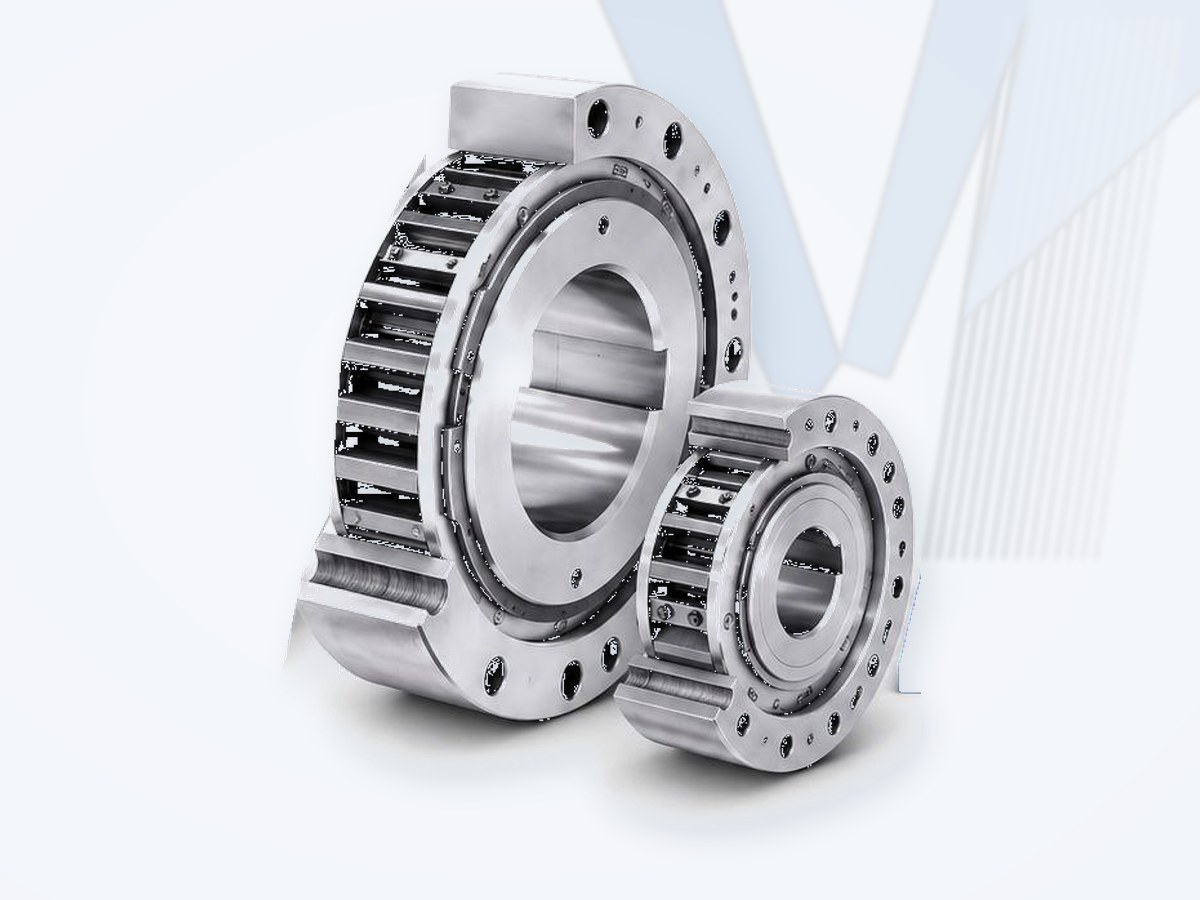
Backstops & Freewheels
Engineering definition, selection, installation, maintenance & replacement guide for industrial backstops.
View →Torque Limiters & Overload Protection
Slip clutches and torque limiters that protect drives from overload and jamming.
View →Safety Couplings & Clutches
Overload-release couplings, torque-limiting couplings, slip clutches and disengaging clutches.
View →Motion & Drive Monitoring
Brake release and wear monitoring, speed and zero-speed sensing, direction monitoring and overload trip interfaces.
View →Accessories & Spare Parts
Brake pads and linings, discs and drums, thrusters, rectifiers, springs, switches and replacement modules.
View →What are safety & protection products?
In power transmission, safety and protection products are mechanical, electromechanical and monitoring devices designed to stop or hold motion, prevent unwanted reverse rotation, limit transmitted torque or detect unsafe and abnormal drive conditions. The family focuses on drive-train protection and motion management rather than general plant safety equipment or personal protective equipment (PPE).
Safety versus protection: safety-oriented devices may support risk-reduction functions, such as spring-applied holding brakes; machinery-protection devices primarily protect drive components, such as torque limiters. Some devices contribute to both, but no product is automatically safety-rated merely because it is called a safety coupling or brake.
Product Families
| Product family | Main product types | Primary purpose |
|---|---|---|
| Industrial Brakes & Braking Systems | Disc; drum; electrohydraulic; hydraulic; electromagnetic; spring-applied / fail-safe; service and holding brakes | Controlled stopping, deceleration and load holding |
| Backstops & Freewheels | High-speed; low-speed; gearbox-integrated; conveyor holdbacks; overrunning clutches; one-way clutches | Prevent unintended reverse rotation or permit one-way drive action |
| Torque Limiters & Overload Protection | Friction; ball-detent; positive-disengagement; shear-pin; torque-limiting modules | Slip, limit or interrupt torque during overload |
| Safety Couplings & Clutches | Overload-release couplings; torque-limiting couplings; slip clutches; disengaging clutches | Protect connected equipment by limiting / disconnecting drive torque |
| Motion & Drive Monitoring | Brake release / wear status; speed and zero-speed sensing; direction / rotation monitoring; overload trip interfaces | Monitor drive status and support protective control functions |
| Accessories & Spare Parts | Brake pads / linings; discs / drums; thrusters; rectifiers; springs; switches; replacement modules | Maintain, repair and integrate protection devices |
Industrial Brakes & Braking Systems
Industrial brakes absorb kinetic energy during deceleration or provide holding torque when a machine is stationary. The correct design depends on duty cycle, stopping time, rotational speed, reflected inertia, load direction, available actuation power and required fail-safe behaviour.
- Disc brakes: compact friction systems with calipers and rotors for conveyors, cranes, hoists and process machinery.
- Drum brakes: shoe-based braking for industrial drives, lifting equipment and material handling.
- Electrohydraulic and hydraulic brakes: actuated or released by hydraulic systems, often with spring-applied fail-safe arrangements.
- Spring-applied / fail-safe brakes: normally engaged when release energy is absent, subject to product design and validated machine-level safety requirements.
- Service vs holding vs emergency duty: verify that the proposed brake is rated for the intended energy, cycle and safety function; these duties are not interchangeable.
Backstops & Freewheels
A backstop or holdback allows permitted rotation while blocking unintended reverse rotation. Freewheel devices can also serve overrunning or indexing functions; these are different operating modes and should not be treated as equivalent.
- High-speed backstops: installed on appropriate gearbox or intermediate shafts, where allowed by gearbox design and speed / torque limits.
- Low-speed backstops: commonly mounted on pulley, head or other low-speed shafts, subject to torque and installation constraints.
- Integrated / external configurations: assess envelope, lubrication, shaft fit, direction, reaction-arm load and mounting.
- Overrunning clutches: transmit torque in one operating condition and freewheel in another; not all are suitable as backstops.
Torque Limiters, Safety Couplings & Clutches
Torque-limiting devices help prevent drivetrain damage caused by jams, collisions, unexpected load spikes and process disturbances. Operating principles include frictional slipping, ball-detent disengagement and sacrificial shear elements. Re-engagement may be automatic, position-dependent or manual, depending on model.
Safety coupling, overload coupling, overload clutch and torque limiter may describe overlapping technologies. MECHATRIC stores each manufacturer series once and maps it to multiple discovery categories rather than duplicating products.
Monitoring, Accessories & Integration
Monitoring components can report brake release, lining wear, rotational speed, direction, zero speed or overload trip conditions. Such signals are only one part of a complete protective control system; functional safety claims require documented components, system architecture, diagnostic coverage and application-level validation.
Engineering Selection Guide
| Step | Required engineering check |
|---|---|
| 1. Define hazard / failure mode | Overload, rollback, unintended motion, holding requirement, stopping demand, or monitoring need. |
| 2. Establish operating data | Motor kW, speed, torque, gear ratio, shaft location, direction, inertia, starts / stops per hour. |
| 3. Quantify loads | Continuous and peak torque, reverse torque, dynamic effects, duty cycles and emergency cases. |
| 4. Select principle | Friction brake vs fail-safe brake; backstop vs overrunning clutch; slipping vs disengaging limiter. |
| 5. Check mechanical fit | Bore, keyway, shaft / hub fits, mounting interface, reaction arm, envelope, service access. |
| 6. Check actuation / control | Voltage, thruster, hydraulic pressure, release time, switch interfaces, PLC logic. |
| 7. Check environment | Temperature, dust, moisture, corrosion, potentially explosive atmosphere where applicable. |
| 8. Verify duty and safety | Brake energy / thermal capacity, overload behaviour, stopping distance, relevant risk assessment. |
| 9. Review manufacturer limits | Published ratings, derating, permissible speed, lubrication, inspection and installation. |
| 10. Validate & document | Datasheets, drawings, calculations, maintenance plan and commissioning tests. |
Replacement & Interchange Methodology
MECHATRIC evaluates replacement options through the existing model identification, dimensional survey, application loads, manufacturer technical data and commissioning requirements. A similar appearance or nominal torque alone does not establish interchangeability.
| Classification | Meaning |
|---|---|
| Direct Interchange | Documented dimensional and functional interchange with verified duty and interfaces. |
| Dimensionally Compatible | Physical mounting fit established; performance and duty still require engineering confirmation. |
| Functionally Equivalent | Required operating function may be achieved with different interfaces or modifications. |
| Engineering Review Required | Insufficient evidence or a critical-duty change requires detailed assessment before quotation. |
Critical cross-checks: rated / peak torque; braking torque and thermal duty; freewheel direction and speed; release / engagement behaviour; brake response time; bore and mounting; torque arm; control interface; environmental limits; documented safety suitability. No blanket equivalence is implied between manufacturers.
Industrial Applications & Solutions
| Industry / application | Typical protective functions |
|---|---|
| Mining & bulk material handling | Conveyor stopping and rollback prevention; crusher overload isolation; long-incline drive protection. |
| Cement plants | Bucket elevator backstops; conveyor brakes; crusher and mill auxiliary drive protection. |
| Steel & metals | Crane and hoist braking; process-line overload protection; controlled handling motions. |
| Oil, gas & petrochemicals | Application-specific overload protection, reverse-rotation control and brake systems where appropriate. |
| Power generation | Overrunning drive arrangements, pump / fan reverse-rotation prevention, auxiliary machinery brakes. |
| Water & wastewater | Pump and blower reverse-rotation protection and mechanical drive overload protection. |
| OEM machinery | Integrated safety couplings, brake monitoring, overload trip interfaces and custom packaging. |
Request for Quotation: Engineering Data Checklist
- General: machine type, industry, location, manufacturer / model, photos, drawings, quantity, operating conditions and urgency.
- Brake: required braking / holding torque, shaft speed, inertia, stop time, duty cycle, fail-safe state, actuator power, disc / drum dimensions, pad details.
- Backstop / freewheel: permitted and blocked rotation direction, installation shaft, maximum reverse torque, running / freewheel speed, reaction-arm details, lubrication.
- Torque limiter: operating / peak torque, required trip or slip threshold, restart method, allowable residual torque, mounting dimensions and trip signal.
- Monitoring: measured state, sensor outputs, control voltage, environment and any validated functional-safety requirements.
Standards and claims: brake, backstop and overload device suitability must be assessed for the specific machine, load, duty and hazards. ISO 12100 can inform machine risk assessment; ISO 13849-1 or IEC 62061 may be relevant when a safety-related control function is specified - these references are not blanket product certifications. No SIL, PL, ATEX / IECEx rating or emergency-stop suitability is claimed without product evidence. Manufacturer references (e.g. RINGSPANN, mayr, KTR) are independent technical references, not claims of agency, inventory or verified interchangeability.
Leading Manufacturers Worldwide
Well-known European, American and Asian (Japanese and Korean) manufacturers of safety & protection products.
| Manufacturer | Country | Product focus |
|---|---|---|
| Pintsch Bubenzer | Germany | Industrial drum and disc brakes |
| SIBRE | Germany | Drum and disc brakes, thrusters |
| Svendborg Brakes (Regal Rexnord) | Denmark | Industrial disc brakes |
| Westcar | Italy | Fluid and gear couplings, drum and disc brakes |
| mayr power transmission | Germany | Backlash-free couplings, safety brakes, torque limiters |
| RINGSPANN | Germany | Backstops, freewheels, brakes |
| Stieber (Regal Rexnord) | Germany | Backstops and freewheels |
| Regal Rexnord (Falk, Kop-Flex, Thomas, Rexnord) | USA | Grid, gear and disc couplings; gear drives; backstops; roller chain |
| Hindon | USA | Industrial drum and disc brakes |
| Tsubaki | Japan | Couplings, POWER-LOCK, backstops, chains |
| Miki Pulley | Japan | Precision couplings, electromagnetic brakes |
| Ogura | Japan | Electromagnetic clutches and brakes |
Listed for market information only. Brand names belong to their owners; their mention does not imply that MECHATRIC represents, distributes for or is authorized by these manufacturers. Product availability and equivalents are confirmed per enquiry.
Need drive protection for your machine?
Send the drive data, existing manufacturer / model and the protection function required - MECHATRIC reviews the selection or replacement and prepares the RFQ.
Frequently Asked Questions
What is the difference between a backstop and a brake?
A backstop normally prevents rotation in one direction, while a brake applies resistance to stop, slow or hold motion. The functions are not generally interchangeable.
Is every spring-applied brake a certified safety brake?
No. Spring application is a design principle; suitability for a defined safety function depends on product documentation and machine-level risk assessment.
Are safety couplings and torque limiters the same?
The terms overlap. Many safety couplings limit or disconnect torque, but operating principles and re-engagement behaviours differ.
Can a brake or backstop be replaced with another brand?
Potentially, after verified torque, duty, dimensions, direction, mounting, control and relevant safety checks. Brand or visual similarity is insufficient.
What information is needed to size a conveyor backstop?
Drive layout, shaft location, gear ratio, speed, load, reverse torque, conveyor geometry and manufacturer selection requirements.
Does MECHATRIC supply complete safety systems?
MECHATRIC may support engineering selection and sourcing of relevant products; complete machine safety design, certification and integration scope must be agreed and verified per project.