
Belts & Pulleys
Belt drive systems - engineering selection, sizing, replacement & interchange guide.
Industrial Belts & Pulleys for Power Transmission
Power transmission belts, V-belt sheaves, synchronous/timing pulleys, Poly-V drives, flat-belt systems, taper-bushed pulleys, keyless shaft-hub interfaces and engineered replacement solutions.
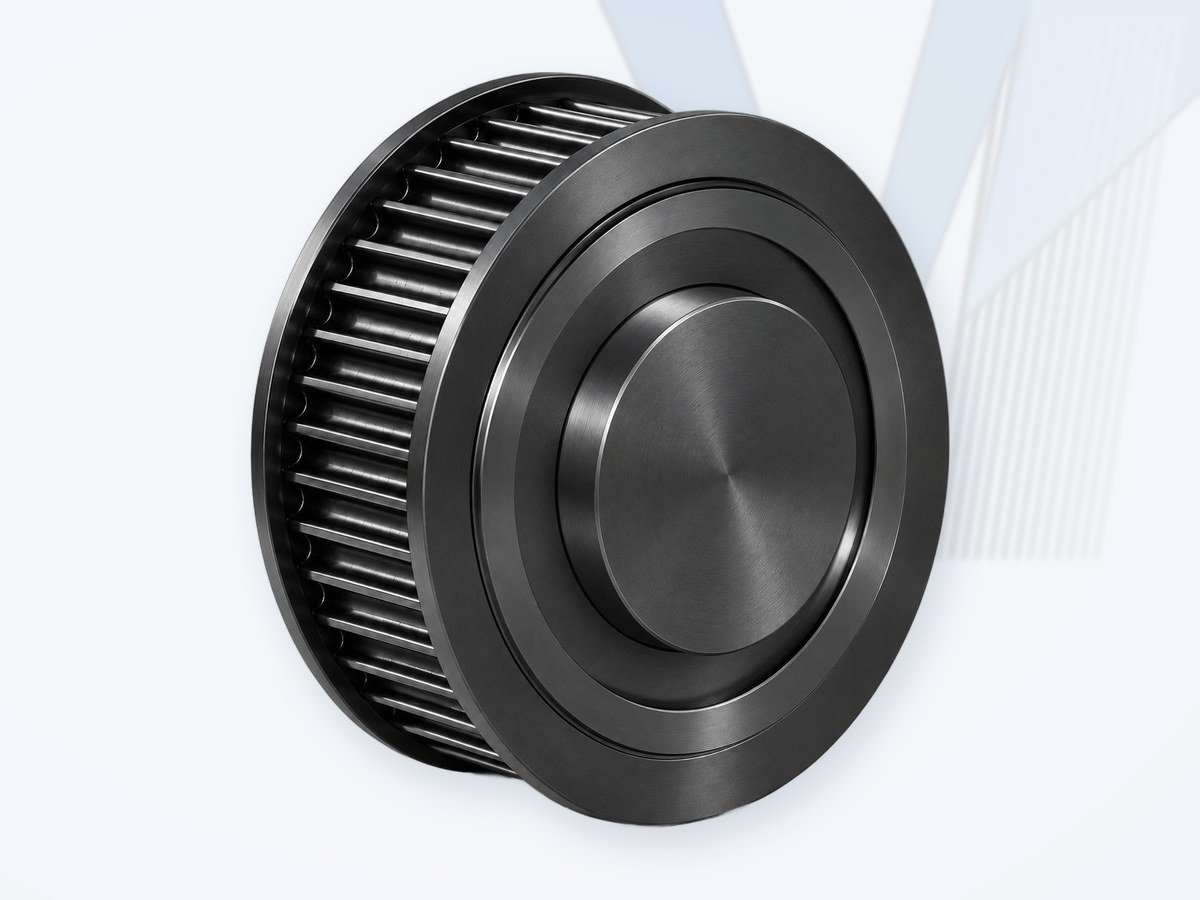
Timing Pulleys
Synchronous drive pulleys in imperial, metric and HTD-type profiles - selection, bore options and replacement support.
View →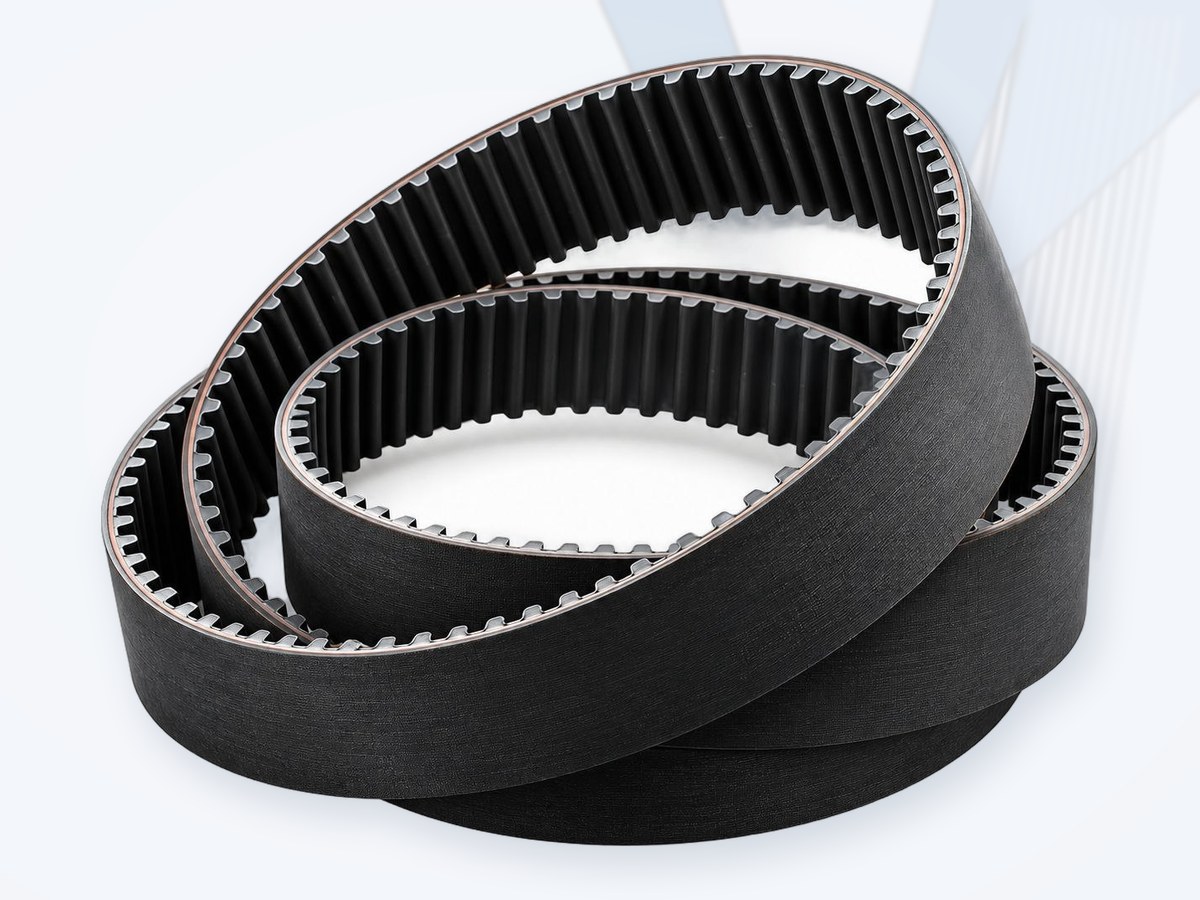
Timing / Synchronous Belts
HTD, high-performance, STD-type and imperial synchronous belts, including double-sided versions - selection and replacement support.
View →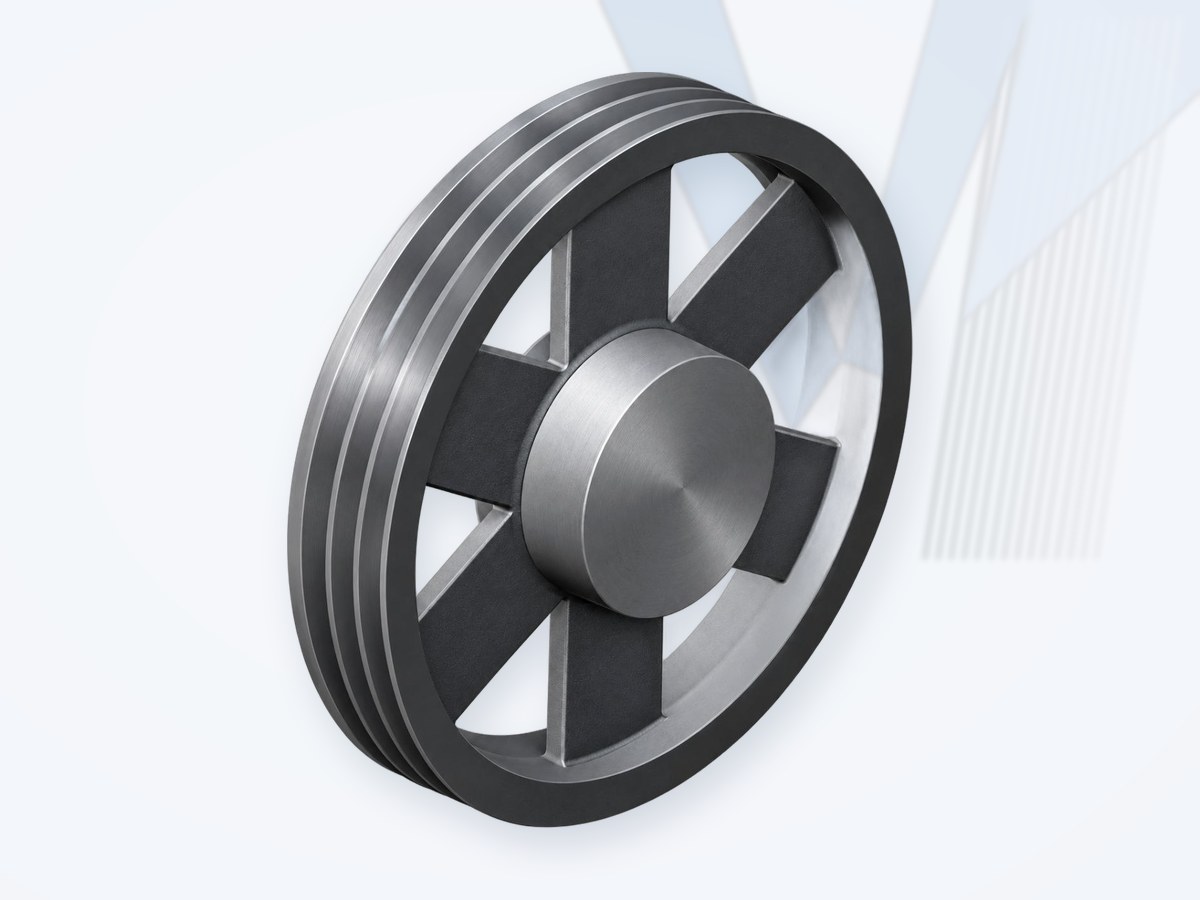
V-Belt Pulleys
V-groove pulleys to DIN 2211 for SPZ, SPA, SPB and SPC belts - solid hub, taper bush, adjustable…
View →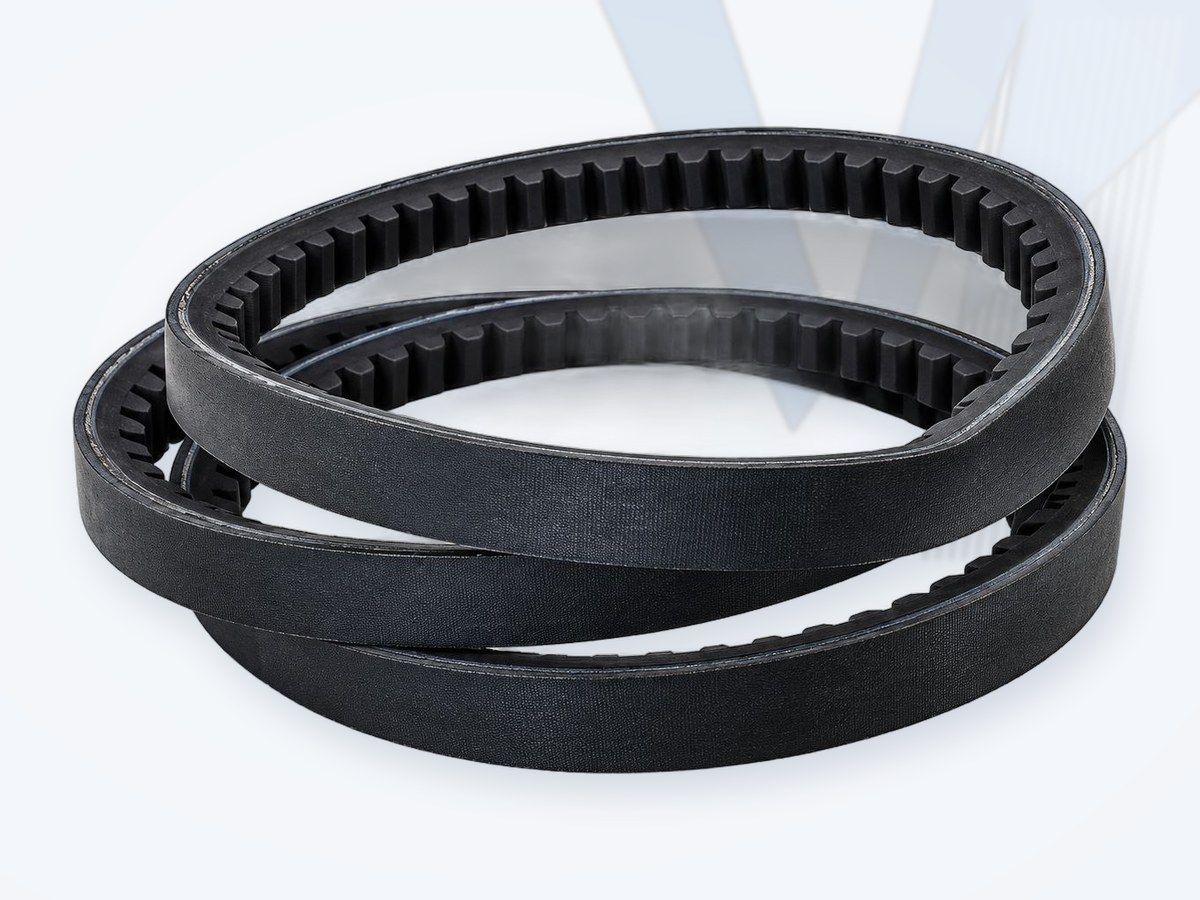
V-Belts
Classical, narrow wedge, cogged, banded and variable-speed V-belts - section identification, selection and replacement support.
View →Polyurethane Belts
Polyurethane timing and conveying belts, endless or open-ended, for automation, linear and conveying drives.
View →Drive Regulation & Instruments
Belt tension meters, motor bases, tensioners and laser alignment tools for correct belt-drive installation.
View →Pulley & Belt Drive Calculation & Configuration
Engineering calculation and configuration of V-belt, timing belt and polyurethane belt drives - from operating data to a…
View →What is a belt and pulley drive?
A belt and pulley drive is a mechanical power-transmission system that transfers rotational power from a driving shaft - commonly an electric motor, engine or gearbox - to a driven shaft through one or more flexible belts running over pulleys or sheaves. Depending on the belt system, torque is transmitted by friction or by positive tooth engagement.
Belt drives can provide economical transmission, flexible shaft spacing, quiet operation, shock isolation, straightforward maintenance and convenient speed-ratio changes. Their performance depends on correct belt profile, pulley geometry, tension, alignment, wrap, speed, environmental conditions and the manufacturer's rating method.
How a Belt Drive Works
- Driver pulley: mounted on the power source and establishes input speed.
- Driven pulley: receives power and contributes to the output speed/torque relationship.
- Belt: transmits circumferential force through friction or tooth engagement.
- Speed ratio: primarily follows effective or pitch diameters, subject to the exact belt system.
- Tension: must be high enough for reliable transmission but not excessive; over-tension increases shaft and bearing loads.
Ideal two-pulley relationship: n1 / n2 = D2 / D1, where n is rotational speed and D is the relevant effective/pitch diameter. Actual design must use the selected manufacturer's pitch definitions, rating data and correction factors.
Core Benefits of Belt Drives
- Flexible center distance and convenient layout compared with many rigid drives.
- Speed ratio can often be changed by pulley selection without changing the prime mover.
- Friction belt systems can provide useful shock/vibration isolation.
- Synchronous systems provide positive engagement and accurate speed ratio.
- Routine inspection and component replacement are generally straightforward.
Main Industrial Belt Technologies
| Drive type | Transmission principle | Typical strengths | Typical applications |
|---|---|---|---|
| Classical / Narrow V-Belt | Friction between belt sidewalls and pulley grooves. | Robust, widely available, economical; multiple-belt arrangements possible. | Fans, pumps, compressors, conveyors, crushers, auxiliaries. |
| Synchronous / Timing Belt | Positive engagement between belt teeth and pulley grooves. | No normal slip; accurate speed ratio; high efficiency when correctly selected. | Automation, packaging, indexing, machine tools, process equipment. |
| Poly-V / Ribbed Belt | Multiple longitudinal ribs engage a compact pulley. | Flexible, compact, suitable for small pulley diameters and higher speeds where rated. | Fans, compact machinery, auxiliaries, HVAC and OEM drives. |
| Flat Belt | Friction drive over flat/crowned or engineered pulleys. | Efficient high-speed operation and long-center possibilities where properly engineered. | Special machinery, textile/process equipment, high-speed systems. |
Industrial Pulley / Sheave Types
- V-belt pulleys / sheaves: classical and narrow profiles, including SPZ, SPA, SPB and SPC where the selected belt standard applies.
- Synchronous / timing pulleys: tooth geometry must match the exact belt pitch and profile. HTD, RPP-type and other systems must not be assumed mutually interchangeable.
- Poly-V pulleys: multi-rib groove geometry matched to the specified rib profile.
- Flat-belt pulleys: selected for tracking, face width, surface geometry, speed and belt construction.
- Taper-bushed pulleys: removable-bush mounting for convenient shaft installation. Bush dimensions and compatibility must be verified for the exact system; nominally similar taper-bush systems are not automatically interchangeable.
- Keyless-mounted pulleys: pulleys or hubs used with friction locking assemblies. These can eliminate keyway clearance at the shaft-hub interface, but this does not make every complete belt drive "zero backlash".
Important Compatibility Rule
The belt and pulley form a matched transmission system. Section, pitch, tooth form, groove angle, pitch diameter definition, belt width, pulley face width and manufacturer-specific geometry must be compatible. This is especially important for synchronous belts, where apparently similar tooth pitches can have different profiles and engagement characteristics.
Never select a timing pulley only by tooth count and pitch. Verify the exact tooth profile and the belt manufacturer's compatibility data.
How to Select an Industrial Belt & Pulley Drive
| Step | Engineering check | What to confirm |
|---|---|---|
| 1 | Define power and duty | Rated/absorbed power, driver and driven machine, operating hours, starts/hour, shock, reversing, overloads and service factor. |
| 2 | Define speeds and ratio | Driver rpm, required driven rpm, target ratio and allowable speed tolerance. |
| 3 | Select belt technology | V-belt, synchronous/timing, Poly-V, flat or special belt based on power, speed, slip, accuracy, maintenance and environment. |
| 4 | Select preliminary pulley sizes | Minimum recommended pulley diameter/tooth count, belt speed, pulley rpm, ratio and installation envelope. |
| 5 | Check center distance and belt length | Shaft centers, standard belt lengths, installation allowance, take-up range and future re-tensioning. |
| 6 | Check wrap / tooth engagement | Arc of contact on small pulley; number of teeth in mesh for synchronous drives; idler need and location. |
| 7 | Verify power capacity | Manufacturer-rated power/torque, correction factors, number of V-belts or synchronous belt width. |
| 8 | Check tension and shaft loads | Installation tension, running tension, overhung load, bearing capacity and shaft deflection. |
| 9 | Verify shaft-hub interface | Bore, key/keyway, taper bush, keyless locking device, hub dimensions and allowable torque. |
| 10 | Verify limits and environment | Belt speed, pulley rpm, temperature, dust, oil, water, corrosion, static conductivity, hazardous-area/project requirements. |
| 11 | Verify alignment and balance | Angular/parallel pulley alignment, runout, pulley balance and high-speed requirements. |
| 12 | Document the final selection | Exact belt designation, pulley geometry, bush/hub, tensioning method, installation data and spare-part strategy. |
Speed Ratio, Belt Speed & Geometry
For an ideal two-pulley drive, the speed ratio is approximately based on the relevant effective or pitch diameters. For synchronous drives, tooth count is normally the more direct ratio basis. Final sizing must also check center distance, standard belt length, wrap angle, tooth engagement, minimum pulley size and belt speed.
Design caution: the smallest pulley often governs belt flexing severity, belt speed, available wrap and transmitted-power rating. A ratio that is mathematically correct may still be mechanically unsuitable.
Belt Tension, Alignment & Bearing Loads
Correct tension is essential. Under-tension can cause slip, heat, tooth jump or unstable tracking; over-tension can shorten belt life and overload shafts and bearings. Installation tension should follow the selected belt manufacturer's method, such as force-deflection, frequency measurement or another specified procedure.
Pulley alignment must be checked in both angular and parallel directions. Also verify pulley runout, shaft condition, mounting security and guard clearance. Re-check tension after the initial run-in period when required by the belt manufacturer.
Multiple V-Belt Drives
When several V-belts operate in parallel, the belts should be suitable for multi-belt service and installed as the manufacturer's recommended matched set or equivalent tolerance-controlled set. Replacing only one belt in a worn multi-belt drive can produce unequal load sharing.
Synchronous Belt Drive - Additional Checks
- Exact pitch and tooth profile compatibility between belt and pulley.
- Minimum pulley tooth count and recommended minimum diameter.
- Required belt width based on transmitted power/torque and correction factors.
- Number of teeth in mesh on the smaller pulley.
- Flange requirements and belt tracking.
- Installation tension and prevention of tooth jump under peak load.
- Positioning accuracy, torsional stiffness and backlash requirements of the complete drive.
- Environmental compatibility of belt compound and tensile member.
Equivalent & Replacement of Belts and Pulleys
An equivalent belt or pulley should never be selected only because nominal dimensions appear similar. Replacement requires confirmation of the functional, dimensional and performance interface of the complete drive.
| Belt replacement check | Engineering requirement |
|---|---|
| Technology / profile | V-belt, synchronous/timing, Poly-V, flat or special construction. |
| Section / pitch / tooth or rib profile | Must match the intended pulley geometry and applicable standard/system. |
| Length / width | Use the correct nominal, datum/effective or pitch-length convention for the selected belt family. |
| Construction | Tensile member, cover, tooth facing, compound and special construction where relevant. |
| Capacity | Required power/torque, speed, service factor, start/peak duty and number of belts / belt width. |
| Environment | Temperature, oil, abrasion, dust, moisture, antistatic/static-conductive or other requirements. |
| Pulley replacement check | Engineering requirement |
|---|---|
| Compatible belt profile | Groove or tooth geometry must match the belt system. |
| Geometry | Groove count / face width; pitch/effective diameter; outside diameter where relevant; tooth count and pitch. |
| Shaft interface | Bore, keyway, taper bush or keyless locking arrangement. |
| Hub / envelope | Hub dimensions, shaft position, guard clearance and available installation space. |
| Material / manufacturing | Cast iron, steel, aluminum or other material as required; groove/tooth quality and surface condition. |
| Speed / balance | Maximum operating rpm, peripheral speed, runout and balance requirement. |
| Ratio preservation | Replacement must maintain the required effective/pitch diameter or tooth-count ratio unless redesign is intended. |
A technically correct equivalent must preserve the required speed ratio, power capacity, belt-pulley compatibility, shaft interface, alignment, tensioning range and operating safety. A redesign may intentionally change some of these parameters, but it must then be re-rated as a new drive.
MECHATRIC Interchange Classification
- Direct Interchange: verified replacement for the specified component and drive conditions.
- Dimensionally Compatible: physical fit is verified, but capacity/performance still requires confirmation.
- Functionally Equivalent: meets the intended duty but may differ in dimensions, mounting or maintenance details.
- Engineering Review Required: candidate identified; final compatibility not yet verified.
Common Industrial Applications
| Industry | Typical belt-drive applications |
|---|---|
| Cement | Fans, conveyors, crushers, auxiliary drives and material-handling equipment. |
| Mining & Mineral Processing | Conveyors, screens, crushers and processing machinery. |
| Steel & Metals | Fans, pumps, auxiliaries and material-handling systems. |
| Oil, Gas & Petrochemical | Fans, blowers, pumps and packaged auxiliaries where belt drives are specified. |
| Power Generation | Fans, cooling auxiliaries and supporting rotating equipment. |
| Water & Wastewater | Pumps, blowers and treatment equipment. |
| Industrial Machinery & OEM | Packaging, machine tools, HVAC, compressors and production machinery. |
Engineering Data Required for RFQ
| Data group | Information to provide |
|---|---|
| Input / driver | Motor/engine/gearbox type; rated and absorbed power; driver rpm; starting method or VFD where relevant. |
| Driven machine | Machine type, required rpm, duty/load characteristics, inertia where relevant. |
| Existing belt | Brand, full designation, profile/pitch, length, width, quantity, construction markings and photos. |
| Existing pulleys | Driver/driven diameters or tooth counts, grooves/teeth, face width, material, photos and drawings. |
| Shaft interface | Driver/driven shaft diameters, keyways, taper bushes or locking assemblies. |
| Geometry | Center distance, adjustment/take-up range, guard/envelope limits and idler arrangement. |
| Service | Operating hours/day, starts/hour, shock/peak load, reversing and required speed accuracy. |
| Environment | Temperature, dust, oil, water/humidity, outdoor/corrosive service, static conductivity requirements. |
| Maintenance | Existing failure mode, belt life, tensioning method, pulley wear/runout and maintenance history. |
| Replacement goal | Exact replacement, alternate brand, redesign, higher capacity, reduced maintenance or improved availability. |
Failure Symptoms - What They May Indicate
| Observed symptom | Possible engineering causes to investigate |
|---|---|
| Rapid belt wear / cracking | Pulley too small, excessive temperature, misalignment, wrong profile, contamination, excessive tension or aging. |
| Belt slip / heat | Insufficient tension, overload, worn grooves, inadequate wrap, contamination or incorrect belt section. |
| Unequal wear in multi-belt drive | Mismatched belts, worn grooves, misalignment, unequal tension or pulley runout. |
| Synchronous tooth wear / jump | Incorrect tension, overload, insufficient teeth in mesh, incompatible tooth profile or alignment issue. |
| Bearing / shaft problems | Excessive belt tension, excessive overhung load, misalignment or unsuitable pulley position. |
| Tracking / edge wear | Pulley alignment, flange condition, pulley geometry, shaft deflection or installation problem. |
Technical Boundaries & Safety
- Use guards appropriate to the machine and local/project safety requirements; never operate an exposed belt drive where guarding is required.
- Lock out and isolate the machine before inspection, tension adjustment or component replacement.
- Do not use pulley outside diameter as a substitute for pitch/effective diameter unless the selected system explicitly defines the relationship.
- Do not mix synchronous belt and pulley tooth profiles without documented compatibility.
- Do not assume taper bushes from different systems or suppliers are interchangeable merely because the nominal size looks similar.
- High-speed pulleys require verification of material, manufacturing quality, runout, maximum rpm/peripheral speed and balance.
Why Source Belt & Pulley Solutions Through MECHATRIC?
MECHATRIC supports industrial customers with product identification, engineering selection, drive review, equivalent/replacement evaluation and sourcing of mechanical power-transmission components. The objective is not simply to match a part number, but to verify the complete belt-drive interface and operating requirements before proposing a technically suitable solution.
- Engineering-oriented belt and pulley selection.
- Equivalent and replacement evaluation for existing drives.
- Support for V-belt, synchronous/timing, Poly-V and selected flat-belt applications.
- Pulley, taper-bush, keyless locking and shaft-hub interface review.
- Drive-ratio, center-distance, wrap, tension and operating-limit review.
- Industrial RFQ preparation and technical data verification.
Leading Manufacturers Worldwide
Well-known European, American and Asian (Japanese and Korean) manufacturers of belts & pulleys.
| Manufacturer | Country | Product focus |
|---|---|---|
| Optibelt | Germany | V-belts, timing belts, pulleys |
| ContiTech (Continental) | Germany | V-belts, timing and PU belts |
| SIT S.p.A. | Italy | Flexible, disc, gear and zero-backlash couplings; pulleys, belts, SIT-LOCK, taper bushes |
| Megadyne / Elatech | Italy | Rubber and polyurethane belts |
| Habasit | Switzerland | Polyurethane and conveyor belts |
| Fenner Drives | United Kingdom | Taper-Lock bushes, pulleys, couplings, keyless bushings |
| Gates | USA | V-belts, synchronous belts, pulleys, tension meters |
| TB Wood's (Regal Rexnord) | USA | Couplings, sheaves, bushings |
| Martin Sprocket & Gear | USA | Sheaves, sprockets, bushings |
| Bando Chemical | Japan | V-belts, timing and PU belts |
| Mitsuboshi Belting | Japan | V-belts and timing belts |
| DRB (Dongil Rubber Belt) | Korea | Industrial belts |
Listed for market information only. Brand names belong to their owners; their mention does not imply that MECHATRIC represents, distributes for or is authorized by these manufacturers. Product availability and equivalents are confirmed per enquiry.
MECHATRIC Engineering Support
Send the existing belt/pulley designation, nameplate data, shaft sizes, operating speeds, motor power, center distance and photos/drawings to MECHATRIC for technical review, replacement identification or complete drive re-selection.
Technical note: Final belt-drive sizing must be checked against the current engineering catalog, rating method and installation instructions of the selected belt and pulley manufacturer. Nominally similar profiles are not automatically interchangeable, especially synchronous tooth profiles. Exact ratings, materials, balance limits, certifications and interchangeability must be verified for the selected manufacturer, series, size and application. Brand/family references do not by themselves imply representation, authorization or commercial partnership.
Frequently Asked Questions
Can I replace a V-belt with another brand of the same printed size?
Possibly, but section, length convention, construction, power rating, matched-set requirements and operating environment should be verified.
Are HTD and RPP-type timing belts automatically interchangeable?
No. Similar nominal pitch does not prove tooth-profile compatibility. Verify the exact belt and pulley geometry using current manufacturer data.
How do I calculate pulley speed ratio?
For an ideal drive, ratio is approximately based on effective/pitch diameters; synchronous drives are commonly related by tooth counts. Slip and the selected system's definitions must be considered.
Can I use a smaller motor pulley to reduce speed?
Only after checking minimum pulley diameter/tooth count, belt flexing, belt speed, wrap, capacity and shaft/bearing loads.
How do I select an equivalent pulley?
Match the belt interface, ratio-defining diameter/tooth count, shaft-hub connection, envelope, material, speed/balance requirement and operating duty.