
V-Belt Pulleys
V-groove pulleys to DIN 2211 for SPZ, SPA, SPB and SPC belts - solid hub, taper bush, adjustable and variable-speed designs.
Industrial V-Belt Pulleys
V-groove pulleys for classical and narrow wedge belts, with solid hub, taper-bush or locking-assembly mounting, plus adjustable and variable-speed designs. MECHATRIC supports groove identification, selection, replacement and RFQ preparation.
V-Belt Pulley Families (SIT S.p.A. reference range)
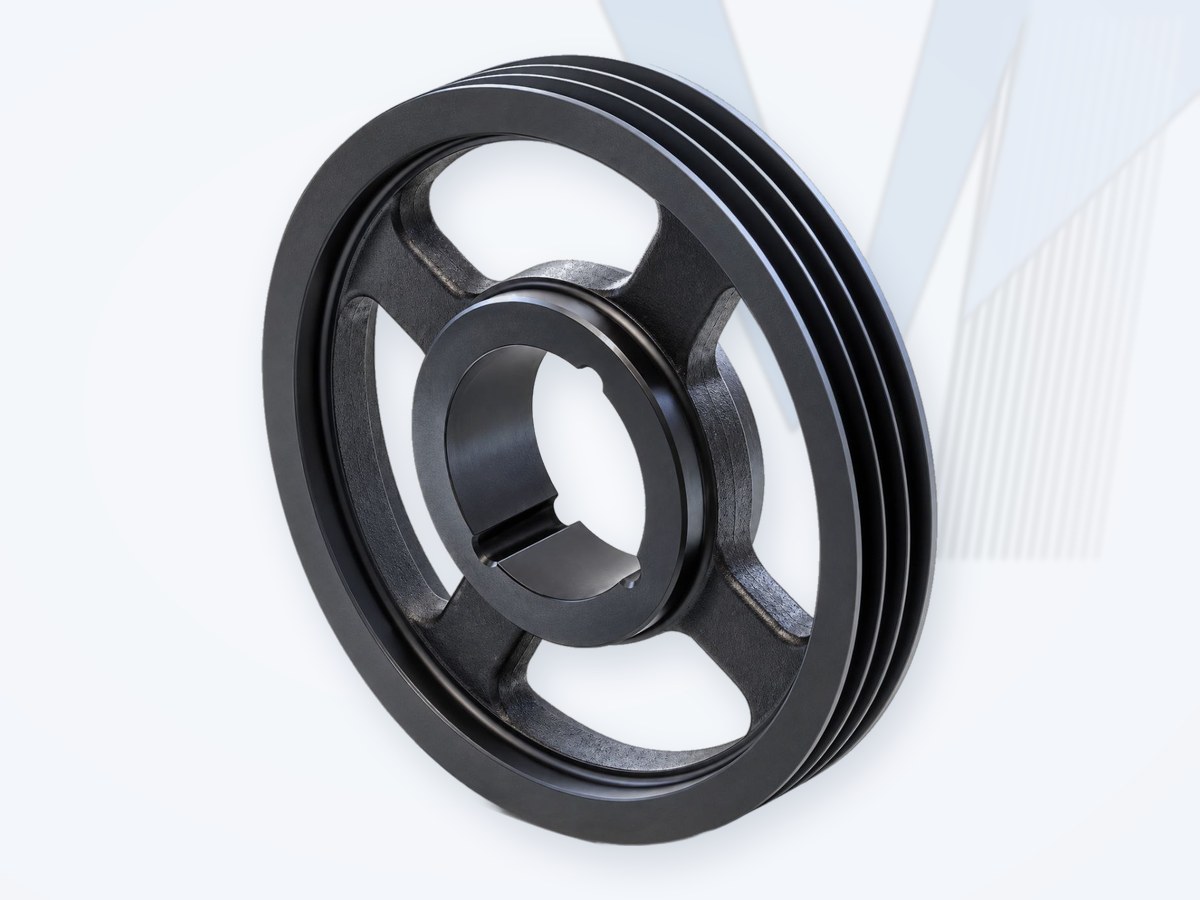
PBT - Taper Bush
Cast iron pulleys for SER-SIT taper bushes; SPZ-Z-3V, SPA-A, SPB-B-5V and SPC-C belts.
Request a Quote →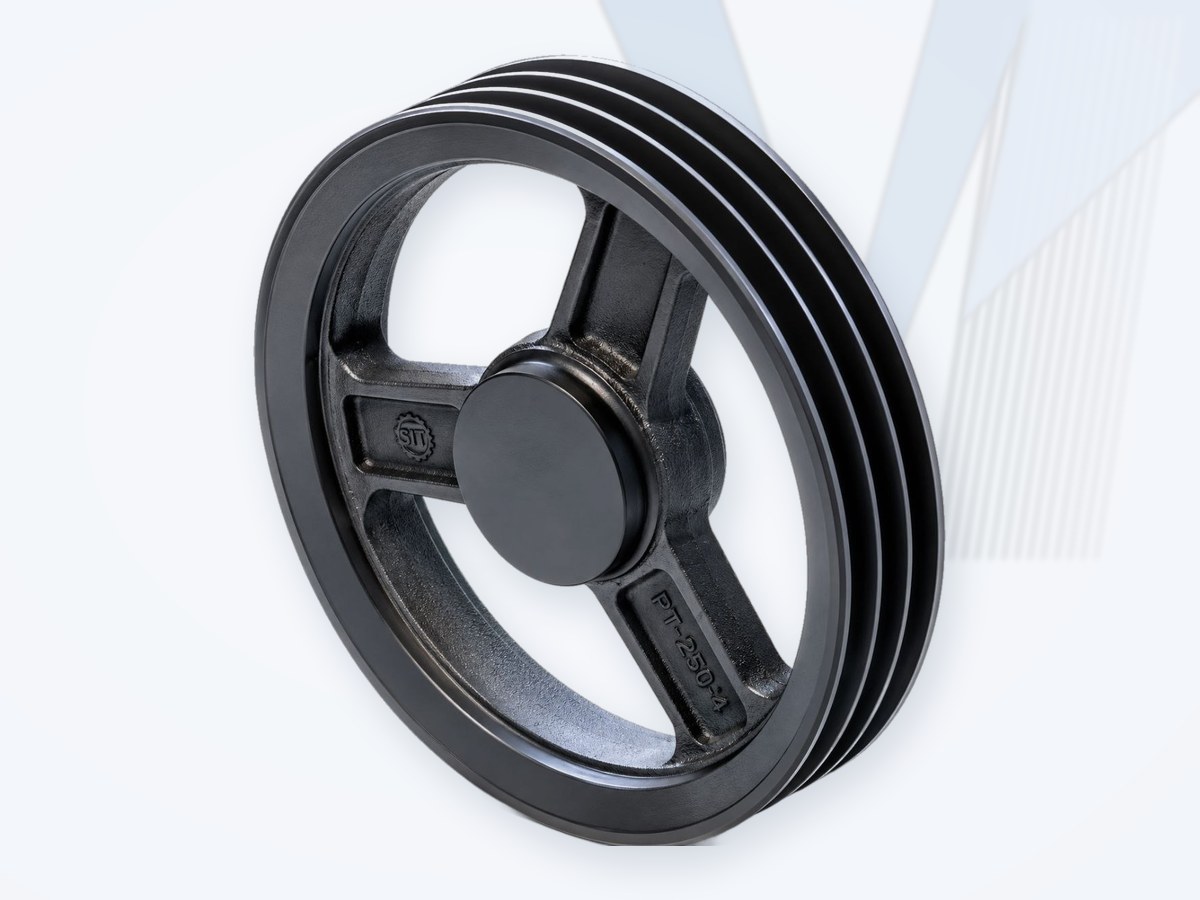
PT - Solid Hub
Cast iron (GG-20/GG-25) pulleys for SPZ-Z-3V, SPA-A, SPB-B-5V and C belts; bored to shaft size.
Request a Quote →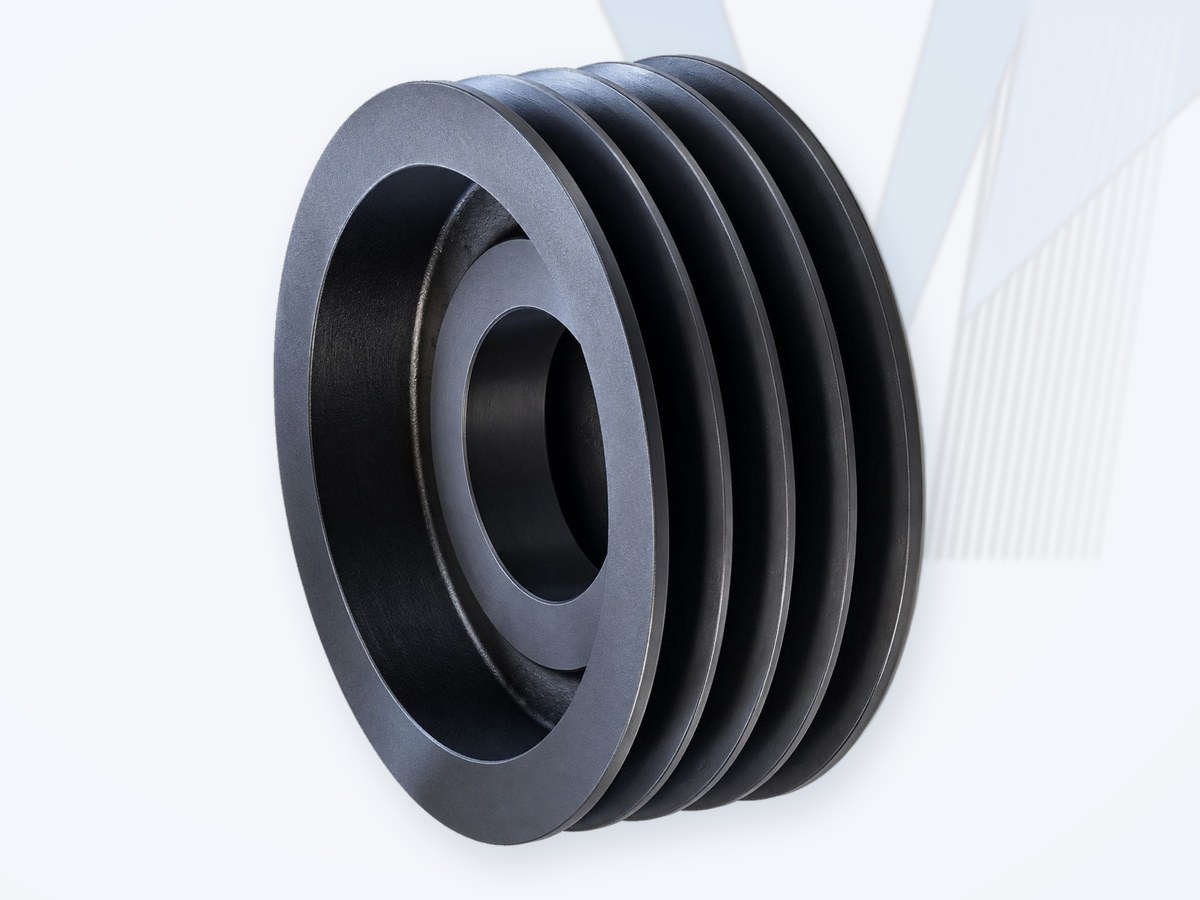
PCT - Locking Assembly Hub
Oversized-hub pulleys for SIT-LOCK CAL 8 self-centring locking assemblies; SPZ to SPC.
Request a Quote →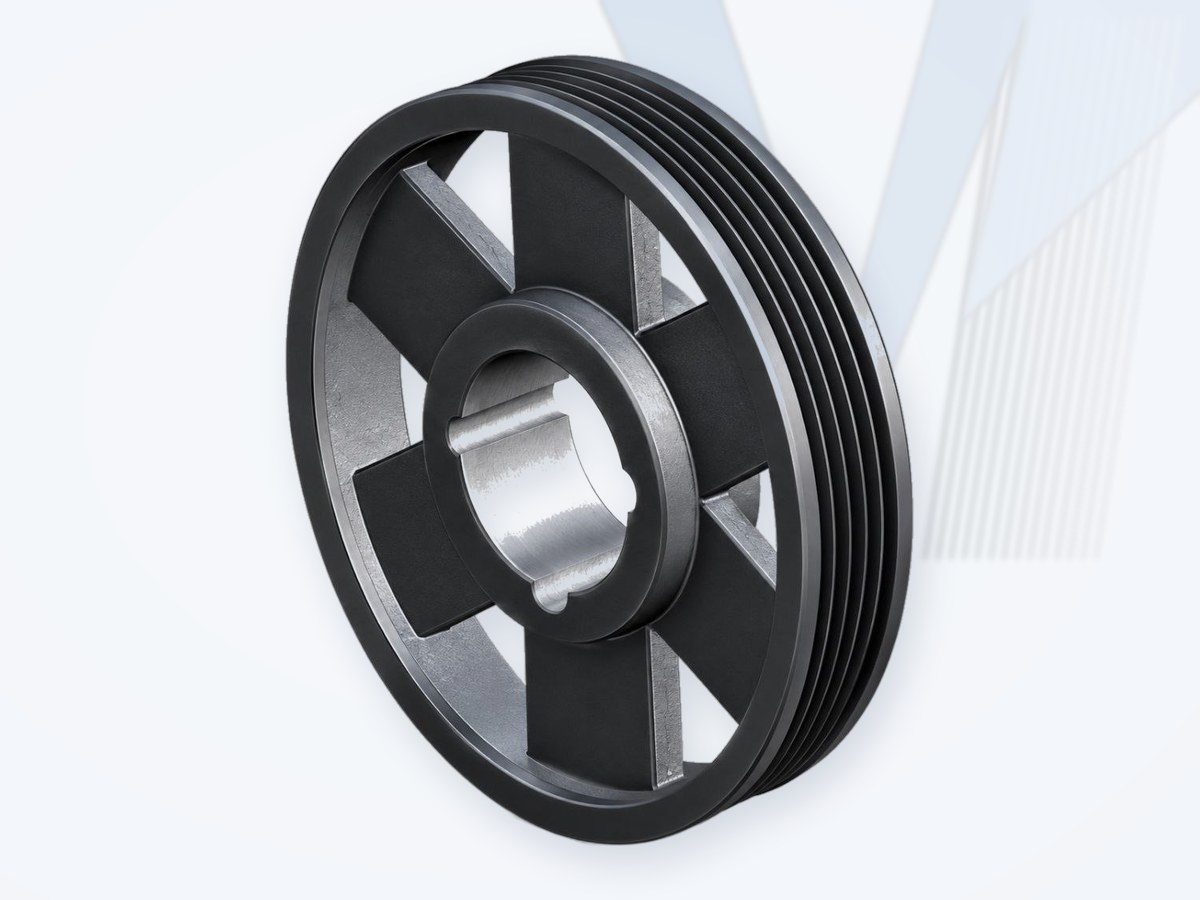
PYB - Poly-V Pulleys
Poly-V (ribbed belt) pulleys for SER-SIT taper bushes; sections J, K, L and M, grooves to ISO 9982.
View Details →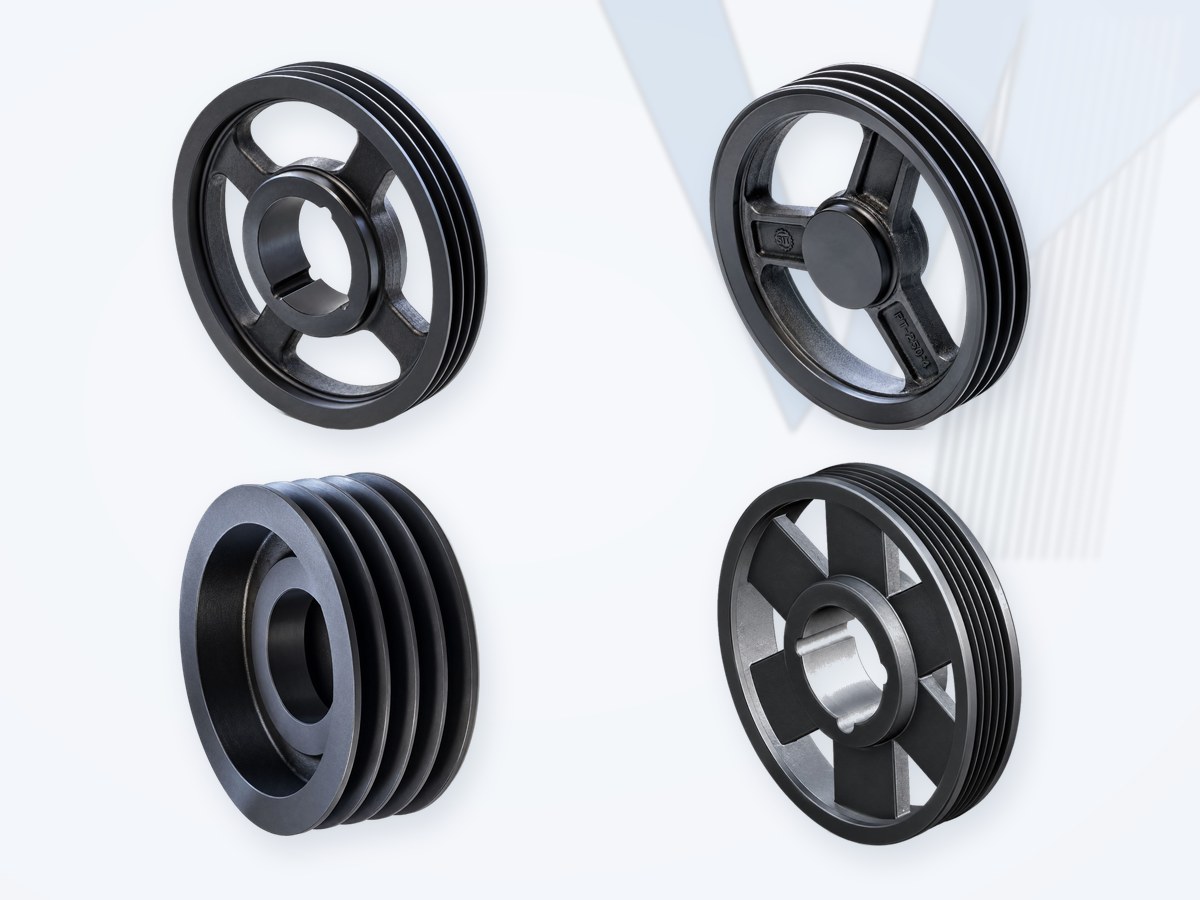
Other & Special V-Belt Pulleys
Custom-manufactured and engineered-to-order V-belt pulleys: special profiles, multi-groove, adjustable-pitch and drawing-based production.
View Details →PYB - Poly-V Pulleys
SIT PYB Poly-V pulleys for multi-ribbed (Poly-V) belts, bored for SER-SIT taper bushes. Grooves comply with ISO 9982; groove angle 40° ± 0.5° for all sections. Standard sections: J, K, L and M.
- Material: steel for diameters up to 50 mm; grey cast iron GG25 above 50 mm. Protective surface treatment.
- Balancing: static balancing grade G6.3 at 1,500 rpm (ISO 1940); higher grades or dynamic balancing on request.
- Peripheral speed: v [m/s] = pulley diameter [mm] × rpm / 19,100. Above 33 m/s steel construction is strongly recommended.
- Special executions: aluminium, thermosetting and thermoplastic versions and custom designs on request.
Groove dimensions and tolerances (ISO 9982)
| Section | Groove pitch P (mm) | rt min (mm) | rb max (mm) | S min (mm) | h (mm) |
|---|---|---|---|---|---|
| H | 1.60 ± 0.03 | 0.15 | 0.30 | 1.3 | 0.8 |
| J | 2.34 ± 0.03 | 0.20 | 0.40 | 1.8 | 1.2 |
| K | 3.56 ± 0.05 | 0.25 | 0.50 | 2.5 | 2.0 |
| L | 4.70 ± 0.05 | 0.40 | 0.40 | 3.3 | 3.0 |
| M | 9.40 ± 0.08 | 0.75 | 3.30 | 6.4 | 4.0 |
P tolerance ± 0.03 mm (cumulative). h = (Dp - De) / 2. Pulley sizes are designated by outside diameter, section and number of ribs (e.g. PYB 200 J 8). Source: SIT S.p.A. catalogue "Poly-V Pulleys - PYB"; data subject to change - confirm with current manufacturer data.
What is a V-belt pulley?
A V-belt pulley (sheave) is a grooved wheel that transmits power through the friction between the flanks of a V-belt and the walls of the pulley groove. The wedge action increases grip, so V-belt drives can transmit high power in a compact, low-cost and shock-tolerant arrangement.
V-belt pulleys are used on pumps, fans, blowers, compressors, crushers, conveyors, mixers and general industrial machinery. One pulley can carry several grooves to run multiple belts in parallel.
The groove must match the belt section. Narrow wedge sections (SPZ, SPA, SPB, SPC) and classical sections (Z, A, B, C) have related but not identical dimensions, and the groove angle changes with pulley diameter.
Match the groove to the belt section and pulley diameter. A worn or wrong groove shortens belt life more than almost any other drive fault.
How a V-Belt Pulley Works
The belt wedges into the groove under tension. Power is transmitted by friction on the groove flanks, not on the groove bottom - the belt should never touch the bottom of the groove. As the pulley diameter decreases the belt bends more, so smaller pulleys use a smaller groove angle (34 degrees) and larger pulleys a wider angle (38 degrees) to keep the flank contact correct.
Belt slip, groove wear, misalignment and incorrect tension are the main causes of short belt life. Pulleys should be checked for groove wear whenever belts are replaced.
Typical Benefits
- Simple and economical power transmission for a wide power range.
- Shock tolerant - controlled slip protects the drive under overload.
- Multi-groove designs for high power with standard belts.
- Flexible mounting - solid hub, taper bush or keyless locking assembly.
- Speed adjustment with adjustable or variable-speed pulleys.
Groove Dimensions - DIN 2211 (narrow wedge belts)
| Section | Datum width bw (mm) | Groove pitch e (mm) | Edge distance f (mm) | 34 degrees for dw | 38 degrees for dw |
|---|---|---|---|---|---|
| SPZ | 8.5 | 12 +/- 0.3 | 8 +/- 0.6 | <= 80 mm | > 80 mm |
| SPA | 11.0 | 15 +/- 0.3 | 10 +/- 0.6 | <= 118 mm | > 118 mm |
| SPB | 14.0 | 19 +/- 0.4 | 12.5 +/- 0.8 | <= 190 mm | > 190 mm |
| SPC / C | 19.0 | 25.5 +/- 0.5 | 17 +/- 1 | <= 315 mm | > 315 mm |
Values as published in the SIT V-pulley catalogue (DIN 2211). Use the full groove table and tolerances for manufacturing or inspection.
Bore & Mounting Options
| Option | Description |
|---|---|
| Taper bush (PBT) | Standard taper bush for quick mounting, removal and easy bore changes. |
| Solid hub (PT) | Pulley is bored and keyed to the shaft; suitable for most standard drives. |
| Locking assembly (PCT) | Keyless self-centring locking element; good axial positioning, no keyway required. |
| Special execution | Steel pulleys, special bores, hubs, balancing or groove counts on request. |
V-Belt Pulley Selection - Engineering Procedure
Define the drive data
Power, driver and driven speeds, duty, start/stop and shock conditions.
Select belt section and number of belts
From the belt manufacturer's power ratings and service factor; respect the minimum pulley diameter for the section.
Select pulley diameters and grooves
Ratio, centre distance and groove count; correct groove angle for the diameter.
Check peripheral speed and material
SIT states its cast iron pulleys are suitable up to 35 m/s; above this, steel pulleys are strongly recommended. Balancing may be required at higher speeds.
Choose bore and mounting
Solid hub, taper bush or locking assembly; shaft diameter, keyway and axial position.
Check alignment and tension
Pulleys aligned in the same plane; belt tension set per the belt manufacturer.
Replacement & Interchange
To replace a V-belt pulley, confirm the belt section, pitch (datum) diameter, number of grooves, groove standard (DIN, ISO or RMA), bore or bush size and hub dimensions. Classical and narrow sections can share pulleys in some cases, but only when the groove dimensions are confirmed for both belts.
- Direct Interchange - same groove standard, section, diameter, groove count and mounting verified.
- Dimensionally Compatible - interfaces verified; drive rating still to be checked.
- Functionally Equivalent - performs the duty with a different arrangement (e.g. taper bush instead of solid hub).
- Engineering Review Required - candidate identified, not yet verified.
Information Required for Selection / RFQ
| Data group | Information to provide |
|---|---|
| Belt | Section (SPZ, SPA, SPB, SPC, Z, A, B, C, 3V, 5V), number of belts, belt brand / designation. |
| Pulley | Pitch (datum) or outside diameter, number of grooves, material, drawing or photos. |
| Mounting | Solid hub bore and keyway, taper bush size or locking assembly; hub length. |
| Drive data | Power, speeds, ratio, centre distance, duty and environment. |
| Quantity | Required quantity and delivery schedule. |
Leading Manufacturers Worldwide
Well-known European, American and Asian (Japanese and Korean) manufacturers of v-belt pulleys.
| Manufacturer | Country | Product focus |
|---|---|---|
| SIT S.p.A. | Italy | Flexible, disc, gear and zero-backlash couplings; pulleys, belts, SIT-LOCK, taper bushes |
| Optibelt | Germany | V-belts, timing belts, pulleys |
| Fenner Drives | United Kingdom | Taper-Lock bushes, pulleys, couplings, keyless bushings |
| Gates | USA | V-belts, synchronous belts, pulleys, tension meters |
| TB Wood's (Regal Rexnord) | USA | Couplings, sheaves, bushings |
| Martin Sprocket & Gear | USA | Sheaves, sprockets, bushings |
| Dodge (RBC) | USA | Gear reducers, bushings, couplings |
Listed for market information only. Brand names belong to their owners; their mention does not imply that MECHATRIC represents, distributes for or is authorized by these manufacturers. Product availability and equivalents are confirmed per enquiry.
Need a V-belt pulley or a complete belt drive?
Send the belt section, pulley diameter, grooves, bore and drive data. MECHATRIC will check the groove and propose a matching pulley and belt solution.
Engineering reference: SIT S.p.A. "SIT V-Pulleys" catalogue and DIN 2211 groove dimensions. Exact dimensions, materials, speed limits and availability must be verified against the manufacturer's current documentation for the selected size. Brand and family names are used for technical identification and do not by themselves imply representation, authorization or commercial partnership.
Frequently Asked Questions
What is a V-belt pulley?
A grooved pulley that transmits power through friction between the V-belt flanks and the groove walls.
What is the difference between SPA and A pulleys?
SPA is a narrow wedge section and A a classical section. Groove dimensions are related but not identical; confirm the groove before mixing belts and pulleys.
Why do grooves have 34 and 38 degree angles?
Smaller pulleys bend the belt more, so a smaller groove angle keeps correct flank contact. DIN 2211 defines the diameter limit for each section.
Cast iron or steel?
Cast iron is standard for normal speeds (SIT: up to 35 m/s). Steel is recommended above that speed.
What information is needed for a quote?
Belt section, pulley diameter, number of grooves, bore or bush size and the drive data, or a drawing / photo of the existing pulley.