
Couplings
Engineering selection, equivalency, supply & customized coupling solutions.
Overview
A power transmission coupling connects two rotating shafts and transmits torque from a driving machine - such as an electric motor, engine or turbine - to driven equipment such as a pump, gearbox, fan, compressor, conveyor, crusher or mill. MECHATRIC organizes industrial couplings by their torque-transmission principle and dynamic behavior. Choose a coupling family below.
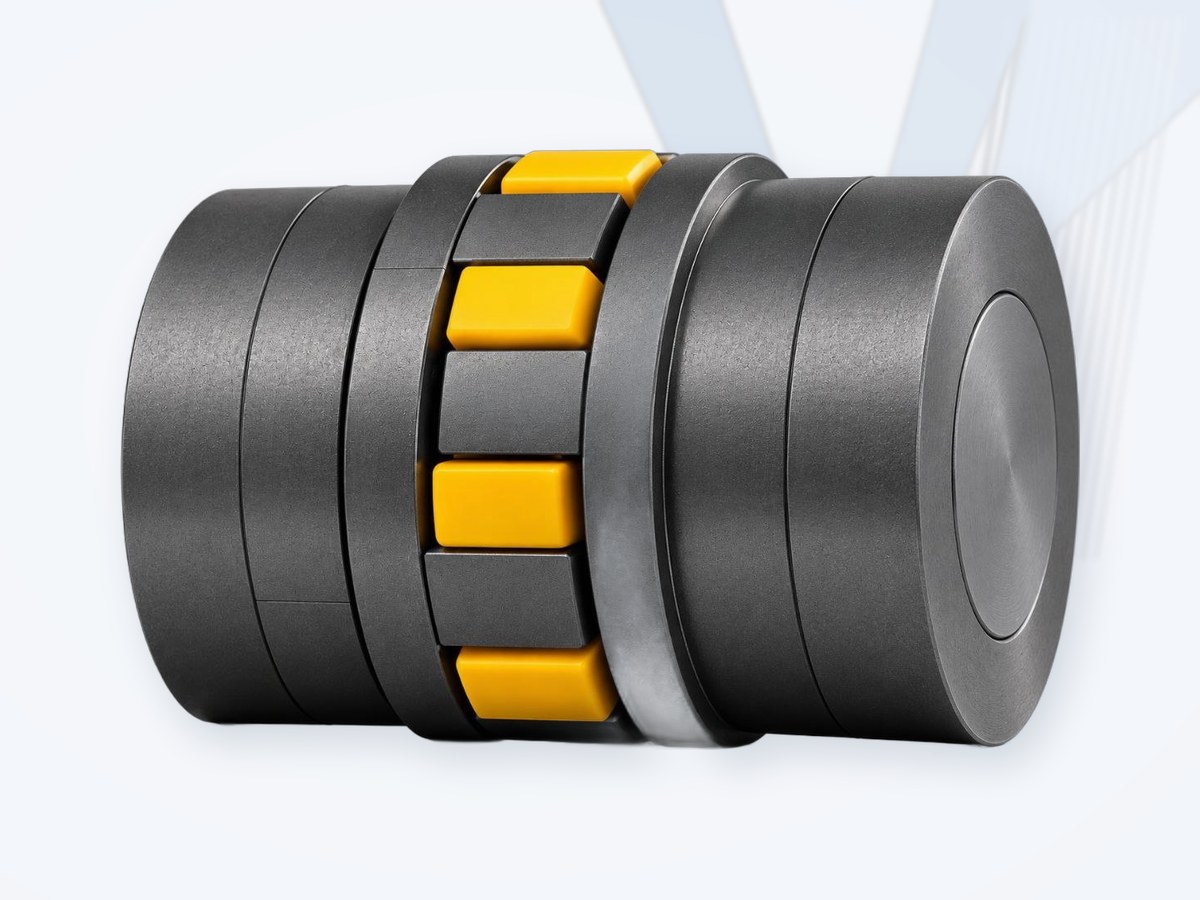
Flexible Elastomeric Couplings
Engineering selection, damping, replacement & interchange guide.
View →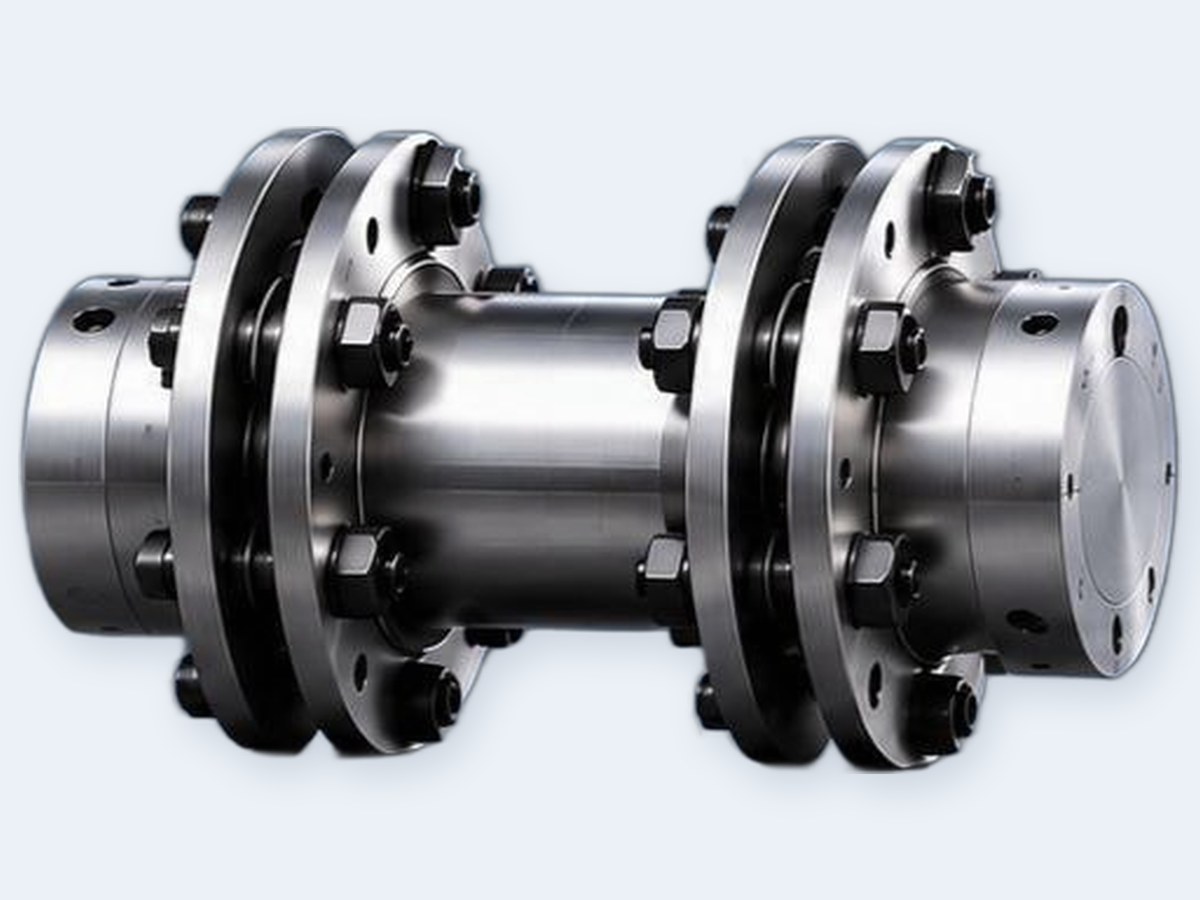
Disc Couplings
Engineering definition, selection, API considerations, replacement & interchange guide.
View →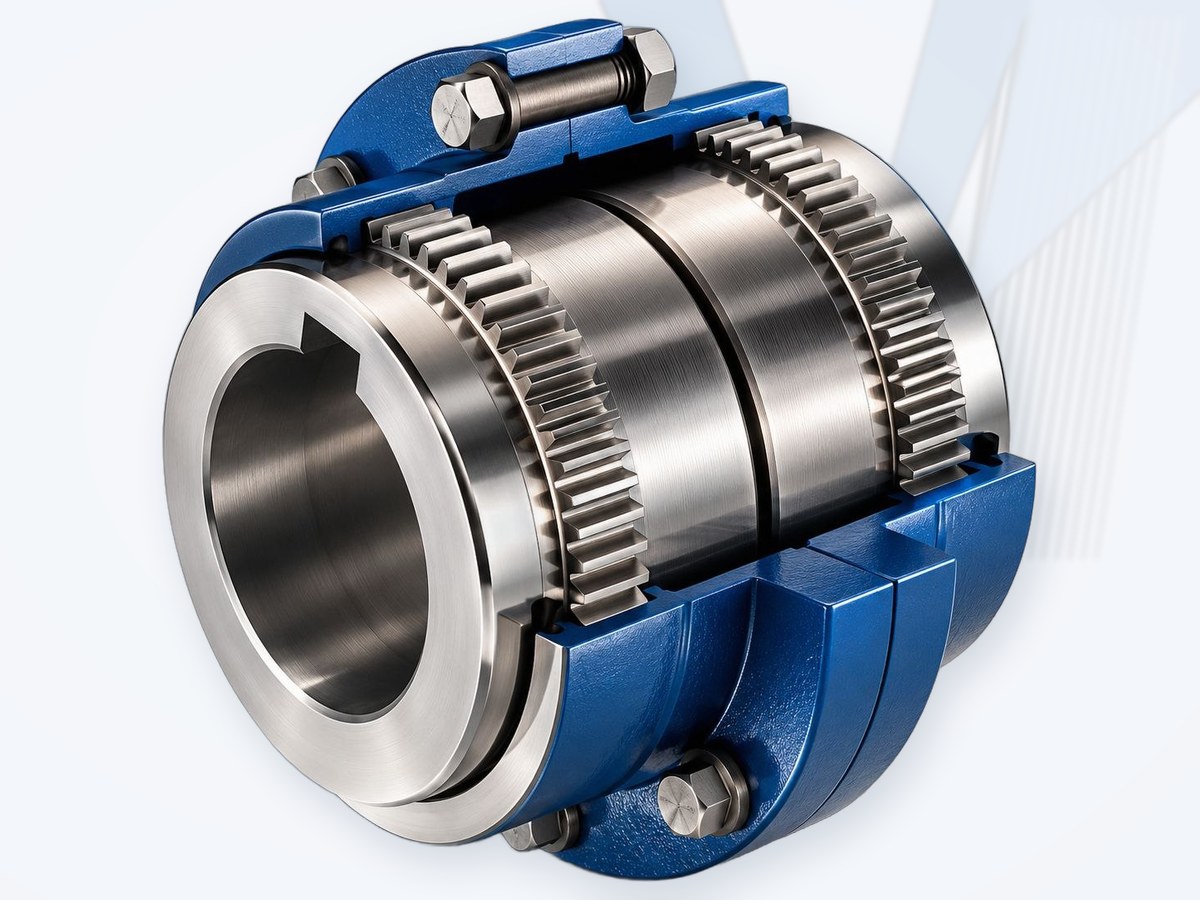
Gear Couplings
Engineering definition, selection, configurations, replacement & interchange guide.
View →Wire Drum & Barrel Couplings
Wire drum (cable drum) and barrel couplings connecting the gearbox output shaft to the rope drum of cranes…
View →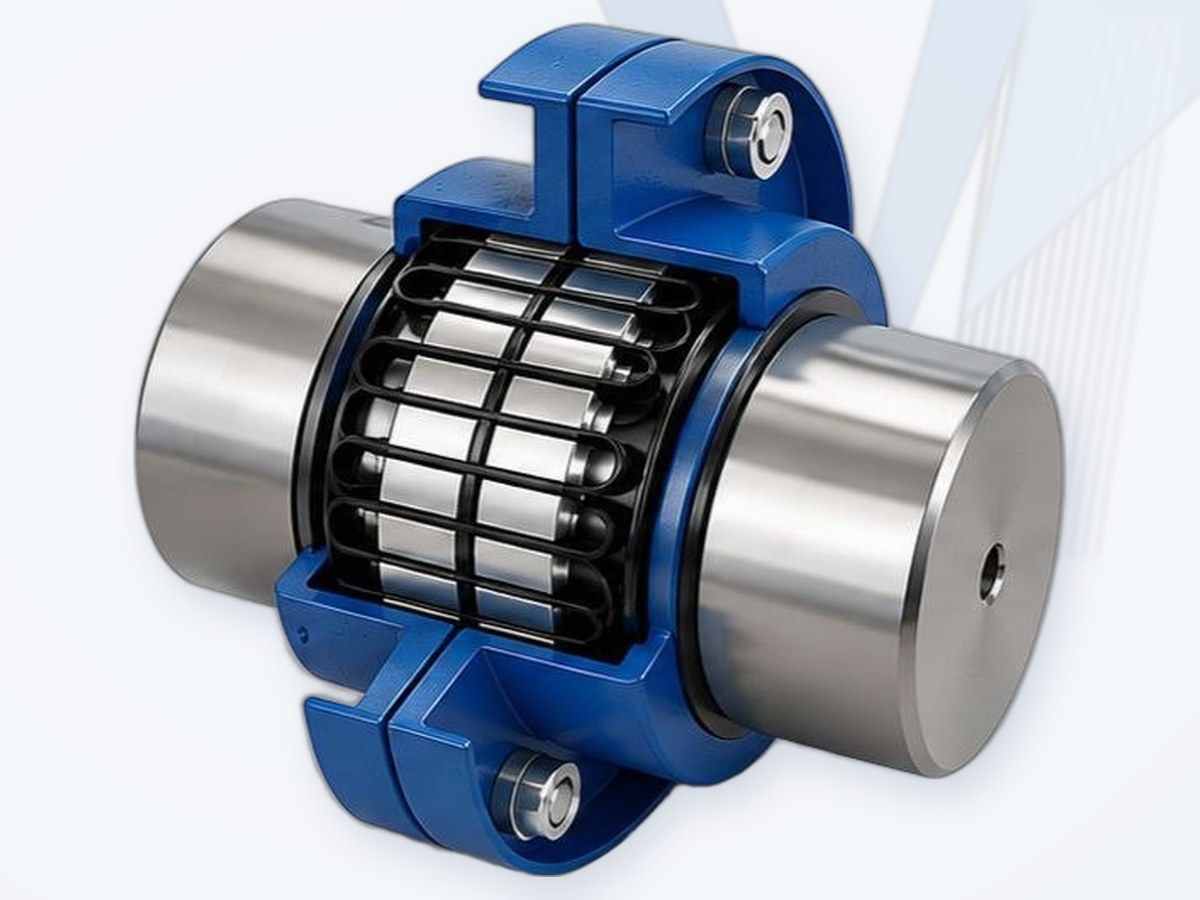
Grid Couplings
Engineering definition, selection, service factor, replacement & interchange guide.
View →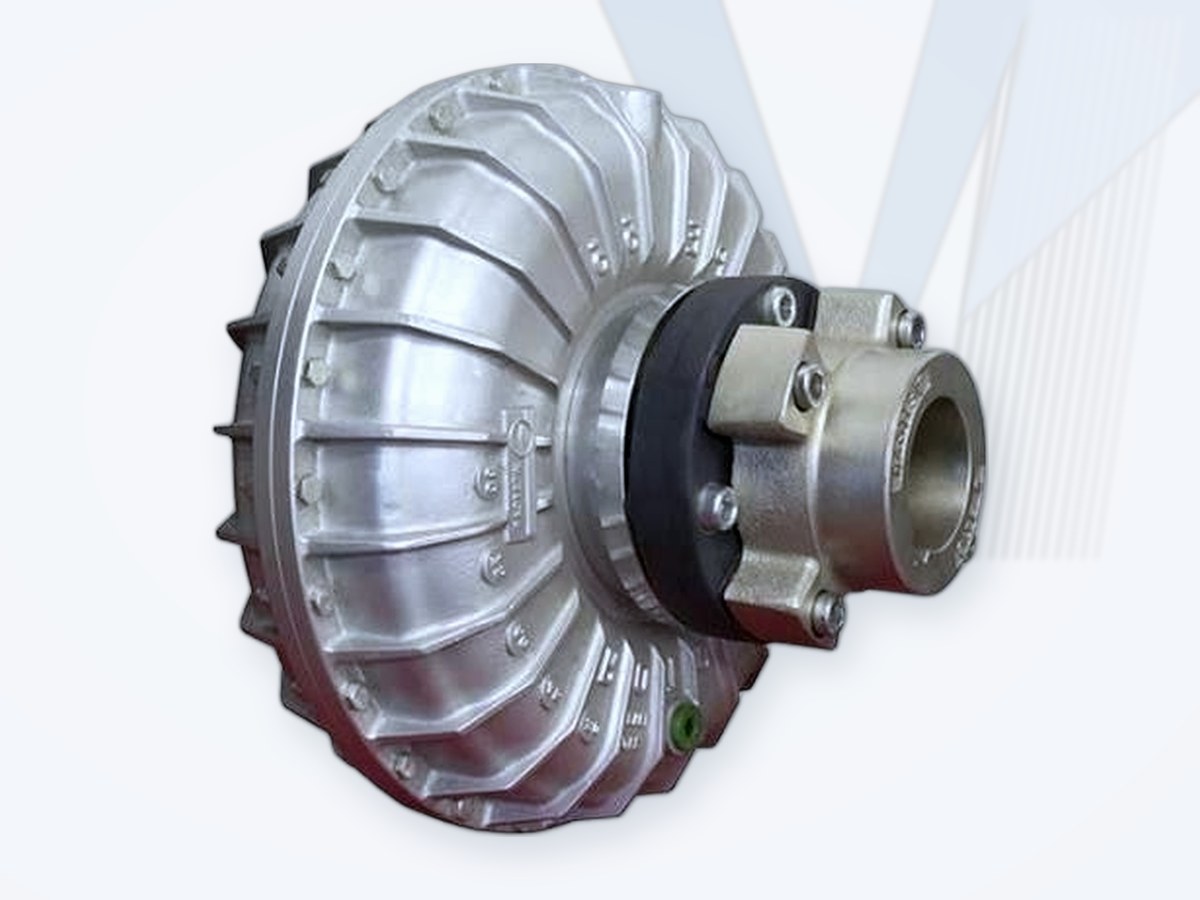
Fluid / Hydrodynamic Couplings
Hydrodynamic power transmission, soft start, selection & replacement guide.
View →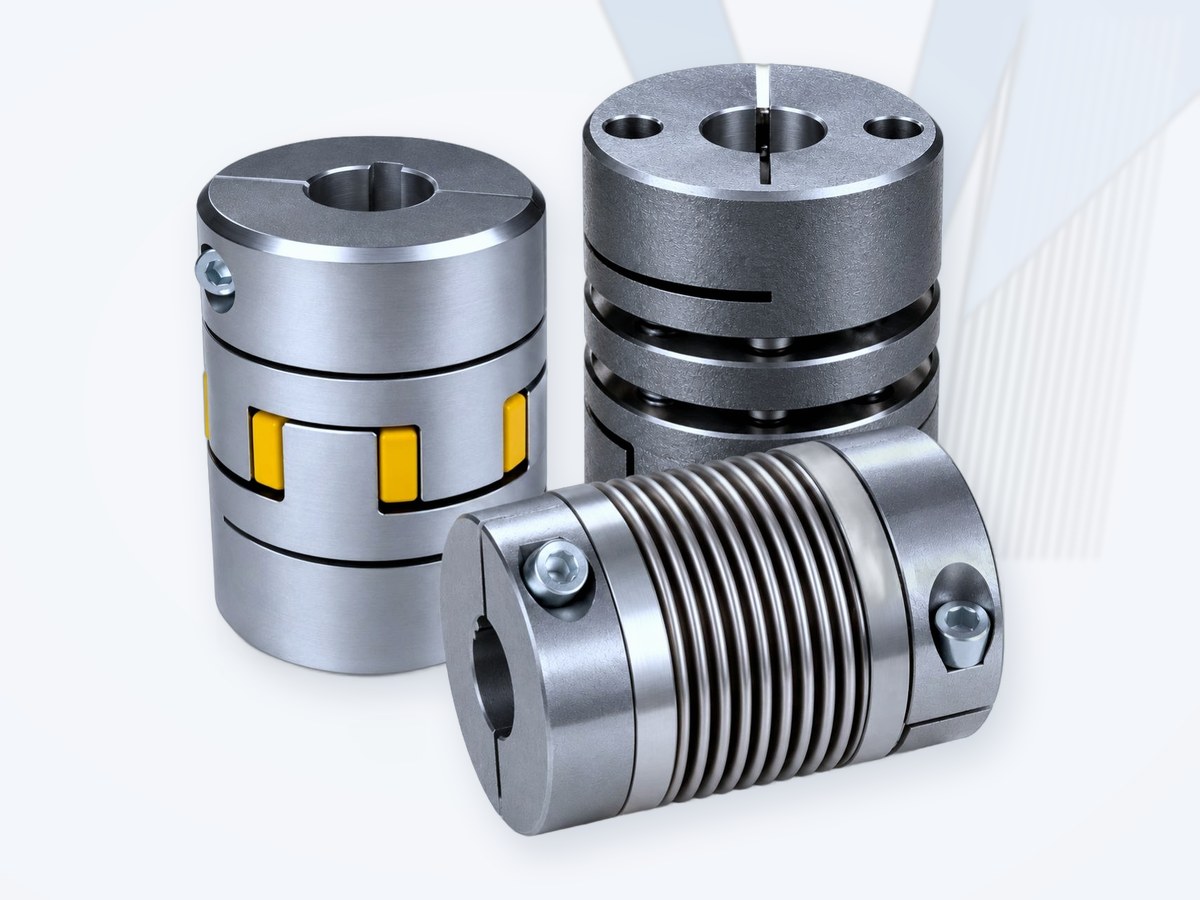
Zero-Backlash Couplings
Torsionally stiff, backlash-free shaft couplings for servo, positioning and precision drives.
View →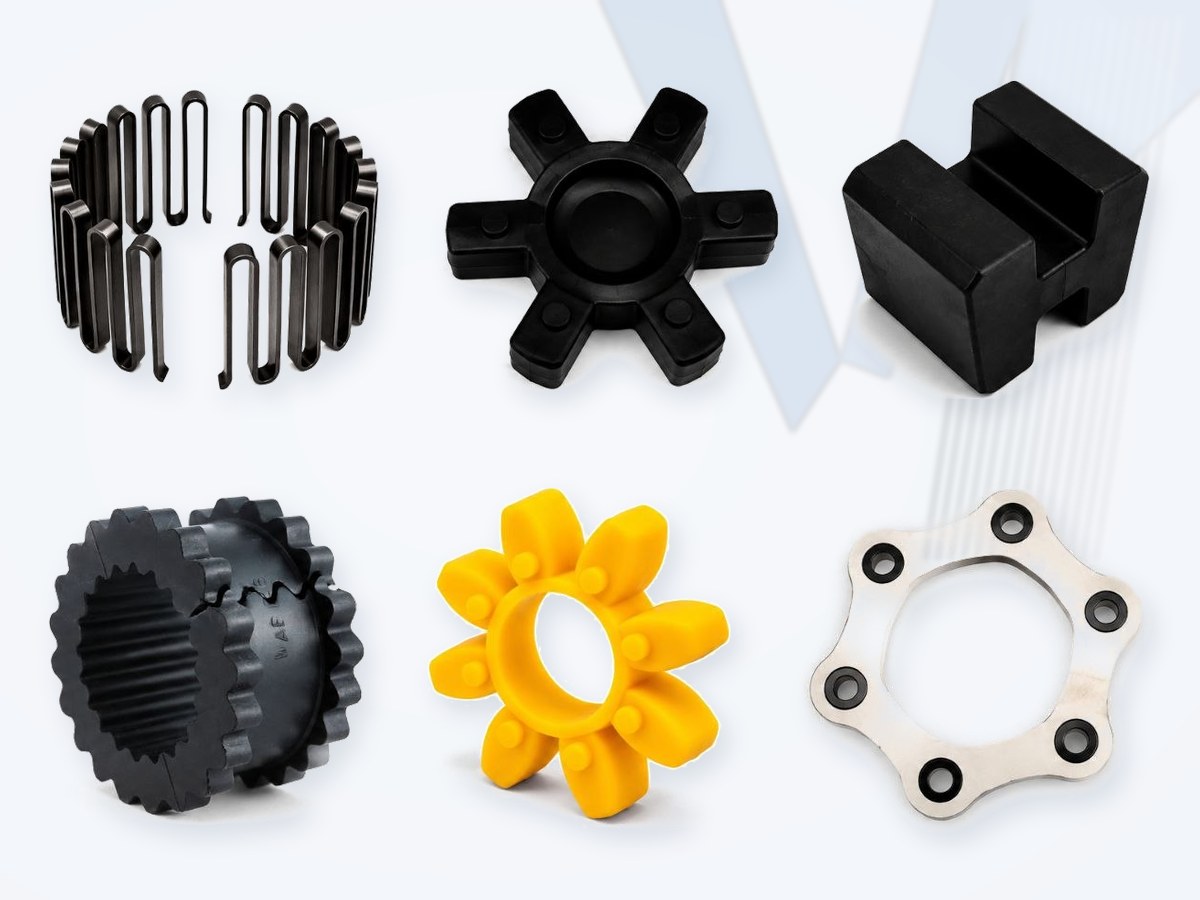
Coupling Components
View →Special & Custom Couplings
View →What is a power transmission coupling?
A power transmission coupling is a mechanical component used to connect two rotating shafts and transmit torque and rotational power from a driving machine - such as an electric motor, engine or turbine - to driven equipment such as a pump, gearbox, fan, compressor, conveyor, crusher or mill.
Depending on its design, a coupling may also compensate for limited angular, radial and axial misalignment, reduce shock loads and torsional vibration, protect connected equipment and simplify installation and maintenance. The correct coupling therefore forms an important part of the complete rotating-drive system, not simply a connection between two shafts.
What does a coupling do?
A coupling transmits torque and power between driving and driven shafts; accommodates permitted shaft misalignment; controls shock and torsional vibration where required; reduces unwanted loads on shafts and bearings; and provides a practical mechanical interface between connected machines.
Main Industrial Coupling Families
MECHATRIC organizes industrial couplings by their torque-transmission principle and dynamic behavior. Major families include Flexible Elastomeric Couplings, Gear Couplings, Grid Couplings, Disc Couplings, Metallic Flexible Couplings, Highly Flexible Couplings and application-specific coupling systems. Each family has different capabilities in torque density, torsional stiffness, damping, misalignment, speed, maintenance and environmental resistance.
For the current MECHATRIC elastomeric range, the key technologies include N-EUPEX, RUPEX, TRASCO, ROTEX, HRC, Tire, Omega and Viva.
How to Select a Power Transmission Coupling
Coupling selection should begin with the application and complete drive data, not only shaft diameter or motor power. A technically correct selection normally requires evaluation of the following parameters:
| Selection parameter | Engineering consideration |
|---|---|
| Power & speed | Operating kW/HP and rpm define transmitted torque and influence coupling size and speed capability. |
| Torque | Nominal, starting, peak, reversing and transient torque should be considered. |
| Service factor | Load type, duty cycle, starts/stops and driven-machine characteristics affect required capacity. |
| Shaft connection | Shaft diameters, bore, keyway, spline, taper bush, shrink fit or other hub connection. |
| Misalignment | Required angular, radial/parallel and axial displacement capability. |
| Dynamics | Torsional stiffness, damping, natural frequencies and torque fluctuations where dynamically critical. |
| Environment | Temperature, dust, oil, chemicals, humidity, corrosion and hazardous-area requirements. |
| Installation | DBSE, hub length, outside diameter, available space and maintenance access. |
| Standards | Project, customer, ISO/API/ATEX or other applicable technical requirements where relevant. |
How to Select an Equivalent or Replacement Coupling
An equivalent coupling should not be selected only because its bore, outside diameter or catalogue torque appears similar. True equivalency requires a structured engineering comparison between the existing coupling and the proposed replacement.
Identify the existing coupling
Record the manufacturer, series, size, hub arrangement, bore and keyway, elastomer or flexible-element grade, installation dimensions and any nameplate or drawing information. Photographs and dimensional measurements are valuable when the original model is obsolete or unknown.
Confirm the actual application
Verify driver and driven-machine type, power, speed, operating torque, starts per hour, reversing duty, shock level, operating hours, ambient conditions and known failure history. A replacement should be selected for the real machine duty rather than only the old catalogue designation.
Compare mechanical and dynamic performance
Compare nominal and maximum torque, permissible speed, service factor, allowable misalignment, torsional stiffness and damping, axial behavior, element material and temperature capability. For dynamically sensitive drives, torsional analysis may be necessary before substitution.
Check dimensional interchangeability
Verify shaft bores, keyways or other shaft connections, hub length, overall length, DBSE where applicable, outside diameter, bolt pattern and surrounding clearance. A coupling can be functionally equivalent without being dimensionally interchangeable.
Verify standards and safety requirements
Where applicable, confirm project specifications, balancing requirements, hazardous-area certification and relevant standards. API or other critical-service applications require additional engineering review and should not be replaced by catalogue cross-reference alone.
MECHATRIC Engineering Equivalency Approach
MECHATRIC evaluates coupling replacements through technical cross-reference and application-based engineering. The objective is not simply to find a similar catalogue item, but to identify a solution that satisfies the required torque, speed, shaft interface, misalignment, dynamic behavior, environment, installation envelope and service requirements.
When an original coupling is obsolete, unavailable or commercially impractical, MECHATRIC can evaluate alternatives from other manufacturers or assess a customized/reverse-engineered solution, subject to the technical requirements of the application.
Information required for coupling selection or cross-reference
Driver type and power; driven equipment; operating speed; shaft diameters; bore/keyway details; existing manufacturer/model/size; coupling photographs or drawings; installation dimensions; operating temperature; load characteristics; misalignment information; environment; and any applicable project standard.
MECHATRIC - Coupling Engineering & Supply
MECHATRIC supports industrial customers in coupling selection, sizing, technical cross-reference, replacement, supply, failure analysis, reverse engineering and customized solutions for rotating equipment across cement, mining, steel, oil & gas, petrochemical, power, water and other process industries.
Leading Manufacturers Worldwide
Well-known European, American and Asian (Japanese and Korean) manufacturers of couplings.
| Manufacturer | Country | Product focus |
|---|---|---|
| FLENDER | Germany | N-EUPEX, RUPEX, ELPEX, ARPEX, ZAPEX, FLUDEX couplings; industrial gear units |
| KTR Systems | Germany | ROTEX, BoWex, RADEX-N couplings; CLAMPEX locking devices; brakes |
| VULKAN | Germany | Highly flexible couplings |
| Voith | Germany | Fluid (turbo) couplings; universal joint shafts |
| SIT S.p.A. | Italy | Flexible, disc, gear and zero-backlash couplings; pulleys, belts, SIT-LOCK, taper bushes |
| Westcar | Italy | Fluid and gear couplings, drum and disc brakes |
| RU-STEEL | Italy | Steel disc couplings |
| John Crane | United Kingdom | Metastream disc couplings |
| Renold | United Kingdom | Couplings, freewheels / backstops, chains |
| Regal Rexnord (Falk, Kop-Flex, Thomas, Rexnord) | USA | Grid, gear and disc couplings; gear drives; backstops; roller chain |
| Lovejoy (Timken) | USA | Jaw and elastomeric couplings |
| Ameridrives (Regal Rexnord) | USA | Gear and disc couplings |
| Tsubaki | Japan | Couplings, POWER-LOCK, backstops, chains |
| Miki Pulley | Japan | Precision couplings, electromagnetic brakes |
| NBK (Nabeya Bi-tech) | Japan | Precision and zero-backlash couplings |
| KCP (Korea Coupling) | South Korea | Grid and gear couplings |
Listed for market information only. Brand names belong to their owners; their mention does not imply that MECHATRIC represents, distributes for or is authorized by these manufacturers. Product availability and equivalents are confirmed per enquiry.
Need to select or replace a coupling?
Send the motor/driver power, speed, shaft dimensions, driven equipment, existing coupling information and operating conditions to MECHATRIC for engineering evaluation.