
Industrial Brakes
Drum brakes, disc brakes, selection, safety, maintenance & replacement.
Industrial Brakes
Engineering support for industrial brake selection, sizing, application review, retrofit, replacement, actuator/thruster matching and RFQ preparation - drum brakes and disc brakes for cranes, hoists, conveyors and heavy machinery.
Reference Brake Families
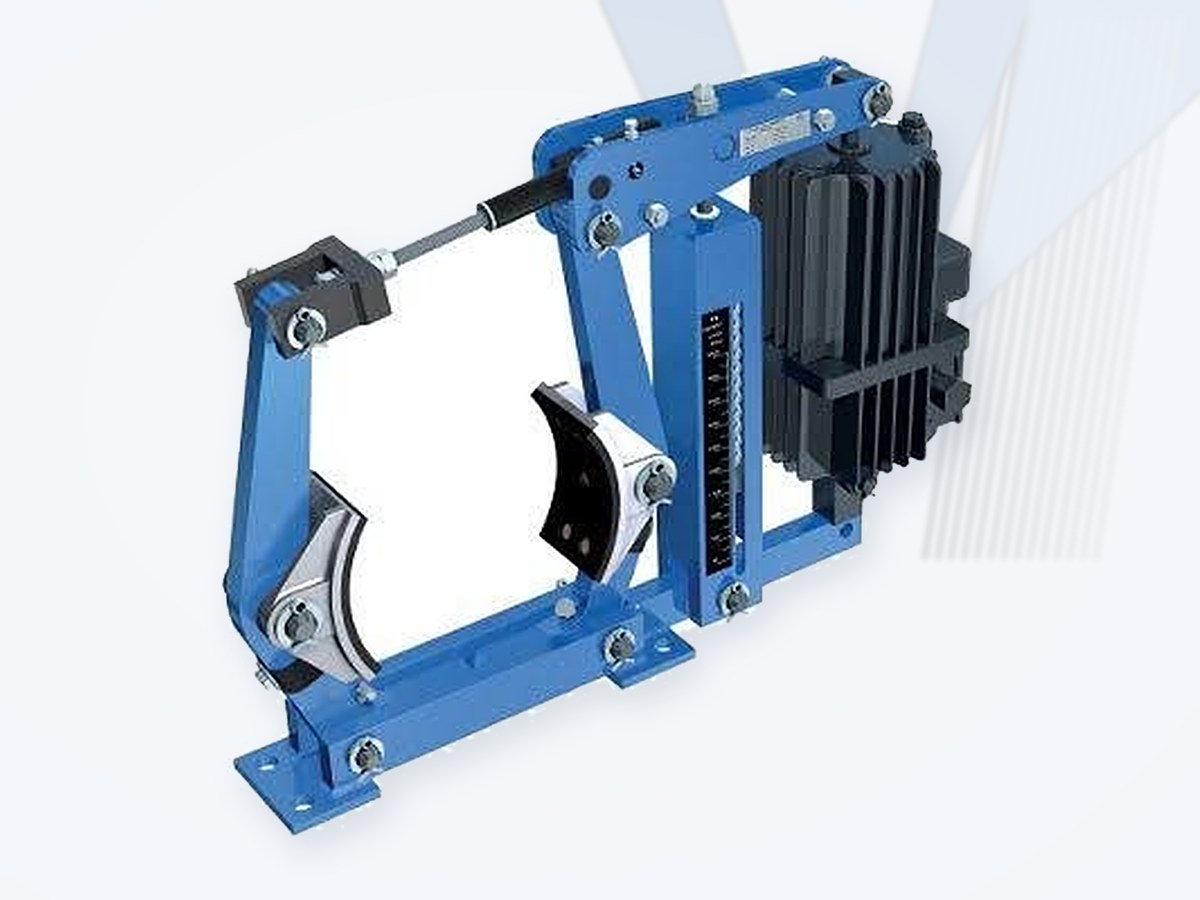
WESTCAR BD Drum Brakes
Spring-applied, thrustor-released drum brakes; spheroidal cast-iron frames, asbestos-free linings, adjustable torque.
Request a Quote →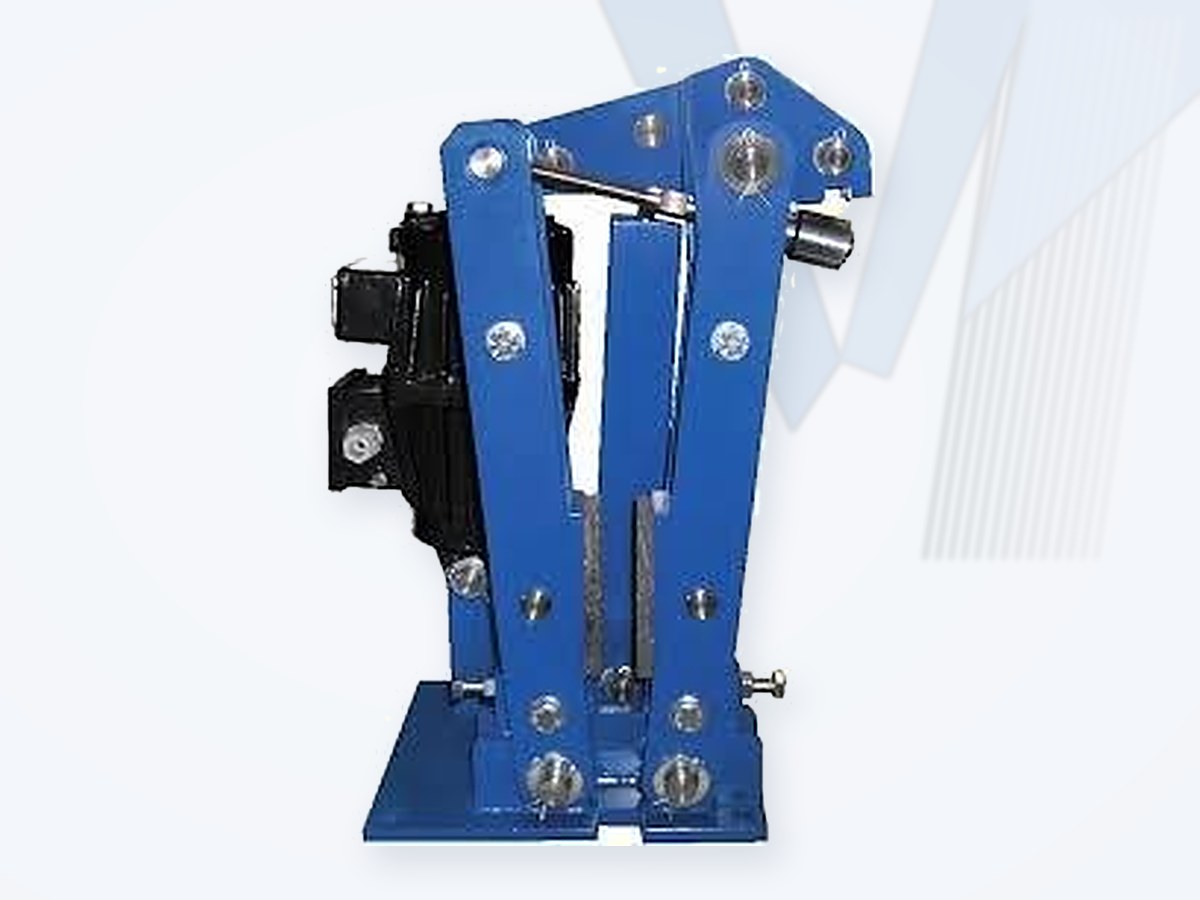
WESTCAR CD Disc Brakes
Welded-steel disc brakes to DIN 15435, stainless pins, replaceable friction plates, right/left execution.
Request a Quote →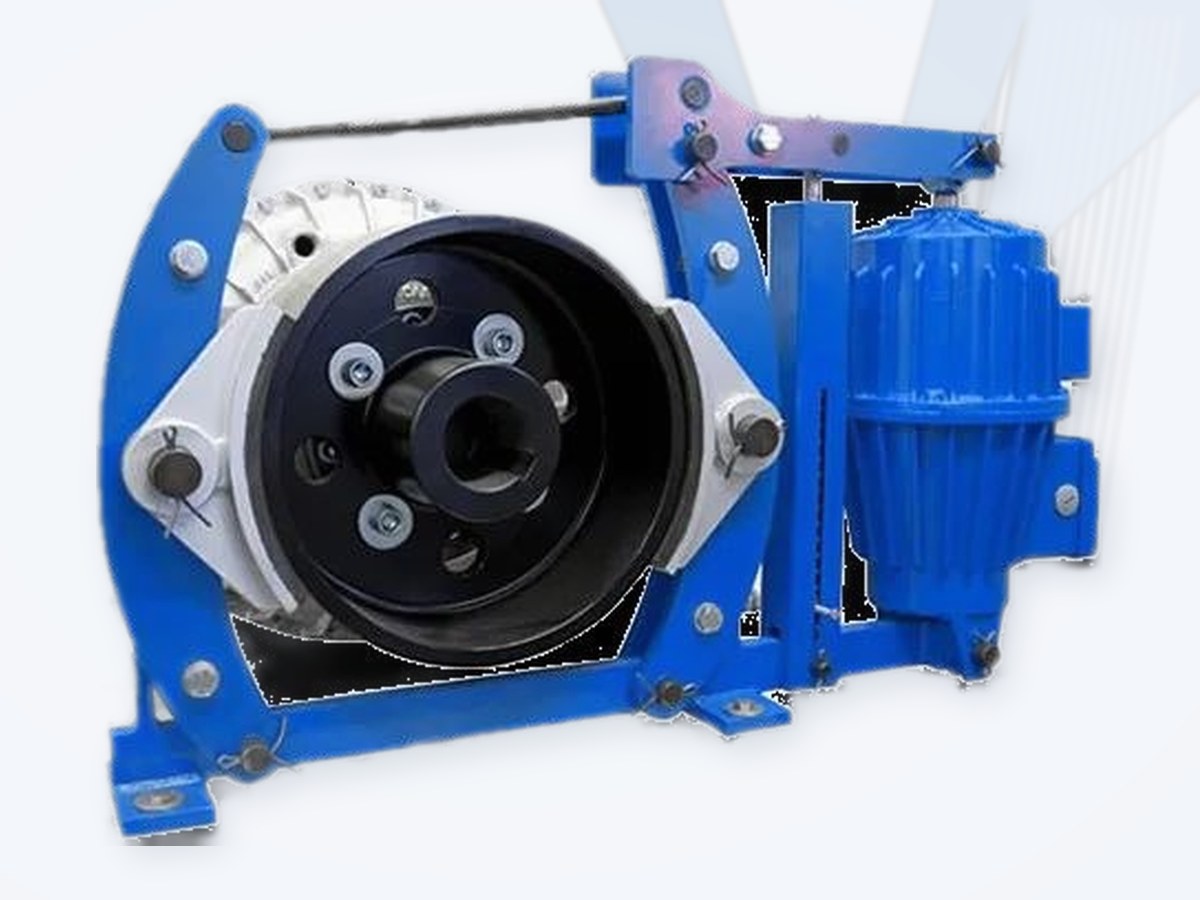
SIBRE TE / TEc / SBH
DIN 15435 spring-applied, thruster-released drum brakes for cranes, conveyors and metallurgy.
Request a Quote →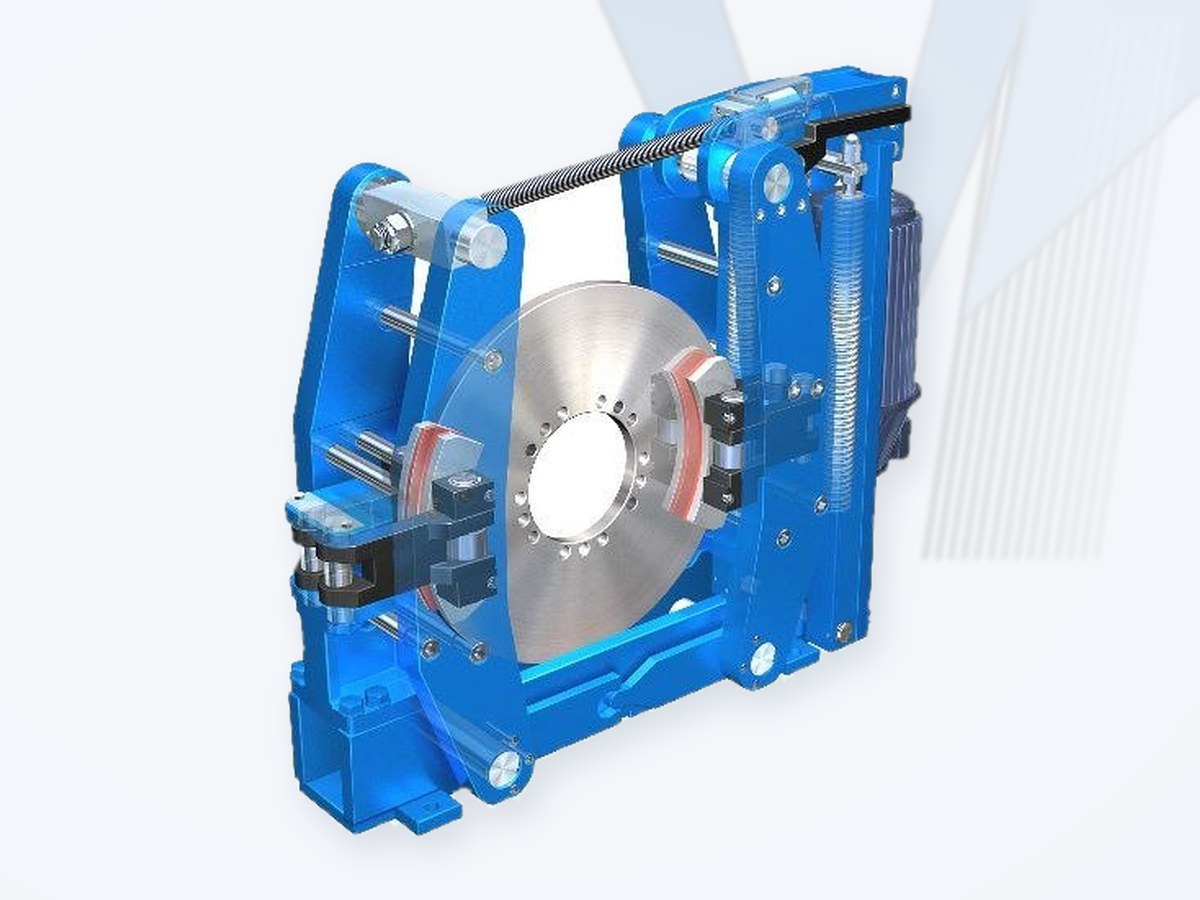
SIBRE USB Disc Brakes
Service and emergency disc brakes for cranes, conveyors and opencast mining; wear compensation, self-centering.
Request a Quote →What is an industrial brake?
An industrial brake is a mechanical friction device used to decelerate, stop, hold or secure machinery and loads. In heavy-duty power-transmission systems, brakes are commonly installed on hoists, cranes, travel drives, conveyors, material-handling equipment, process machinery and other drive systems where controlled stopping or holding is required.
The reference catalogues focus mainly on drum brakes and disc brakes, especially spring-applied, actuator-released designs: stored spring force applies the brake and an electrohydraulic or pneumatic actuator opposes the spring force to release it.
Important safety principle: brake selection is an application-engineering task. Required braking torque alone is not sufficient; stopping duty, thermal energy, brake frequency, actuator, drum/disc geometry, environment, control logic and safety function must also be verified.
How a Spring-Applied, Thruster-Released Brake Works
The WESTCAR documentation describes its BD drum and CD disc brakes as negative brakes: spring force is amplified through a lever system and applied to the friction elements, while an electrohydraulic or pneumatic thrustor produces the opposing force required to open and release the brake. SIBRE's TE drum-brake documentation similarly identifies the design as spring applied, thruster released. This principle is widely useful for holding and safety duties because loss of actuator force can allow the spring system to apply the brake, subject to the exact machine design and control philosophy.
Main Industrial Brake Types
| Brake type | Typical characteristics | Typical use |
|---|---|---|
| Drum brake | External shoes/linings act on a rotating brake drum; robust mechanical arrangement; braking torque adjusted through spring/lever system. | Hoists, cranes, travel drives, conveyors, general engineering and heavy-duty machinery. |
| Disc brake | Friction pads act on a brake disc; compact friction interface, good accessibility and wide torque range depending on disc diameter and actuator. | Service/emergency stopping, cranes, conveyors, opencast/mining equipment and high-duty machinery. |
| Service brake | Controls normal stopping or operational braking cycles. | Travel, translation, lifting and process-motion duties. |
| Holding / parking brake | Maintains a stationary load or drive position. | Hoists, conveyors, cranes and stationary machinery. |
| Emergency / safety brake | Provides a defined safety-related stopping or holding function in the machine concept. | Lifting, material handling and critical machinery; exact safety architecture must be engineered. |
Reference Product Families
- WESTCAR BD Drum Brakes: spheroidal cast-iron frames as standard for many BD versions, with welded-steel options in specified cases; asbestos-free friction materials, adjustable braking torque, electrohydraulic/pneumatic actuation and optional monitoring/accessories.
- WESTCAR CD Disc Brakes: welded-steel construction according to DIN 15435, stainless-steel pins, replaceable asbestos-free friction plates and right-/left-hand executions depending on the model.
- SIBRE TE / TEc / SBH Drum Brakes: DIN 15435 spring-applied, thruster-released drum-brake families for general engineering, metallurgy, crane, conveyor, underground/above-ground and related heavy-duty applications.
- SIBRE USB Disc Brakes: service and emergency stopping for cranes, conveyors and opencast mining equipment; robust construction, stainless pivot pins, adjustable braking force, optimized lever geometry, replaceable asbestos-free linings, wear compensation and self-centering/self-balancing features.
These families are engineering references. Their exact torque ranges, dimensions, materials and options remain manufacturer- and model-specific and are not generalized to every industrial brake.
Typical Applications & Industries
| Application | Industries / equipment |
|---|---|
| Hoisting and lifting | Overhead cranes, gantry cranes, winches, hoists, ports and material handling. |
| Travel / translation drives | Crane travel, trolley drives, industrial mobile machinery and conveyor-related drives. |
| Conveyors | Mining, steel, cement, bulk material handling and process plants. |
| Service / parking duty | General industrial machinery, drive systems and positioning/holding applications. |
| Emergency / safety duty | Critical lifting and material-handling systems where the machine safety concept requires a dedicated brake. |
| Heavy process duty | Metallurgy, mining, steel, cement, ports, power and industrial OEM machinery. |
Engineering Brake Selection - Recommended Workflow
| Step | Engineering check | Required information |
|---|---|---|
| 1 | Define brake function | Service, holding/parking, emergency/safety, lifting, travel or combined duty. |
| 2 | Determine required braking torque | Drive/load torque, load direction, gear ratio, efficiencies, inertia, safety/design factor and required stopping behavior. |
| 3 | Define braking frequency | Stops per hour, duty cycle, emergency-stop frequency and repeated-stop requirements. |
| 4 | Evaluate braking energy / thermal duty | Rotating and translating inertia, load energy, stopping time and heat dissipation between stops. |
| 5 | Select drum or disc interface | Drum/disc diameter, width/thickness, available installation envelope and friction radius. |
| 6 | Select actuator / thruster | Electrohydraulic or pneumatic type, thrust/stroke, supply voltage/frequency or air pressure, opening/release time. |
| 7 | Check mechanical arrangement | Mounting dimensions, orientation, hand of disc brake, lever geometry, shoe/pad clearance and support structure. |
| 8 | Check friction system | Lining/pad material, friction coefficient used by manufacturer, allowable temperature, wear and replacement method. |
| 9 | Check monitoring & accessories | Wear compensation, open/closed indication, wear switch, remaining-stroke indication, manual release, delay valve and other options. |
| 10 | Check environment & protection | Ambient temperature, dust, moisture, corrosion, IP protection, hazardous area and required certification. |
| 11 | Validate safety & controls | Fail-safe philosophy, interlocks, redundancy where required, emergency-stop logic and machine risk assessment. |
| 12 | Verify manufacturer data | Torque range, thermal limits, dimensions, actuator combination, installation instructions and current certification/documentation. |
Selection Data Highlighted by WESTCAR
The WESTCAR source asks for the application type, number of stops per hour, supply voltage, drum diameter and width, disc diameter/thickness and pneumatic pressure when applicable. These are mandatory MECHATRIC RFQ fields rather than treating brake torque as the only selection parameter.
Braking Torque Is Not the Whole Selection
Maximum braking torque varies with brake size, drum/disc diameter and thrustor combination (WESTCAR quick-selection tables, SIBRE TE ranges). These tables help identify candidates, but final selection must also satisfy thermal duty, stopping requirements, mechanical fit and actuator/control conditions.
Do not copy a torque value from one brand to another as an equivalence rule.
A Useful Torque Relationship
For a simplified friction-brake concept, braking torque is related to friction force and effective friction radius. Actual industrial brake ratings are taken from the selected manufacturer's verified data: MECHATRIC uses calculated torque as the engineering requirement and manufacturer tables as the final product-rating reference.
Thermal Duty, Stops per Hour & Braking Energy
Repeated braking converts kinetic and potential energy into heat at the friction interface. A brake with adequate static torque may still be unsuitable if the stopping energy, number of stops per hour or cooling interval exceeds its thermal capability.
- For travel drives, include translational and rotating inertia reflected to the brake shaft.
- For hoists, include the load and lifting/lowering condition, not only motor power.
- For emergency stops, define the credible operating speed and load at brake application.
- For frequent cycling, verify lining/pad temperature, wear rate and actuator duty.
- Where the catalogue does not publish sufficient thermal data, obtain manufacturer confirmation before approval.
Actuation & Release Systems
The WESTCAR range uses electrohydraulic actuation as standard in the documented configurations and also lists alternative electrohydraulic and pneumatic actuation. SIBRE drum and USB disc-brake references pair brake types with specific thruster sizes. Actuator selection is an integral part of brake selection.
For RFQ and replacement work, record actuator manufacturer/type, thrust, stroke, voltage, frequency, duty, opening/release time and mounting interface.
Spring Setting & Adjustable Braking Torque
Braking force is provided by a spring and spring compression changes braking torque; for the documented WESTCAR external-spring design, higher compression increases torque and speeds application while slowing release. This is a product-specific adjustment performed according to the exact manufacturer's manual.
Drum Brake vs Disc Brake
| Criterion | Drum brake | Disc brake |
|---|---|---|
| Friction interface | Shoes/linings act on drum circumference. | Pads/linings act on disc faces. |
| Typical industrial positioning | Very common in cranes, hoists, travel drives and heavy material handling. | Common in service/emergency braking, cranes, conveyors, mining and compact/high-duty arrangements. |
| Maintenance focus | Shoe/lining wear, drum surface, clearances, lever/pin condition, thruster stroke and spring setting. | Pad wear, disc condition/thickness, air gap, lever/pin condition, thruster stroke and spring setting. |
| Installation data | Drum diameter/width, shaft/drum arrangement, base height and mounting geometry. | Disc diameter/thickness, friction radius, right/left execution and mounting geometry. |
| Selection caution | Torque varies with brake size, spring/lever geometry and actuator. | Torque varies with disc diameter, brake size, spring/lever geometry and actuator. |
Wear Compensation, Monitoring & Accessories
| Feature | Engineering purpose |
|---|---|
| Automatic lining-wear compensation | Maintains required clearance/stroke as friction material wears; exact adjustment and inspection remain manufacturer-specific. |
| Maximum-wear indicator / switch | Signals that friction material has reached a defined wear condition. |
| Brake-open / brake-closed indication | Provides control-system feedback on brake state. |
| Remaining-stroke indication | Helps identify loss of actuator stroke margin caused by wear or maladjustment. |
| Manual release | Allows controlled mechanical release for maintenance or specific operating procedures. |
| Adjustable delay valve | Modifies actuator timing where supported by the product. |
| Stainless pins / corrosion options | Supports demanding environmental conditions where documented. |
| Wide-shoe / special lining options | Changes friction interface and potentially torque/thermal behavior; must use exact manufacturer data. |
| Higher IP protection | WESTCAR documentation lists IP56 standard and IP65 on request for the referenced range. |
| Hazardous-area option | WESTCAR states ATEX-certified products can be supplied on request; certification must be verified for the exact configuration. |
Installation & Alignment
The WESTCAR BD maintenance manual requires the brake to be mounted on a suitable plane with the support surface at the specified distance from the drum axis, so the shoes act symmetrically on the drum and the actuator can use its intended stroke. For the documented BD arrangement, the thrustor is set so that approximately two-thirds of its stroke is used for brake release, leaving the remaining stroke for progressive lining wear; periodic inspection is stressed because excessive wear can consume the stroke and compromise braking.
These numeric adjustment values are product-specific maintenance instructions, not universal settings. Always use the manual for the exact brake and actuator.
Maintenance Priorities
- Inspect friction linings/pads for wear, glazing, contamination, cracking and secure attachment.
- Inspect drum/disc friction surfaces for damage, contamination, scoring and dimensional limits.
- Verify actuator/thruster stroke and release clearance.
- Check spring setting and braking-torque adjustment against the approved value.
- Inspect pins, bushes, levers, fasteners and mounting structure for wear or looseness.
- Verify wear-compensation devices and limit/proximity switches.
- Confirm equal shoe/pad clearance and free release without drag.
- After maintenance, perform the required functional and safety test before returning equipment to service.
Safety-Critical Selection Considerations
Brakes used for hoisting, emergency stopping or safety-related holding are safety-critical components. A replacement is not approved solely because its mounting dimensions or nominal torque are similar. The review considers brake function, required torque, dynamic stopping load, thermal capacity, response time, release behavior, power-loss behavior, actuator reliability, monitoring, environmental conditions, friction material, applicable machinery standards and the complete control/safety architecture.
DIN 15435 context: the SIBRE TE catalogue identifies its drum brakes as designed according to DIN 15435, and WESTCAR describes its CD disc-brake welded-steel frame according to DIN 15435. MECHATRIC records DIN 15435 only for exact products whose current manufacturer documentation confirms it.
How to Select a Replacement or Equivalent Industrial Brake
| Parameter to verify | Replacement / interchange check |
|---|---|
| Brake function | Service, holding, parking, emergency or safety duty must match the machine requirement. |
| Braking torque range | Candidate must cover required setting with suitable margin and approved spring/actuator combination. |
| Thermal capacity | Stopping energy and stops/hour must be acceptable. |
| Drum / disc interface | Diameter, width/thickness, friction radius and allowable surface condition. |
| Actuator / thruster | Type, thrust, stroke, voltage/frequency or pneumatic pressure, duty and mounting interface. |
| Mounting geometry | Base dimensions, shaft/drum/disc centerline, hand/orientation and available envelope. |
| Release clearance / stroke | Must suit friction wear, actuator travel and monitoring arrangement. |
| Friction material | Coefficient assumptions, temperature capability and environmental compatibility. |
| Controls & monitoring | Open/closed switches, wear indicators, remaining stroke, manual release and interlocks. |
| Environment / protection | IP, corrosion, temperature, dust, hazardous area and certification. |
| Standards / safety | DIN or project requirements, machine risk assessment and safety-control architecture. |
| Documentation | Current drawings, torque tables, manuals, certificates and approved settings. |
MECHATRIC Interchange Classification
- Direct Interchange: engineering verification confirms functional, dimensional, actuator, torque, thermal and safety compatibility for the specified machine.
- Dimensionally Compatible: mounting and interfaces match, but performance/safety validation is still required.
- Functionally Equivalent: required braking function can be achieved, but modifications or different dimensions/actuation may be involved.
- Engineering Review Required: a candidate has been identified but cannot yet be approved as an interchange.
Information Required for Brake RFQ / Engineering Review
| Data group | Information to provide |
|---|---|
| Machine / application | Crane, hoist, trolley, conveyor, winch, travel drive, process machinery; service/holding/emergency function. |
| Drive data | Motor power, speed, gearbox ratio, brake-shaft speed and drive arrangement. |
| Load / inertia | Maximum load, moving mass, rotating inertia, direction of motion and relevant load cases. |
| Stopping requirement | Required stop time/distance, emergency condition and permissible deceleration. |
| Duty | Stops per hour, operating cycle, emergency-stop frequency and ambient cooling conditions. |
| Required torque | Calculated/design braking torque and required adjustable range. |
| Drum / disc | Type, diameter, width/thickness, material/surface information and photographs/drawing. |
| Existing brake | Manufacturer, series, model, nameplate, brake size, spring setting and torque range. |
| Actuator | Manufacturer/type, thrust/stroke, voltage/frequency or pneumatic pressure, duty and nameplate. |
| Mounting | Base dimensions, center height, right/left execution, orientation and available envelope. |
| Monitoring | Wear compensation, limit/proximity switches, manual release, delay valve and control requirements. |
| Environment | Indoor/outdoor, temperature, dust, humidity, corrosion, IP and hazardous-area requirements. |
| Documents | GA drawing, brake drawing, photos, manual, torque table and machine safety specification. |
Leading Manufacturers Worldwide
Well-known European, American and Asian (Japanese and Korean) manufacturers of industrial brakes.
| Manufacturer | Country | Product focus |
|---|---|---|
| Pintsch Bubenzer | Germany | Industrial drum and disc brakes |
| SIBRE | Germany | Drum and disc brakes, thrusters |
| Svendborg Brakes (Regal Rexnord) | Denmark | Industrial disc brakes |
| Westcar | Italy | Fluid and gear couplings, drum and disc brakes |
| mayr power transmission | Germany | Backlash-free couplings, safety brakes, torque limiters |
| KTR Systems | Germany | ROTEX, BoWex, RADEX-N couplings; CLAMPEX locking devices; brakes |
| Hindon | USA | Industrial drum and disc brakes |
| Miki Pulley | Japan | Precision couplings, electromagnetic brakes |
| Ogura | Japan | Electromagnetic clutches and brakes |
Listed for market information only. Brand names belong to their owners; their mention does not imply that MECHATRIC represents, distributes for or is authorized by these manufacturers. Product availability and equivalents are confirmed per enquiry.
MECHATRIC Engineering Support
MECHATRIC can support industrial brake selection, drum/disc brake sizing, actuator/thruster matching, replacement and interchange evaluation, technical cross-reference, RFQ preparation, retrofit review and engineering assessment for crane, hoist, conveyor, material-handling and heavy industrial applications.
Engineering references: WESTCAR BD/CD Brakes catalogue (2022); WESTCAR BD Drum Brake Installation and Maintenance manual; SIBRE industrial drum-brake catalogue including TE/TEc/SBH families; SIBRE USB Disc Brake technical brochure. Product-specific ratings, torque tables, dimensions, adjustments, standards, certifications and options must be verified against current manufacturer documentation. Brand and family names are used for technical identification and engineering comparison and do not by themselves imply representation, authorization or commercial partnership. Safety-critical brake selection and replacement require application-specific engineering review.
Frequently Asked Questions
What is a fail-safe industrial brake?
In a common spring-applied, power-released arrangement, stored spring force applies the brake and powered actuation releases it. Whether the complete machine is fail-safe depends on the full mechanical and control-system design.
How do I choose between a drum brake and a disc brake?
Consider existing drive geometry, required torque and energy, available space, maintenance access, environmental conditions, actuator arrangement and the machine's safety function.
Can brake size be selected only from motor power?
No. Brake-shaft torque, load, inertia, gear ratio, stopping time, thermal duty and safety requirements must be evaluated.
Why are stops per hour important?
Repeated stops generate heat. A brake may have adequate torque but insufficient thermal capacity for the duty cycle.
Can WESTCAR BD/CD and SIBRE TE/USB brakes be treated as direct equivalents?
Not automatically. They can be engineering comparison candidates, but direct interchange requires verification of torque, thermal duty, actuator, dimensions, drum/disc interface, controls and safety requirements.
What information is most useful for replacement?
Existing brake and actuator nameplates, machine application, drawings, drum/disc dimensions, required torque, stops/hour, supply data and clear installation photographs.