
HRC Couplings
Semi-elastic general-purpose HRC couplings for electric motor drives - Taper Lock, bored and pilot-bore versions, standard and FRAS elements.
HRC Couplings
Semi-elastic general-purpose couplings for electric motor drives - quick installation with Taper Lock bushes, alignment with a straightedge on the machined outside diameters, and a fail-safe interacting-dog design. Selection, replacement and RFQ support by MECHATRIC.
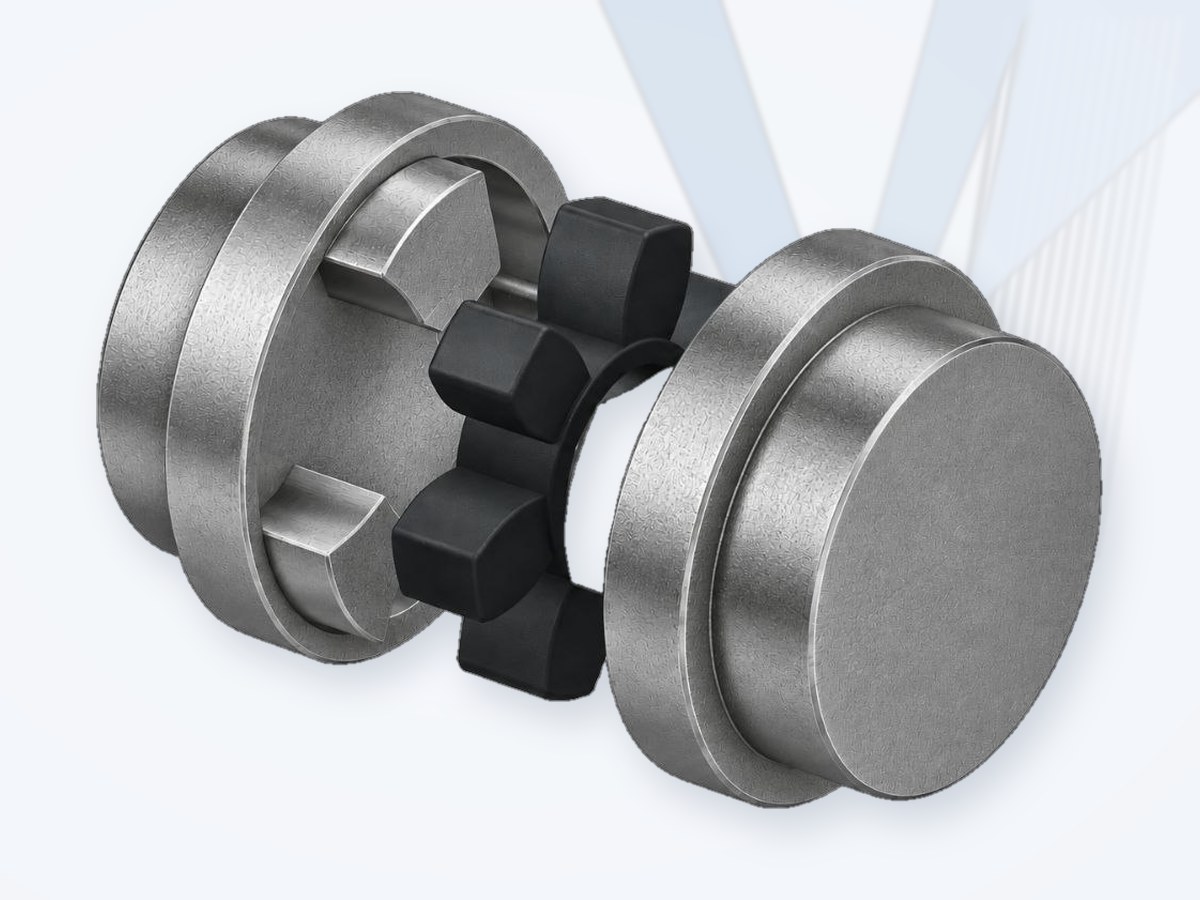
What is an HRC coupling?
An HRC coupling is a compact semi-elastic shaft coupling combining two interlocking hub members with an elastomer element. It transfers torque between rotating shafts while tolerating incidental misalignment. The Fenner HRC reference describes a fail-safe interacting-dog design, straightforward fitting, and alignment using machined outside diameters and a straightedge.
Configurations and Features
- Taper Lock bush, bored-and-keyed and pilot-bore versions; flywheel fixing variant.
- Standard and FRAS (fire-resistant, anti-static) elastomer elements in the Fenner range - FRAS suitability must be confirmed for the exact element and application.
- Fail-safe interacting dogs; power ratings matched to standard motor sizes (Fenner).
- No lubrication of the elastomer element.
Manufacturer Reference: Fenner HRC Bore Limits
| Size reference | Max. bore - Taper Lock bush (mm) | Max. bore - bored and keyed (mm) |
|---|---|---|
| 70 | 25 | 32 |
| 90 | 28 | 42 |
| 110 | 42 | 55 |
| 130 | 42 | 60 |
| 150 | 50 | 70 |
| 180 | 60 | 80 |
| 230 | 75 | 100 |
| 280 | 100 | 115 |
Reference-family values from the Fenner HRC data sheet, not universal HRC limits.
Typical Applications
Electric motors driving pumps, fans, blowers, small gearboxes, conveyors and general industrial machinery where operating conditions suit a semi-elastic coupling.
Replacement cautions
Check hub style, taper-bush series, bolt / dog geometry, elastomer shape and compound, overall length, bore, speed and torque. Do not assume that an HRC size from one manufacturer is directly interchangeable with another.
How to Select the Right Coupling
Identify the driver and driven equipment, rated power (kW), operating speed (rpm) and duty cycle.
Calculate nominal torque: T (Nm) = 9550 × P (kW) / n (rpm).
Apply the manufacturer-specific service factor and review starting, stopping, reversing, braking and peak torque.
Verify catalogue torque rating, maximum speed, bore / keyway or bushing, shaft spacing and envelope dimensions.
Evaluate angular, parallel and axial misalignment together, including thermal growth.
Check temperature, chemical exposure, fire / antistatic requirements and installation access.
Obtain the current manufacturer drawing and engineering approval before ordering.
Replacement and Interchange Methodology
Compare the original and proposed coupling at assembly level: rated / peak torque; speed; shaft bore, keyway and taper-bush details; shaft gap or DBSE; outside diameter and axial envelope; misalignment and reaction loads; torsional stiffness and damping; element compound; service temperature; maintenance method; and safety requirements. A similar shape or nominal size is not evidence of direct interchange.
| Classification | Meaning |
|---|---|
| Direct Interchange | Fully verified |
| Dimensionally Compatible | Dimensional checks passed, performance still to verify |
| Functionally Equivalent | Different design meeting validated application requirements |
| Engineering Review Required | Insufficient evidence or modifications needed |
Information Required for RFQ
Application and industry; driver / driven machine; motor kW and rpm; rated and peak torque if known; start / stop frequency; reversing or braking duty; shaft diameters and fits; keyway or taper bush; shaft gap / DBSE; allowable installation space; ambient temperature and contaminants; existing brand / series / size; photos, nameplate and drawings; quantity; requested documentation; delivery location.
Need HRC couplings or elements?
Send the existing coupling data and drive details - MECHATRIC checks the selection or replacement and prepares the RFQ.
Source: Fenner HRC Coupling Data Sheet, Rev 001/05.19 (user-supplied, one page). Educational MECHATRIC landing page, not a certified product datasheet: ratings, limits, fire classifications, standards and equivalence must be verified against current OEM documentation. Brand names identify technical references and do not imply authorised representation.
Frequently Asked Questions
Is an HRC coupling flexible?
Yes, it is semi-elastic, with limited misalignment capability.
Does it need lubrication?
The elastomer element normally does not require lubrication.
Is it fail-safe?
The cited Fenner HRC design uses interacting dogs; verify the exact design and safety case.