
SIT TEN-SIT 2.0 Belt Tension Meter
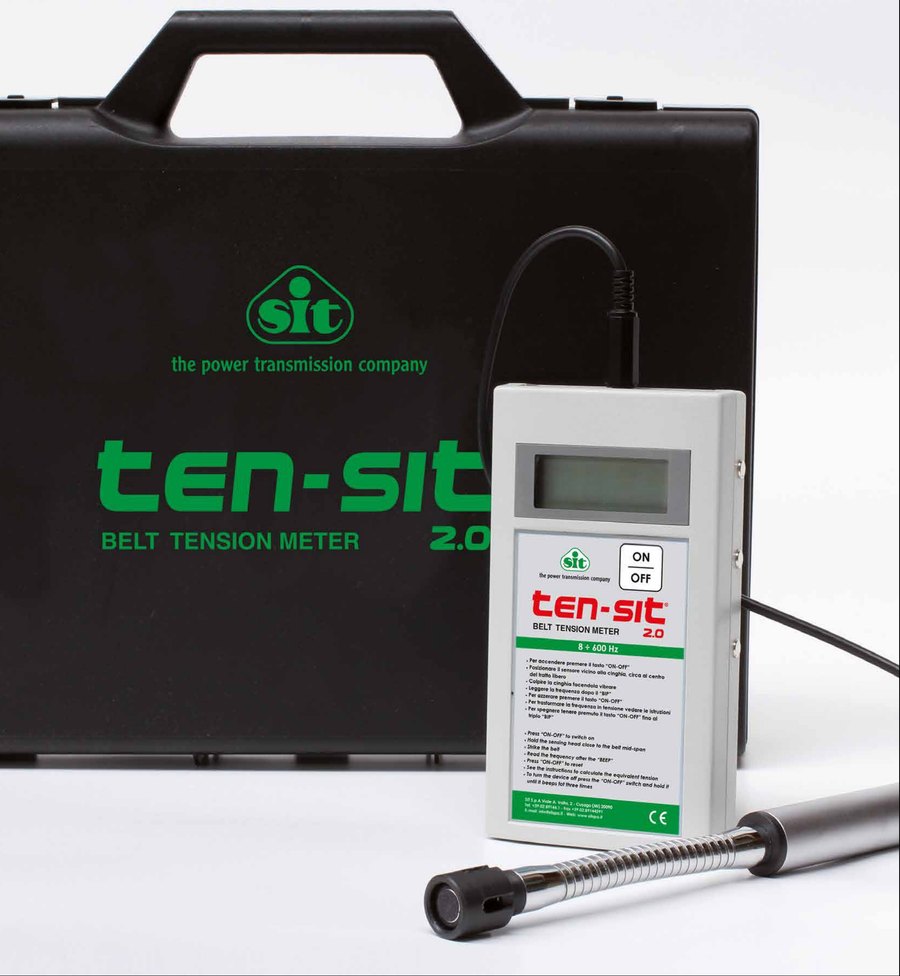
Electronic belt tension meter with unidirectional microphone on a flexible arm; 8-600 Hz; separates belt vibration from background noise; for any belt type.
SIT TEN-SIT 2.0 Belt Tension Meter
The SIT TEN-SIT® 2.0 is an electronic belt tension meter for the correct tensioning of all types of belt drives. Like every TEN-SIT gauge it uses the relationship between belt tension and the vibration frequency of the belt: a unidirectional microphone on a flexible arm picks up the vibration of the free span, and the instrument shows the frequency in Hz. The gauge recognises the belt vibration and separates it from background noise, so measurements stay reliable in a working plant.
Features
- Reliability and precision
- Suitable for any kind of belt
- Handy and versatile
- Light and compact
- Sensitivity range 8 - 600 Hz
- Unidirectional microphone on a flexible arm
How to measure
- Make sure the drive is stationary and the probe is connected to the gauge, then press "ON".
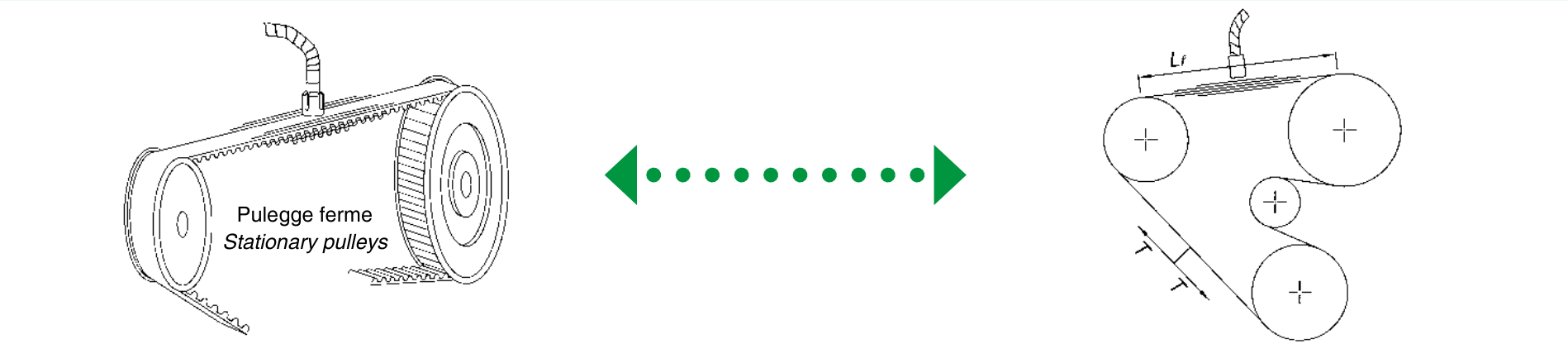
- Place the microphone as close as possible to the back of the belt at mid-span (Lf), without touching it when the belt vibrates. If a guard is in the way, aim the probe at the inner side of the belt.
- Make the belt vibrate by striking it near the middle of the span with a rigid object.
- Read the frequency after the acoustic signal. Repeat the measurement and use the average value.
- On multiple-belt drives, measure each belt individually and use the average value.
- Run the drive under load for one or two minutes, check the tension again and re-tighten if necessary.
From frequency to belt tension
The target frequency is calculated from the required static tension, the linear belt mass and the free span length: f = 1 / (2 · Lf) · √(T / M), or T = 4 · M · Lf² · f². If the reading is lower than the calculated value, tighten the belt; if it is higher, slacken it, and measure again. The formula, a worked example and the linear mass of common belt types are shown under TEN-SIT Light.
To switch off, hold "OFF" for about 3 seconds until the triple acoustic signal. "LOBAT" on the display means the battery must be replaced.
Source: SIT S.p.A. leaflet "TEN-SIT® 2.0", 152.10 - 01/26. Brand names are used for identification and technical reference.
Request a Quote Ask an Engineer All belt drive regulation products
Available on request
Specific series are being qualified with our manufacturing partners. Send your requirement and our engineers will propose a solution.
What we need to select the right product
Motor power and speed, required ratio, center distance, duty and operating hours, existing belt profile and length.
Typical applications: Fans, pumps, compressors, crushers, screens and machine drives.
Original, alternative or custom
Depending on the requirement we offer original-brand products, selected supply from qualified manufacturers, replacement solutions or custom-engineered designs. Each product shows MECHATRIC's relationship to it.
Original Brand & EquivalentSelected SupplyReplacement SolutionCustom Engineered