
Related Shaft Components
Industrial bushings, hubs, adapters and shaft-to-hub connection components - engineering selection, replacement and interchange.
Industrial Bushings, Hubs & Shaft Components
MECHATRIC supports industrial customers and equipment manufacturers with the engineering selection, sourcing and replacement of components used to mount pulleys, sprockets, couplings, fans and other rotating elements onto shafts - with a clear distinction between keyed tapered-bushing systems and keyless friction-locking connections.
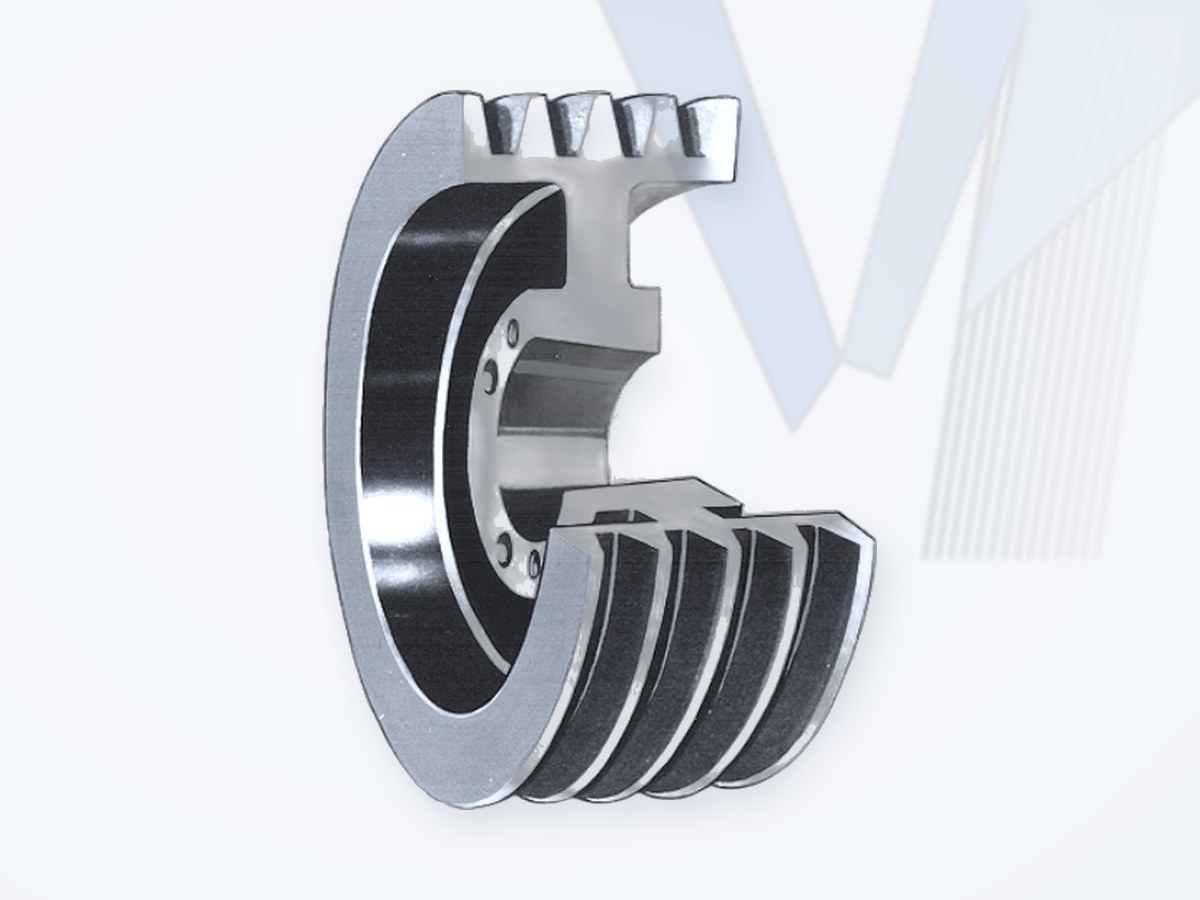
QD Bushings & Hubs (DODGE QD)
Flanged quick-detachable tapered bushings with 4-degree taper, conventional or reverse mounting, sizes QT to S, and matching QD…
View →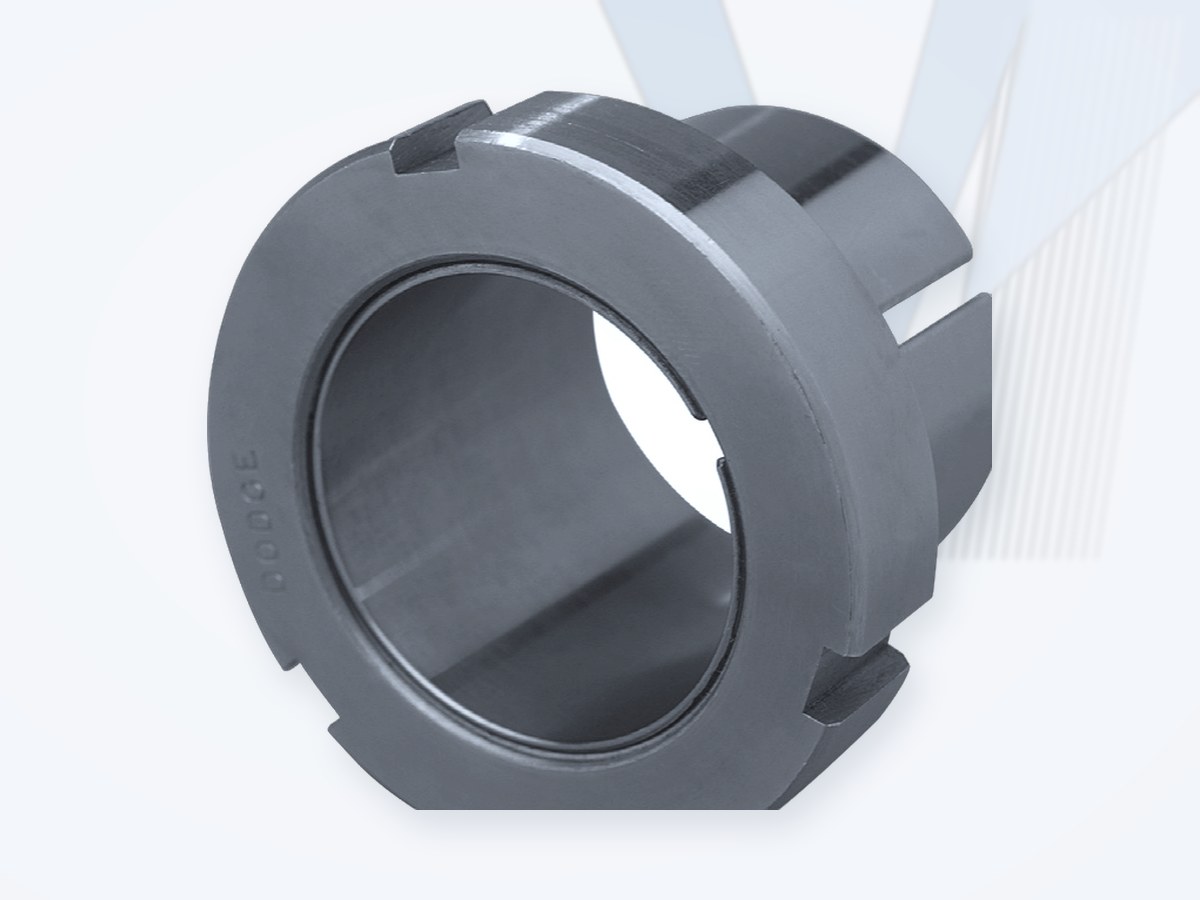
Keyless Grip Bushings (DODGE GRIP-TIGHT)
Keyless gripping bushings with 360-degree concentric shaft contact - no keyway, less vibration, for fan hubs, sheaves, sprockets…
View →What are related shaft components?
Related shaft components are mechanical parts that connect, position, retain or adapt rotating elements on shafts. They include tapered bushings, quick-detachable bushings, weld-on and bolt-on hubs, mounting adapters, keyed hub interfaces and keyless shaft-gripping devices. The appropriate solution depends on transmitted torque, shaft geometry, installation envelope, service duty, disassembly access and the host component.
Product Families & Configurations
| Family | Engineering definition / typical use |
|---|---|
| Taper-Lock-type bushings | Split tapered bushings fitted into a matching tapered hub; typically a keyed shaft interface. Compact mounting of sheaves, sprockets and similar components. |
| QD (Quick Detachable) bushings | Flanged split tapered bushings with conventional or reverse mounting configurations where supported by the exact design. |
| Keyless grip / clamping bushings | Shaft-gripping systems relying on distributed radial contact; some designs avoid shaft keyways. Verify actual torque rating and fit. |
| Tapered / QD hubs | Matching hubs, including weld-on and bolt-on arrangements, to connect bushings to a driven element. |
| Adapters & mounting accessories | Interfaces for adapting a product to a particular bushing series, hub geometry or shaft arrangement. |
| Keys, keyways & retention parts | Associated shaft-hub features and fastening elements requiring fit, stress and installation checks. |
Technical Reference: DODGE PT6 Bushings & Hubs
The DODGE PT6 catalogue documents TAPER-LOCK bushings, integral-key options, hubs and adapters; QD bushings and QD hubs; and GRIP-TIGHT keyless-gripping bushings. These are reference product families, not a statement that all manufacturers use identical geometries or interchangeable part numbers.
For its TAPER-LOCK design, the catalogue describes an 8-degree included taper, compact flush mounting and removal using threaded jackscrew positions. For its QD design, it describes a 4-degree taper and conventional / reverse installation configurations. GRIP-TIGHT is described as a 360-degree shaft-contact design without a conventional keyway. These features are manufacturer- and series-specific.
How to Select a Bushing or Shaft-Hub Assembly
- Define shaft diameter, tolerance, material, surface condition and whether a keyway is present or permissible.
- Determine operating torque, starting and peak torque, reversing loads, shock, speed and duty cycle.
- Identify the host component: pulley / sheave, sprocket, coupling hub, fan hub, gear or custom rotor.
- Confirm the bushing family and matching hub series, taper, bolt pattern, flange orientation and mounting direction.
- Verify rated torque and applicable manufacturer service factors; check bore limits, keyway geometry and hub strength.
- Check axial space, shaft shoulder, available access for assembly / removal, and required jackscrew clearance.
- Review concentricity, runout, balance, vibration, corrosion and environmental conditions.
- Confirm installation fastener grade, tightening torque and exact OEM instructions before commissioning.
Torque & Duty Verification
Basic running torque may be estimated as T (N·m) = 9550 × P (kW) / n (rpm). This is a preliminary calculation only. Apply an appropriate application-specific duty factor and evaluate transient peak torque separately. The DODGE PT6 TAPER-LOCK reference provides size-specific torque capacities and a duty table for light, uneven, shock and reversing loads; those numbers must not be transferred automatically to other product families.
Taper-Lock vs QD vs Keyless Grip
| Criterion | Taper-Lock type | QD type | Keyless grip type |
|---|---|---|---|
| Primary interface | Tapered split bushing in matched hub | Flanged tapered split bushing | Frictional shaft contact |
| Key requirement | Often keyed; verify variant | Often keyed; verify variant | May be keyless; verify series |
| Mounting envelope | Compact, flush options | Flange clearance required | Design-specific |
| Replacement risk | Taper, screw pattern, bore, hub fit | Flange, bolt circle, orientation | Contact pressure, torque, shaft fit |
Replacement & Interchange Engineering
An apparent match in shaft bore is not sufficient to establish interchangeability. Validate the full shaft-to-hub interface, including the bushing series, taper angle, outer diameter, length through bore, flange profile, keyway, fastener pattern, installation torque, torque capacity and mounting / removal clearances.
| Classification | Meaning |
|---|---|
| Direct Interchange | Fully verified |
| Dimensionally Compatible | Dimensional checks passed, performance still to verify |
| Functionally Equivalent | Different design meeting validated application requirements |
| Engineering Review Required | Insufficient evidence or modifications needed |
Typical Industrial Applications
Conveyor drive pulleys, belt and chain drives, fans and blowers, bucket elevators, material handling systems, crushers, mixers, process machinery, pumps, OEM equipment and maintenance replacement projects. Selection is driven by the actual load case and component interface rather than industry alone. See also Belts & Pulleys, Locking Assemblies & Shaft-Hub Connections, Taper Bushes, Couplings and Chain Drives.
RFQ / Technical Data Checklist
| Required information | Useful details |
|---|---|
| Component / host machine | Sheave, sprocket, coupling, fan, OEM model and available drawings |
| Shaft data | Diameter, tolerance, material, keyway, usable length, surface condition |
| Existing component | Brand, bushing number, part number, photos, dimensions and markings |
| Drive duty | Power, speed, nominal / peak torque, shock, reversal, starts per hour |
| Installation | Hub bore, mounting direction, bolt pattern, access and removal clearance |
| Project requirements | Quantity, lead time, environment, standards and inspection needs |
Leading Manufacturers Worldwide
Well-known European, American and Asian (Japanese and Korean) manufacturers of related shaft components.
| Manufacturer | Country | Product focus |
|---|---|---|
| Fenner Drives | United Kingdom | Taper-Lock bushes, pulleys, couplings, keyless bushings |
| SIT S.p.A. | Italy | Flexible, disc, gear and zero-backlash couplings; pulleys, belts, SIT-LOCK, taper bushes |
| Dodge (RBC) | USA | Gear reducers, bushings, couplings |
| TB Wood's (Regal Rexnord) | USA | Couplings, sheaves, bushings |
| Martin Sprocket & Gear | USA | Sheaves, sprockets, bushings |
| Regal Rexnord (Falk, Kop-Flex, Thomas, Rexnord) | USA | Grid, gear and disc couplings; gear drives; backstops; roller chain |
Listed for market information only. Brand names belong to their owners; their mention does not imply that MECHATRIC represents, distributes for or is authorized by these manufacturers. Product availability and equivalents are confirmed per enquiry.
Find the right shaft component
Send the existing part number or dimensions, shaft data and operating conditions. MECHATRIC can evaluate sourcing and application suitability subject to available manufacturer documentation.
Technical source: DODGE, PT Component Quick References - Bushings and Hubs (PT6): TAPER-LOCK features and dimensions, hubs and adapters, QD bushings and hubs, GRIP-TIGHT bushings. All trademarks belong to their owners. Product families are cited as engineering references only; no agency, authorization or direct interchange is implied. Always confirm current manufacturer data and installation procedures.
Frequently Asked Questions
Are all Taper-Lock bushings interchangeable?
No. Similar trade descriptions do not prove compatibility. Compare detailed manufacturer drawings, fit, fasteners, torque ratings and installation requirements.
Can a QD bushing replace a Taper-Lock bushing?
Not as a direct assumption. The hub interface, taper, flange and bolt configuration differ; the entire assembly may need redesign.
Are keyless bushings always better?
No. They can simplify keyway-related constraints, but require verification of shaft condition, contact pressure, torque capacity, balance and maintenance access.
Can I reuse old screws?
Follow the manufacturer instructions and inspect fasteners. Replace where required by the OEM or engineering assessment.