
Taper Bushes
Split taper bushes, sizes 1008 to 6050, for pulleys, sprockets and couplings - bores, keyways, slip torque and mounting.
Taper Bushes
Split taper bushes (taper lock bushings) for mounting pulleys, sprockets and couplings on shafts quickly and accurately, with a wide range of finished bores. MECHATRIC supports size identification, selection and RFQ preparation.
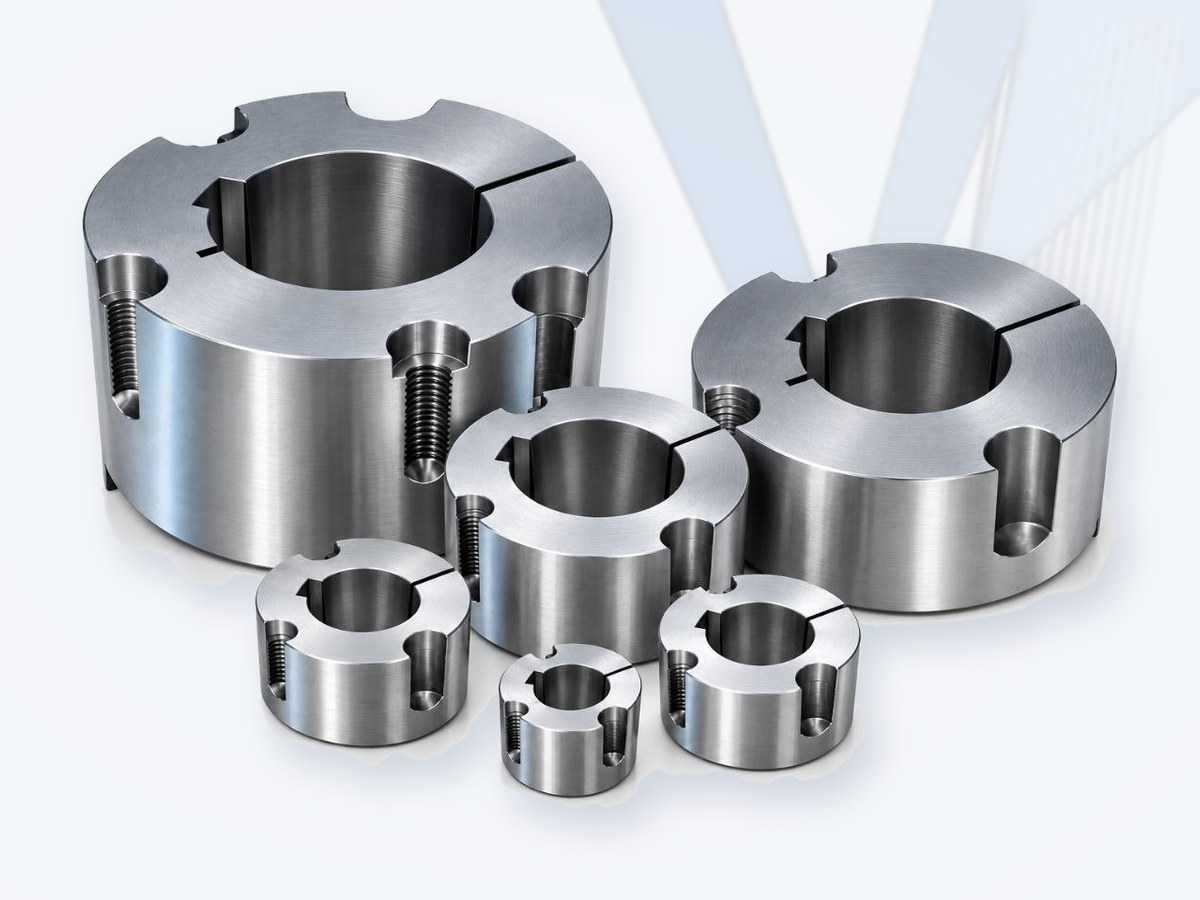
Taper Bush Series
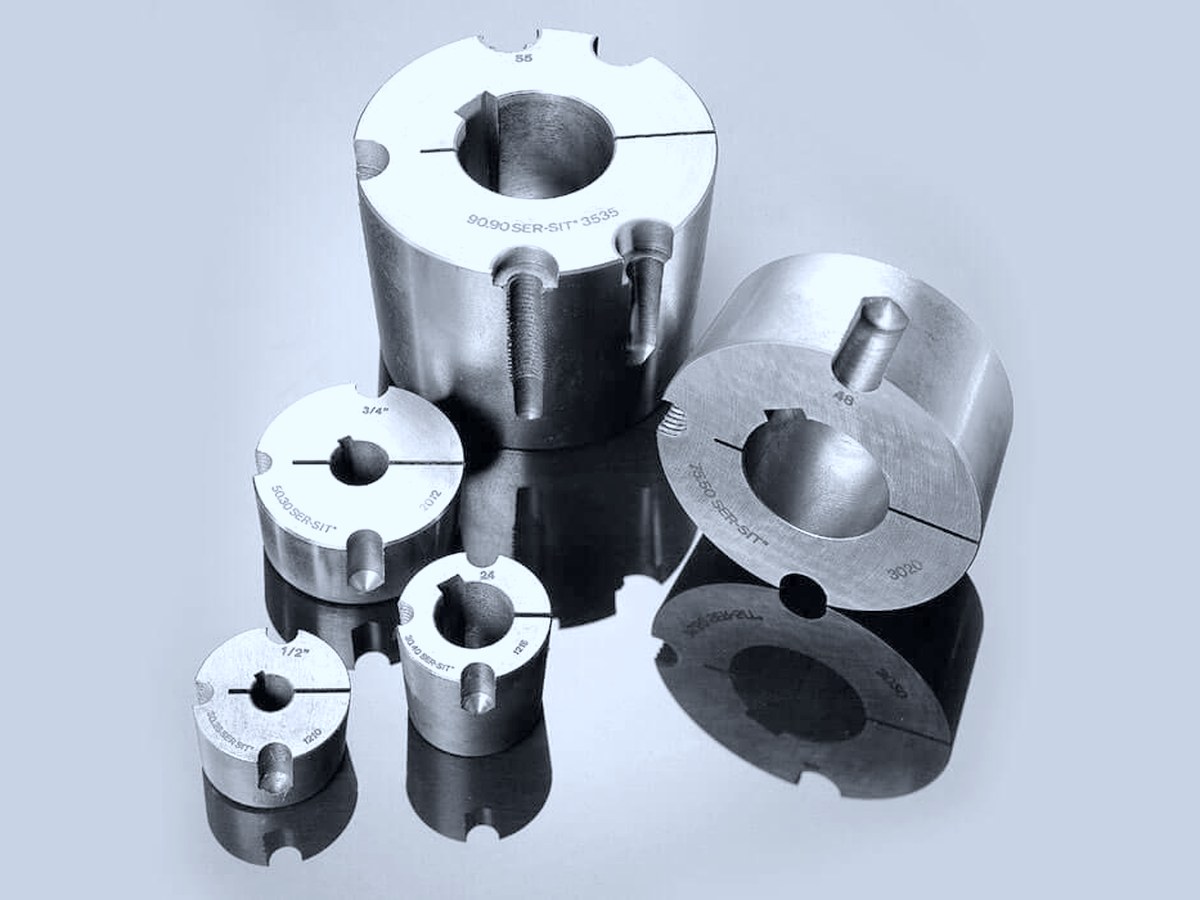
SIT SER-SIT Taper Bushes
Split taper bushes from SIT S.p.A. (Italy), sizes 1008-6050, mm and inch bores; interchangeable with similar taper bushes worldwide.
View Details →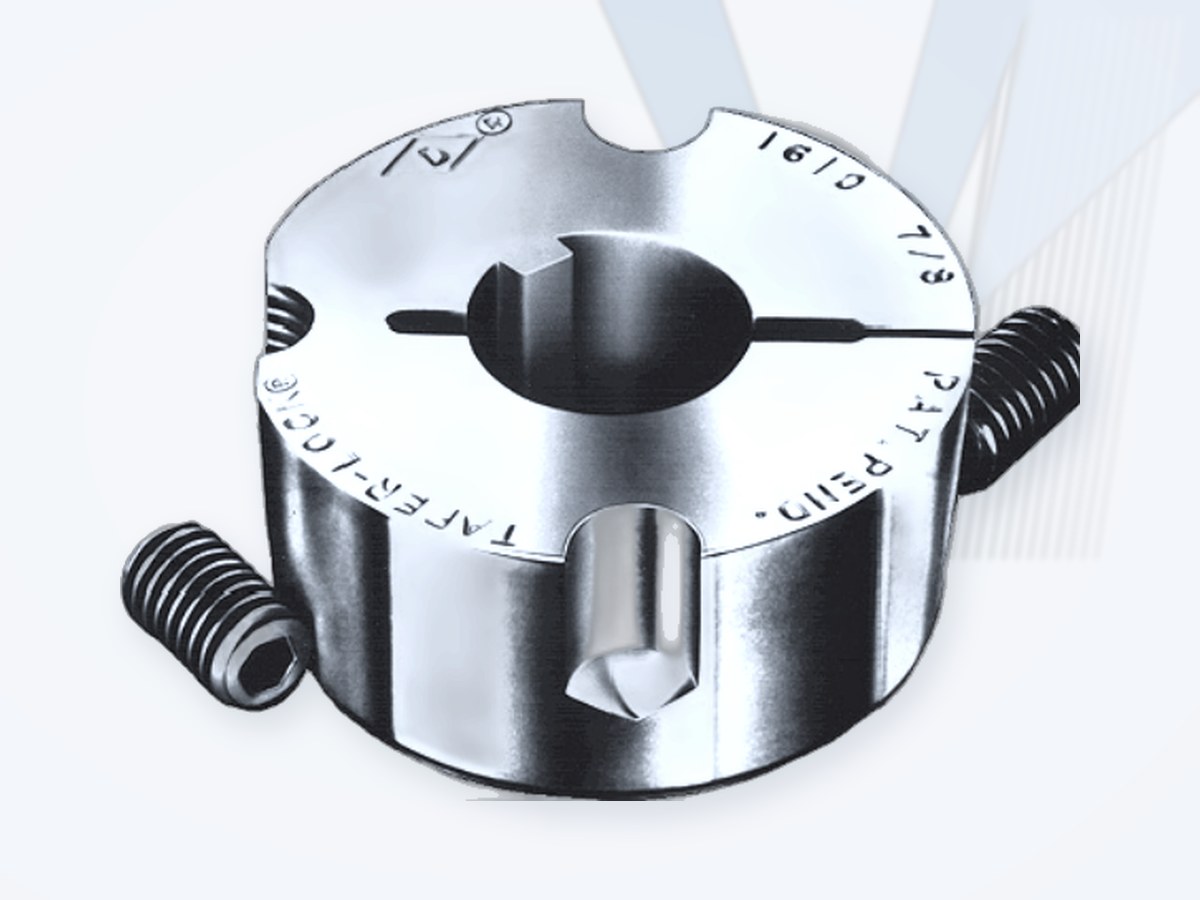
DODGE TAPER-LOCK Bushings & Hubs
Split tapered bushings (Taper-Lock type) with 8-degree included taper, flush mounting and jackscrew removal; matching weld-on and bolt-on hubs and adapters (DODGE PT6 reference).
Request a Quote →SIT SER-SIT Taper Bushes
Brand: SIT S.p.A. (Italy)
SER-SIT is the SIT range of split taper bushes for fixing pulleys, sprockets and couplings to the shaft. According to SIT, the bush gives a precise assembly and quick removal with only a hexagon key, eliminates the clearance between hub and bore so that fretting corrosion is avoided, and is interchangeable with similar taper bushes sold worldwide.
- Sizes 1008 to 6050.
- Large range of finished bores in mm and inch; keyways to UNI 6604 / DIN 6885 (reduced keyway for some large bores in a size).
- Cast iron as standard; some bore sizes made in steel.
- BSW (Whitworth) clamping screws with specified tightening torque; removal by a screw in the jacking hole.
- Slip torque and axial load per size: see the table "Size Range & Slip Torque" on this page.
For a quotation send: bush size (e.g. 2012, 3020), bore diameter and keyway (mm or inch), quantity, and the pulley / sprocket / coupling it is used with.
Information from the SIT catalogue; brand names belong to their owners. MECHATRIC does not represent SIT and supplies original or equivalent bushes after dimensional check.
SER-SIT Technical Data
| Size | Bores d (mm) | Bores d (inch) | L (mm) | D (mm) | Screws (No. x BSW) | Screw length (mm) | Hex key (mm) | Ms (Nm) |
|---|---|---|---|---|---|---|---|---|
| 1008 | 11, 12, 14, 15, 16, 18, 19, 20, 22, 24*, 25* | 3/8, 1/2, 5/8, 3/4, 7/8, 1* | 22.3 | 35 | 2 x 1/4" | 13 | 3 | 5.5 |
| 1108 | 11, 12, 14, 15, 16, 17, 18, 19, 20, 22, 24, 25, 26, 27, 28* | 3/8, 1/2, 5/8, 3/4, 7/8, 1, 1-1/8* | 22.3 | 38 | 2 x 1/4" | 13 | 3 | 5.5 |
| 1210 | 11, 12, 14, 15, 16, 18, 19, 20, 22, 24, 25, 26, 28, 30, 32 | 1/2, 5/8, 3/4, 7/8, 1, 1-1/8, 1-1/4 | 25.4 | 47 | 2 x 3/8" | 16 | 5 | 20 |
| 1215 | 12, 14, 15, 16, 18, 19, 20, 22, 24, 25, 26, 28, 30, 32 | 1/2, 5/8, 3/4, 7/8, 1, 1-1/8, 1-1/4 | 38.1 | 47 | 2 x 3/8" | 16 | 5 | 20 |
| 1310 | 14, 16, 18, 19, 20, 22, 24, 25, 28, 30, 32, 35* | 1/2, 5/8, 3/4, 7/8, 1, 1-1/8, 1-1/4, 1-3/8 | 25.4 | 52 | 2 x 3/8" | 16 | 5 | 20 |
| 1610 | 12, 14, 15, 16, 18, 19, 20, 22, 24, 25, 26, 28, 30, 32, 35, 38, 40, 42 | 3/8, 1/2, 5/8, 3/4, 7/8, 1, 1-1/8, 1-1/4, 1-3/8, 1-1/2, 1-5/8 | 25.4 | 57 | 2 x 3/8" | 16 | 5 | 20 |
| 1615 | 12, 14, 15, 16, 18, 19, 20, 22, 24, 25, 26, 28, 30, 32, 35, 38, 40, 42* | 1/2, 5/8, 3/4, 7/8, 1, 1-1/8, 1-1/4, 1-3/8, 1-1/2, 1-5/8*, 1-3/4* | 38.1 | 57 | 2 x 3/8" | 16 | 5 | 20 |
| 2012 | 14, 15, 16, 18, 19, 20, 22, 24, 25, 26, 28, 30, 32, 35, 38, 40, 42, 45, 48, 50 | 5/8, 3/4, 7/8, 1, 1-1/8, 1-1/4, 1-3/8, 1-1/2, 1-5/8, 1-3/4, 1-7/8, 2 | 31.8 | 70 | 2 x 7/16" | 22 | 5 | 30 |
| 2517 | 18, 19, 20, 22, 24, 25, 28, 30, 32, 35, 38, 40, 42, 45, 48, 50, 55, 60, 65* | 3/4, 7/8, 1, 1-1/8, 1-1/4, 1-3/8, 1-1/2, 1-5/8, 1-3/4, 1-7/8, 2, 2-1/8, 2-1/4, 2-3/8, 2-1/2 | 44.5 | 85 | 2 x 1/2" | 25 | 6 | 50 |
| 3020 | 22, 25, 28, 30, 32, 35, 38, 40, 42, 45, 48, 50, 55, 57, 60, 65, 70, 75 | 1-1/4, 1-3/8, 1-1/2, 1-5/8, 1-3/4, 1-7/8, 2, 2-1/8, 2-1/4, 2-3/8, 2-1/2, 2-5/8, 2-3/4, 2-7/8, 3 | 50.8 | 108 | 2 x 5/8" | 32 | 8 | 90 |
| 3030 | 25, 28, 30, 32, 35, 38, 40, 42, 45, 47, 48, 50, 55, 60, 65, 70, 75 | 1-1/4, 1-3/8, 1-1/2, 1-5/8, 1-3/4, 1-7/8, 2, 2-1/8, 2-1/4, 2-3/8, 2-1/2, 2-5/8, 2-3/4, 2-7/8, 3 | 76.2 | 108 | 2 x 5/8" | 32 | 8 | 90 |
| 3535 | 25, 35, 38, 40, 42, 45, 48, 50, 55, 60, 65, 70, 75, 80, 85, 90 | 1-1/2, 1-5/8, 1-3/4, 1-7/8, 2, 2-1/8, 2-1/4, 2-3/8, 2-1/2, 2-5/8, 2-3/4, 2-7/8, 3, 3-1/8, 3-1/4, 3-3/8, 3-1/2* | 88.9 | 127 | 3 x 1/2" | 38 | 10 | 115 |
| 4040 | 40, 42, 45, 50, 55, 60, 65, 70, 75, 80, 85, 90, 95, 100 | 1-3/4, 2, 2-3/4, 3-1/2, 3-3/4*, 4* | 101.6 | 146 | 3 x 5/8" | 44 | 14 | 170 |
| 4545 | 55, 60, 65, 70, 75, 80, 85, 90, 95, 100, 105, 110 | 3, 3-1/2, 4 | 114.3 | 162 | 3 x 3/4" | 51 | 14 | 195 |
| 5050 | 50, 60, 65, 70, 75, 80, 85, 90, 95, 100, 110, 115, 120, 125 | 3-1/2, 4 | 127.0 | 178 | 3 x 7/8" | 57 | 17 | 275 |
| 6050** | 80, 85, 90, 95, 100, 105, 110, 115, 120, 125, 130, 135, 140, 145, 150 | - | 127.0 | 235 | 3 x 1-1/4" | 107 | 48 | 650 |
* reduced keyway; ** hexagon-head screws. Some bores (bold in the SIT catalogue) are made in steel instead of cast iron. Ms = screw tightening torque. Source: SIT SER-SIT catalogue.
Request a Quote for SIT SER-SIT Taper Bushes Ask an Engineer
What is a taper bush?
A taper bush is a split, externally tapered sleeve that fits into a matching tapered bore in a pulley, sprocket or coupling hub. Tightening the set screws draws the bush into the hub; the taper closes the split bush onto the shaft and clamps the hub in place. Standard taper bushes are bored and keyed to the shaft size.
Taper bushes allow one standard hub to fit many shaft sizes, make installation and removal fast with only a hexagon key, and remove the clearance between hub and bore that can cause fretting corrosion.
Standard taper bushes normally use a key; they are not the same as fully keyless friction locking assemblies.
Size Range & Slip Torque (SIT SER-SIT reference)
| Bush size | Example bores d (mm) | Slip torque (Nm) | Allowable axial load (N) |
|---|---|---|---|
| 1008 | 12 / 19 / 24 | 29 / 51 / 66 | 3,990 / 4,940 / 5,490 |
| 1108 | 12 / 19 / 24 / 28 | 28 / 49 / 64 / 79 | - / 4,630 / 5,220 / 5,720 |
| 1210 / 1215 | 16 / 19 / 24 / 32 | 82 / 105 / 142 / 210 | 8,840 / 9,800 / 10,900 / 12,300 |
| 1610 / 1615 | 19 / 24 / 38 / 42 | 98 / 135 / 240 / 265 | - / 9,570 / 11,900 / 12,700 |
| 2012 | 24 / 38 / 42 / 48 / 50 | 165 / 310 / 340 / 400 / 420 | 11,500 / 14,400 / 15,700 / - / 16,700 |
| 2517 | 24 / 38 / 42 / 48 / 55 / 60 | 220 / 380 / 430 / 510 / 600 / 670 | - / 17,000 / 18,500 / - / 21,000 / 22,300 |
| 3020 / 3030 | 38 / 48 / 55 / 60 / 75 | 520 / 730 / 890 / 970 / 1,300 | 23,900 / 26,100 / 29,900 / 31,500 / 34,500 |
| 3535 | 42 / 60 / 75 / 90 | 1,000 / 1,580 / 2,150 / 2,600 | 41,000 / 49,800 / 54,800 / 59,000 |
| 4040 | 48 / 60 / 75 / 100 | 1,700 / 2,300 / 3,150 / 4,400 | - / 70,200 / 77,200 / 89,400 |
| 4545 | 55 / 75 / 100 / 110 | 2,500 / 3,900 / 5,500 / 6,300 | 79,600 / 93,000 / 107,700 / - |
| 5050 | 75 / 100 / 125 | 3,950 / 5,650 / 7,370 | 91,800 / 106,600 / 119,500 |
Values from the SIT SER-SIT catalogue: slip torques calculated with the nominal screw tightening torque, friction coefficient 0.14 and assembly without key. Bores and keyways follow UNI 6604 / DIN 6885; some large bores in a size use a reduced keyway.
Mounting & Removal
Clean
Clean the hub bore, the taper surfaces and the shaft carefully.
Insert
Fit the bush into the hub with the threaded half-holes of the hub aligned to the plain half-holes of the bush; hand-tighten the screws.
Position and tighten
Place the assembly on the shaft, position it and tighten the screws alternately to the specified torque.
Remove
Remove the screws and insert one into the jacking hole; tighten it until the hub is released.
Installation Notes
- The top of the key must not touch the bottom of the keyway - keep a small clearance.
- In applications with strong vibration, re-check screw tightening after a few hours under load and then at regular intervals.
- Use the screw tightening torque specified for the exact bush size.
- Larger bores in some sizes are supplied in steel instead of cast iron.
Selection & Replacement
Select the bush size from the hub (pulley, sprocket or coupling) and the bore from the shaft diameter; then check that the slip torque and axial load cover the duty with an appropriate margin, or rely on the key where the drive design requires it. Taper bushes are a worldwide standardised component: sizes, tapers and bores follow the same international standard series, and SIT states that its SER-SIT bushes are interchangeable with all similar types sold throughout the world. A bush of the same size and bore can therefore replace an equivalent bush from another manufacturer; MECHATRIC only checks the size, bore and keyway marking.
Information Required for Selection / RFQ
| Data group | Information to provide |
|---|---|
| Bush | Size (e.g. 2012, 2517), bore diameter, keyway (standard / reduced / inch), quantity. |
| Hub | Pulley, sprocket or coupling type and its taper bush size. |
| Duty | Power and speed or torque, axial load, vibration and shock. |
| Existing part | Brand, marking and photos if replacing. |
Leading Manufacturers Worldwide
Well-known European, American and Asian (Japanese and Korean) manufacturers of taper bushes.
| Manufacturer | Country | Product focus |
|---|---|---|
| Fenner Drives | United Kingdom | Taper-Lock bushes, pulleys, couplings, keyless bushings |
| SIT S.p.A. | Italy | Flexible, disc, gear and zero-backlash couplings; pulleys, belts, SIT-LOCK, taper bushes |
| Optibelt | Germany | V-belts, timing belts, pulleys |
| Gates | USA | V-belts, synchronous belts, pulleys, tension meters |
| Dodge (RBC) | USA | Gear reducers, bushings, couplings |
| Martin Sprocket & Gear | USA | Sheaves, sprockets, bushings |
| TB Wood's (Regal Rexnord) | USA | Couplings, sheaves, bushings |
Listed for market information only. Brand names belong to their owners; their mention does not imply that MECHATRIC represents, distributes for or is authorized by these manufacturers. Product availability and equivalents are confirmed per enquiry.
Need taper bushes?
Send the bush size, bore and quantity - or the pulley and shaft details. MECHATRIC confirms the size and supplies matching bushes, pulleys and sprockets.
Engineering reference: SIT S.p.A. "Taper bushing SER-SIT" catalogue. Dimensions, screw torques, slip torques and availability must be verified against the manufacturer's current documentation for the selected size. Brand names are used for technical identification and do not by themselves imply representation, authorization or commercial partnership.
Frequently Asked Questions
Is a taper bush keyless?
Standard taper bushes are normally used with a key. Slip torque values in catalogues are often calculated without a key for reference.
How do I remove a taper bush?
Remove the screws, insert one screw into the jacking hole and tighten it until the hub is released.
Are taper bushes from different brands interchangeable?
Yes. Taper bushes are a worldwide standard; a bush of the same size, bore and keyway is interchangeable between manufacturers (SIT states its SER-SIT bushes are interchangeable with all similar types).