
Explosion-Protected (Ex) Motors
Hazardous-area classification, ATEX / IECEx selection and engineering replacement of explosion-protected motors.
Explosion-Protected Electric Motors | ATEX & IECEx Motor Selection
Hazardous-area classification, ATEX / IECEx selection and engineering replacement of industrial Ex motors, with emphasis on Innomotics, Siemens SIMOTICS XP and ABB. Selection must always follow the actual certificate, the site hazardous-area dossier and the project specification.
Innomotics, Siemens SIMOTICS XP and ABB Ex Motor Families
Innomotics
Industrial explosion-protected LV and MV/HV motors; SIMOGEAR geared motors with Ex ec / Ex tc configurations.
View Details →Siemens SIMOTICS XP
Explosion-protected LV motors; historical Siemens SIMOTICS HV / LOHER references.
View Details →ABB
IEC LV flameproof and increased-safety motors; MV/HV flameproof induction motors.
View Details →Innomotics
Representative portfolio: industrial explosion-protected LV and MV/HV motors; SIMOGEAR geared motors with Ex ec / Ex tc configurations.
Engineering notes: check the current Innomotics catalogue, product transition, frame range, Ex certificates and converter duty.
Siemens SIMOTICS XP
Representative portfolio: SIMOTICS XP explosion-protected LV motors; historical Siemens SIMOTICS HV / LOHER references.
Engineering notes: examples include Ex db, Ex db eb, Ex eb, Ex ec, Ex tb and Ex tc depending on series. Verify the current legal manufacturer and series availability.
ABB
Representative portfolio: IEC LV flameproof and increased-safety motors; MV/HV flameproof induction motors.
Engineering notes: options include Ex db / Ex db eb, Ex eb / Ex ec and dust variants; MV/HV specifications depend on cooling, voltage and certification.
What is a hazardous (Ex) area?
An explosive atmosphere may form when flammable gas, vapour, mist or combustible dust mixes with air and an ignition source is present. Ex-rated motors control ignition hazards through certified construction, thermal limits, wiring arrangements and operating restrictions. A motor with a high ingress-protection (IP) rating alone is not necessarily explosion protected.
Brand names and family descriptions are informative, not blanket claims of availability or approvals. Innomotics is a separate motor brand; legacy Siemens documentation may refer to product lines subsequently transferred. Only exact model certificates determine permissible zones, VFD configurations and conditions of use.
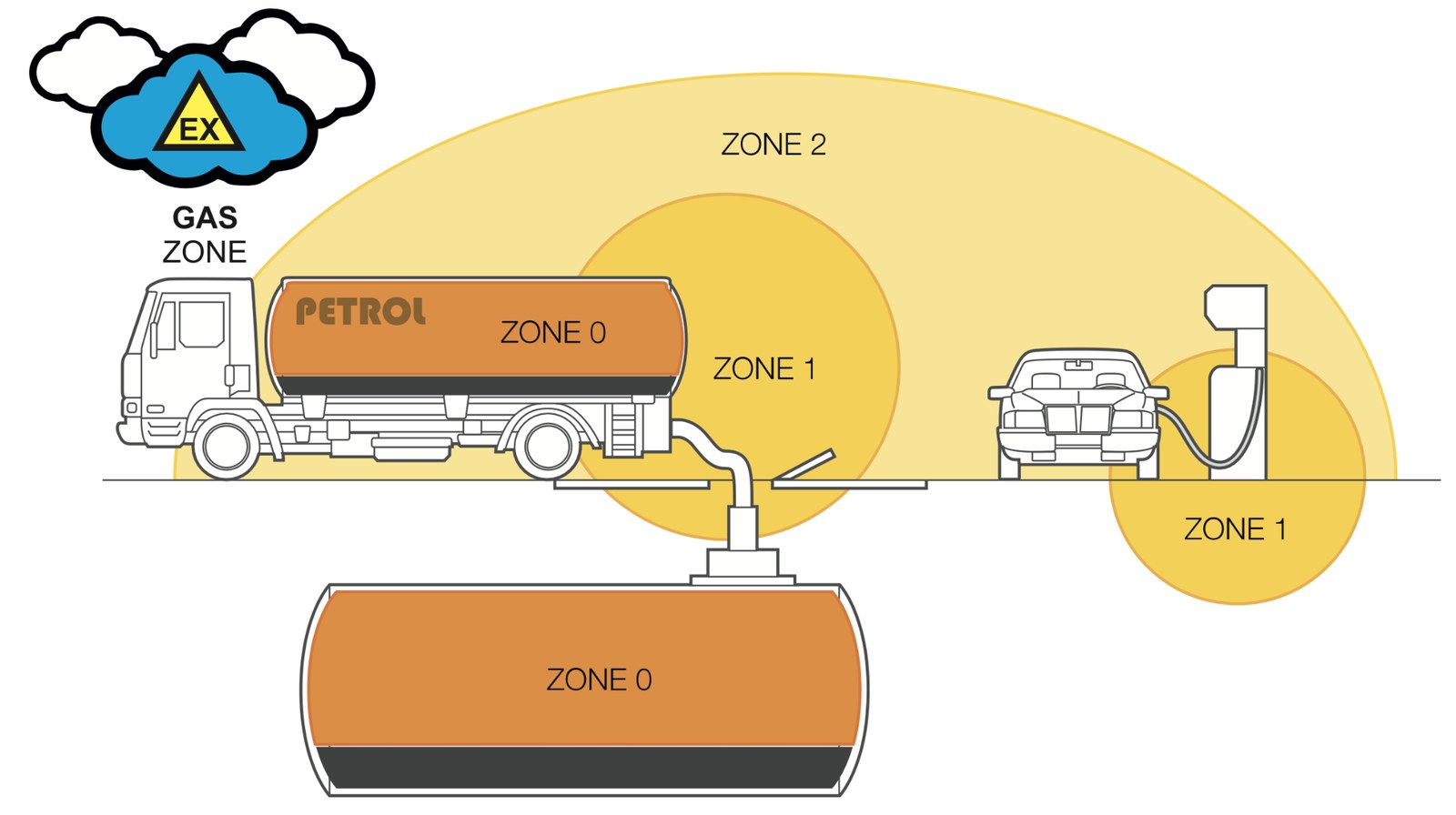
Hazardous-Area Zones: Gas Zones 1/2 and Dust Zones 21/22
| Atmosphere / zone | Presence during operation | Typical equipment requirement |
|---|---|---|
| Gas Zone 0 | Continuous, long periods or frequent | EPL Ga / ATEX 1G; conventional industrial rotating motors are generally not used. |
| Gas Zone 1 | Occasional in normal operation | EPL Gb / 2G; e.g. certified Ex db, Ex db eb, Ex eb. |
| Gas Zone 2 | Unlikely in normal operation; short duration if it occurs | EPL Gc / 3G; e.g. Ex ec; higher-EPL equipment may also qualify. |
| Dust Zone 20 | Continuous, long periods or frequent | EPL Da / 1D; conventional industrial motors generally not installed. |
| Dust Zone 21 | Occasional in normal operation | EPL Db / 2D; e.g. Ex tb. |
| Dust Zone 22 | Unlikely in normal operation; short duration | EPL Dc / 3D; e.g. Ex tc, subject to dust subgroup and enclosure requirements. |
Zone classification is based on the frequency and duration of explosive atmosphere, not a fixed universal radius or a guaranteed hours-per-year threshold. Reference: IEC 60079-10-1 (gas) and IEC 60079-10-2 (dust).
Motor Protection Types: Ex db, Ex db eb, Ex eb, Ex ec, Ex tb and Ex tc
| Marking | Principle | Typical motor application |
|---|---|---|
| Ex db | Flameproof enclosure contains an internal explosion and prevents flame transmission. | Zone 1 gas; Gb. |
| Ex db eb | Flameproof motor enclosure plus increased-safety terminal box. | Zone 1 gas; Gb. |
| Ex eb | Increased safety: measures to avoid excessive temperatures, arcs and sparks. | Zone 1 gas; Gb; starting and thermal protection need careful review. |
| Ex ec | Increased safety level ec for normal-operation ignition control. | Zone 2 gas; Gc. Older Ex nA markings require certificate review. |
| Ex pxb / pyb / pzc | Pressurization keeps explosive gas from entering the protected enclosure. | Selected larger MV/HV motors; specific EPL depends on design. |
| Ex tb / Ex tc | Dust ignition protection by enclosure and temperature limitation. | Zone 21 (tb, Db) / Zone 22 (tc, Dc), subject to certificate. |
EPL, ATEX Categories and Gas / Dust Groups
| Gas | Dust | ATEX category | Equipment protection level |
|---|---|---|---|
| Zone 0: Ga | Zone 20: Da | 1G / 1D | Very high |
| Zone 1: Gb | Zone 21: Db | 2G / 2D | High |
| Zone 2: Gc | Zone 22: Dc | 3G / 3D | Enhanced |
Gas groups: IIA (e.g. propane), IIB (e.g. ethylene), IIC (e.g. hydrogen / acetylene). Dust groups: IIIA (combustible flyings), IIIB (non-conductive dust), IIIC (conductive dust). The certificate must cover the actual material group. IIC gas certification generally encompasses IIB and IIA; IIIC dust certification generally encompasses IIIB and IIIA, subject to all other conditions.
Temperature Class and Surface-Temperature Limits
| Gas temperature class | T1 | T2 | T3 | T4 | T5 | T6 |
|---|---|---|---|---|---|---|
| Maximum surface temperature | 450 °C | 300 °C | 200 °C | 135 °C | 100 °C | 85 °C |
The permitted motor surface temperature must be below the gas auto-ignition temperature. For dust, markings normally give a maximum surface temperature in degrees Celsius (e.g. T125 °C), and the engineering assessment must consider both dust-cloud and dust-layer ignition, layer thickness, ambient temperature and dust accumulation. A gas T-class is not a substitute for dust thermal evaluation.
How to Read an Ex Motor Nameplate
Example A: CE ⬡ II 3G Ex ec IIC T3 Gc
II = surface industries; 3G = gas Category 3; Ex ec = increased-safety protection level ec; IIC = gas subgroup; T3 = 200 °C maximum surface temperature; Gc = equipment protection level for Zone 2. CE and the ATEX Ex hexagon are distinct symbols. A four-digit notified-body number appears only when required by the applicable conformity-assessment route; its presence is not universal.
Example B: II 2G Ex db eb IIC T4 Gb
Category 2 gas motor; flameproof housing and increased-safety terminal box; gas group IIC; T4 = 135 °C; EPL Gb, typically for Zone 1. The legacy marking Ex d IIC T4 should be reconciled with its certificate and the applicable standard edition.
Important: "II 2G Ex ec IIC T3" is not a coherent example - Ex ec is normally EPL Gc / Zone 2 and Category 3G, not Zone 1 / 2G.
Engineering Selection, VFD Operation and Replacement
- Obtain the area classification drawing and gas / dust material data.
- Identify Zone, EPL, ATEX category and gas / dust subgroup.
- Confirm ambient range, altitude, gas ignition temperature or dust cloud / layer temperatures.
- Select the Ex protection method and approved maximum surface temperature.
- Determine rated power, speed, voltage, frequency, duty, efficiency, mounting and cooling.
- Review starting method, locked-rotor limits, protection relay and PTC / RTD requirements.
- If VFD-fed, verify the certified motor-drive combination or certificate conditions, permissible speed range and thermal monitoring.
- Check terminal box, cable glands, earthing, installation and maintenance instructions.
- Validate certificates, special conditions (X), ambient limits and nameplate before purchase.
Replacement and cross-brand equivalence
A Siemens, Innomotics or ABB motor must never be substituted on kW, rpm and frame size alone. Match or exceed the required EPL; verify the exact gas / dust subgroup, temperature rating, protection concept, certified ambient range, VFD permission, shaft / mounting dimensions, terminal entry, IP rating, insulation, bearing arrangement, duty cycle and applicable project approvals. Equivalent protection cannot be inferred from visual similarity.
Important certification note
A general-purpose motor, even if highly efficient, is not an explosion-protected motor unless the exact configuration has the required Ex certification and marking. Final selection, installation and converter compatibility must follow the manufacturer certificate, any special conditions of use and site requirements.
Industries, RFQ Data and Frequently Asked Questions
| Industry | Typical Ex motor applications |
|---|---|
| Oil and gas | Hydrocarbon pumps, compressors, blowers, fans and loading facilities. |
| Petrochemical and chemical | Agitators, extruders, mixers and process pumps. |
| Grain, sugar, wood and bulk solids | Conveyors, elevators, dust collectors and mixers. |
| Paint and solvent processing | Ventilation and pumping systems. |
Each area must be assessed for its own hazardous substances and ventilation conditions.
Request for quotation (RFQ) checklist
Motor manufacturer / model / nameplate (photo); rated kW, rpm, voltage and Hz; Zone / EPL / ATEX category; gas or dust subgroup; temperature class or maximum surface temperature; ambient and altitude; direct-on-line or VFD; mounting (IM), frame and shaft; enclosure IP, cooling and efficiency; hazardous-area classification document, applicable certificate and project standards; quantity, destination and required delivery. For replacements, supply the existing motor nameplate and drawings.
Need an Ex motor or a replacement?
Send the nameplate and hazardous-area data - MECHATRIC reviews the selection or replacement and prepares the technical RFQ.
Standards and Manufacturer Reference Material
IEC 60079-0 (general), -1 (flameproof), -2 (pressurization), -7 (increased safety), -10-1 (gas classification), -10-2 (dust classification), -14 (installation), -17 (inspection), -31 (dust enclosure); ATEX Directive 2014/34/EU; IECEx scheme. Refer to the applicable editions and local regulatory requirements.
Frequently Asked Questions
Is an IP66 motor automatically explosion-proof?
No. IP and Ex certification address different hazards.
Can a Zone 1 motor be used in Zone 2?
Usually yes, if its certificate, subgroup, temperature, installation and other conditions satisfy the site requirements.
Is Ex ec suitable for Zone 1?
Normally no: Ex ec is Gc and intended for Zone 2.
Can an Ex motor run on a VFD?
Only within the certified configuration and stated limits.
Are gas and dust certifications interchangeable?
No. Dual-marked motors require separate appropriate markings for each atmosphere.